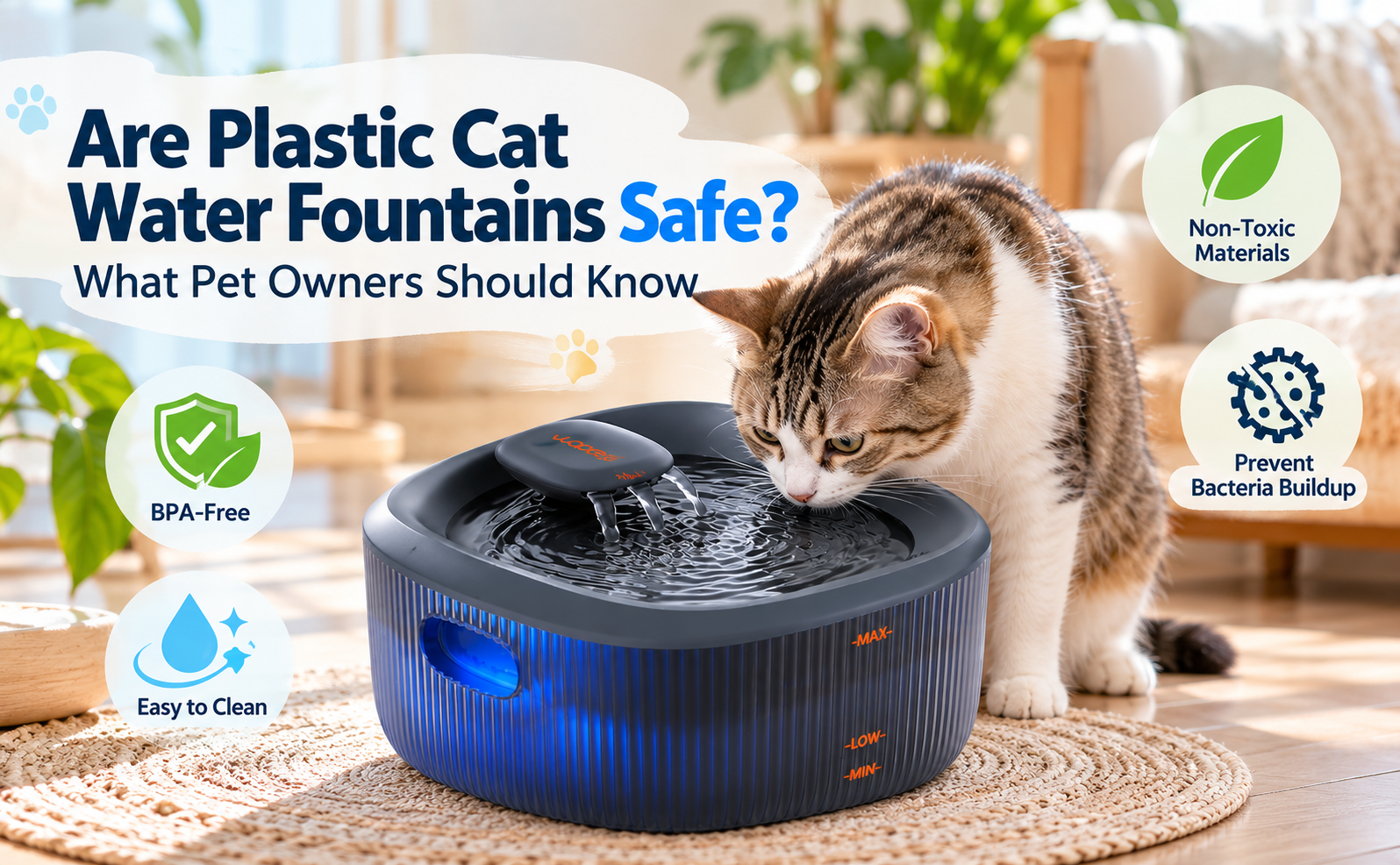

Plastic is one of the most common materials used in cat water fountains. It is lightweight, easy to shape, and often more affordable than ceramic or stainless steel.
It is also one of the most debated.
Search for advice about cat fountains and you will quickly find claims that plastic should always be avoided. The reality is more nuanced.
A well-made plastic cat water fountain can be suitable for everyday use. What matters most is whether the fountain is intended for repeated water contact, remains in good condition, and can be cleaned thoroughly.
Is Plastic Safe for a Cat Water Fountain?
There is no single type of “plastic.” Different plastic materials are manufactured for different uses, including products intended to come into contact with food or drinking water.
That is why judging a fountain simply by whether it contains plastic is not especially useful. Instead, check whether the manufacturer identifies the product as intended for pet drinking water and provides clear care instructions.
The U.S. Food and Drug Administration regulates food-contact substances and evaluates their intended uses. Its current BPA guidance also shows why a single label such as “BPA-free” should not be treated as a complete measure of product safety. See the FDA’s information on BPA in food-contact applications.
For a pet fountain, practical design questions matter too:
- Are the water-contact surfaces smooth?
- Can the fountain be taken apart easily?
- Is the pump accessible for cleaning?
- Are there narrow seams where residue can collect?
- Are replacement filters or parts available?
Why Scratches Matter
One of the main long-term drawbacks of plastic is surface wear.
Plastic can become scratched through normal use or abrasive cleaning. A small cosmetic mark does not automatically make a fountain unsuitable, but deep scratches and damaged surfaces can become harder to clean thoroughly.
During routine cleaning, inspect:
- The drinking tray
- Reservoir walls
- Corners and seams
- Pump housing
- Filter compartment
- Water channels
Consider replacing a component if it becomes deeply scratched, cracked, warped, permanently rough, or difficult to clean.
Avoid aggressive scouring tools unless the fountain manufacturer specifically recommends them.
A Filter Does Not Replace Cleaning
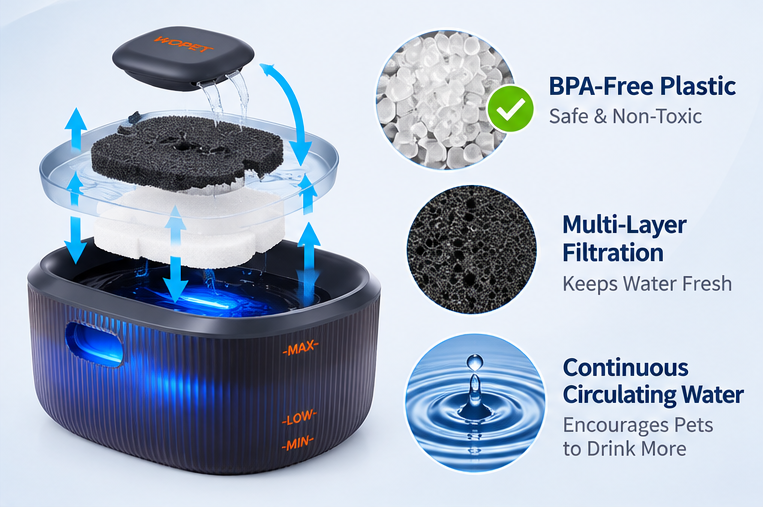
A filter can help catch hair and suspended debris, depending on the fountain design, but it does not wash the reservoir or pump.
Water still moves through multiple surfaces, including the drinking tray, reservoir, filter housing, pump, and internal channels.
A realistic routine includes:
- Checking the water level and condition daily.
- Removing visible hair or debris.
- Refreshing the water regularly.
- Washing removable surfaces on the manufacturer’s schedule.
- Cleaning the pump and intake as instructed.
- Replacing or servicing filters according to the product manual.
If maintenance is one of your main concerns, see WOPET’s guide to what makes a cat water fountain easy to maintain alongside the fountain’s own care instructions.
What About BPA-Free Plastic?
“BPA-free” can be useful product information, but it does not tell you everything about the material, fountain design, or long-term condition.
For everyday use, it is more useful to ask:
Is this fountain designed for drinking water, is it still intact, and can every important water-contact area be cleaned properly?
Those questions are more relevant to routine ownership than relying on a single marketing phrase.
Can Plastic Cat Fountains Cause Feline Acne?
Plastic bowls and feline acne are frequently discussed together online, but the relationship should not be reduced to a simple rule.
Feline acne can have multiple contributing factors. Keeping food and water containers clean is sensible regardless of whether they are plastic, ceramic, glass, or stainless steel.
If your cat develops persistent blackheads, swelling, redness, sores, or irritation around the chin or mouth, consult a veterinarian rather than trying to diagnose the problem from fountain material alone.
Plastic vs Stainless Steel vs Ceramic
Each material has practical strengths and weaknesses.
Plastic
Plastic is lightweight and works well for larger or more complex reservoirs. The tradeoff is that its surface may show wear sooner.
Stainless Steel
Stainless steel is durable and easy to inspect, but many stainless steel fountains still include plastic reservoirs, pumps, or filter housings.
Ceramic
Glazed ceramic provides a smooth, substantial drinking surface and additional weight for stability. It is heavier to carry and should be inspected for chips or cracks.
For a more direct cleaning-focused comparison, read Best Cat Water Fountain Material for Easy Cleaning.
When Should You Replace a Plastic Fountain?
Replacement may be appropriate when you notice:
- Deep scratches
- Cracks
- Warping
- Broken pieces
- Persistent odors after proper cleaning
- Rough areas that no longer clean well
- Damage around pump or electrical components
If only one removable part is damaged, check whether the manufacturer sells a replacement before replacing the entire fountain.
WOPET currently sells fountain filters and selected replacement pumps through its fountain accessories collection.
How to Choose a Better Plastic Fountain
If you prefer plastic, prioritize cleanability over decorative complexity.
Look for:
- Broad, smooth surfaces
- Easy disassembly
- Direct pump access
- Removable drinking trays
- Simple water channels
- Clearly identified filters
- Available replacement parts
The best fountain is one you can realistically keep clean.
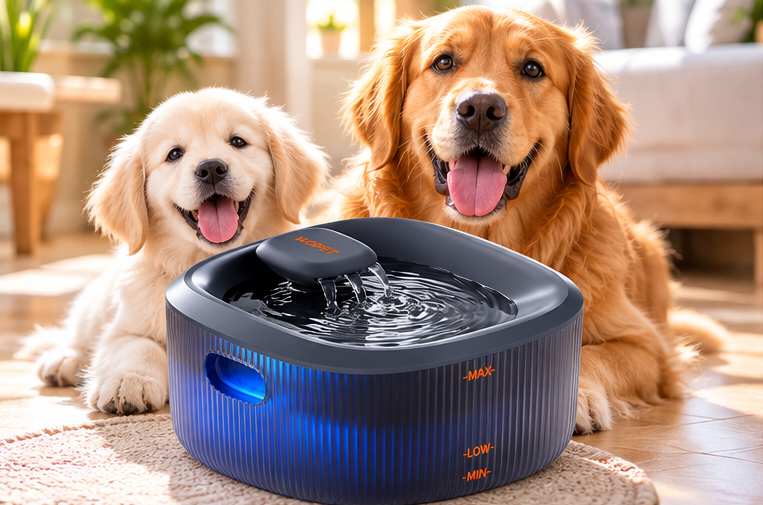
Buy WOPET W600 Dog Water Fountain on Amazon
Does Your Cat Like the Fountain?
Material is only one part of the decision.
Some cats show more interest in moving water, while others prefer a familiar bowl. Cornell’s Feline Health Center notes that some cats increase water intake when fountains are offered, but individual preferences vary. See Cornell’s feline hydration guidance.
If your cat is new to fountains, keep a familiar clean water source available while you observe whether the new fountain is being used reliably.
You can also read WOPET’s article on why cats like running water for more background on moving-water behavior.
Frequently Asked Questions
Are all plastic cat water fountains unsafe?
No. Plastic is not automatically unsafe. Look for a fountain intended for repeated drinking-water contact, follow the manufacturer’s care instructions, and stop using parts that become cracked, warped, or deeply scratched.
Is a BPA-free label enough to prove that a fountain is safe?
No. “BPA-free” addresses one material claim, but it does not tell you whether the fountain is durable, easy to clean, correctly assembled, or suitable for your cat. Evaluate the complete product and its condition.
How often should a plastic cat fountain be replaced?
There is no universal replacement schedule. Inspect it whenever you clean it and replace the fountain or affected part if you find deep scratches, cracks, warping, persistent odors, or surfaces that no longer clean properly.
Can I keep using a scratched plastic fountain?
Light cosmetic marks are different from deep or rough scratches. If an area traps residue, feels damaged, or cannot be cleaned thoroughly, replacing that component is the safer practical choice.
Does a plastic fountain cause feline acne?
Bowl material alone cannot diagnose or explain feline acne. Keep every drinking surface clean, and contact a veterinarian if your cat develops persistent blackheads, swelling, redness, sores, or irritation around the chin.
Summary
Plastic cat water fountains can be suitable for everyday use when they are made for repeated water contact, kept clean, and replaced when drinking surfaces become badly scratched, cracked, or difficult to clean. Plastic itself is not automatically unsafe. For everyday use, material quality, surface condition, fountain design, and regular maintenance matter more than the material label alone.