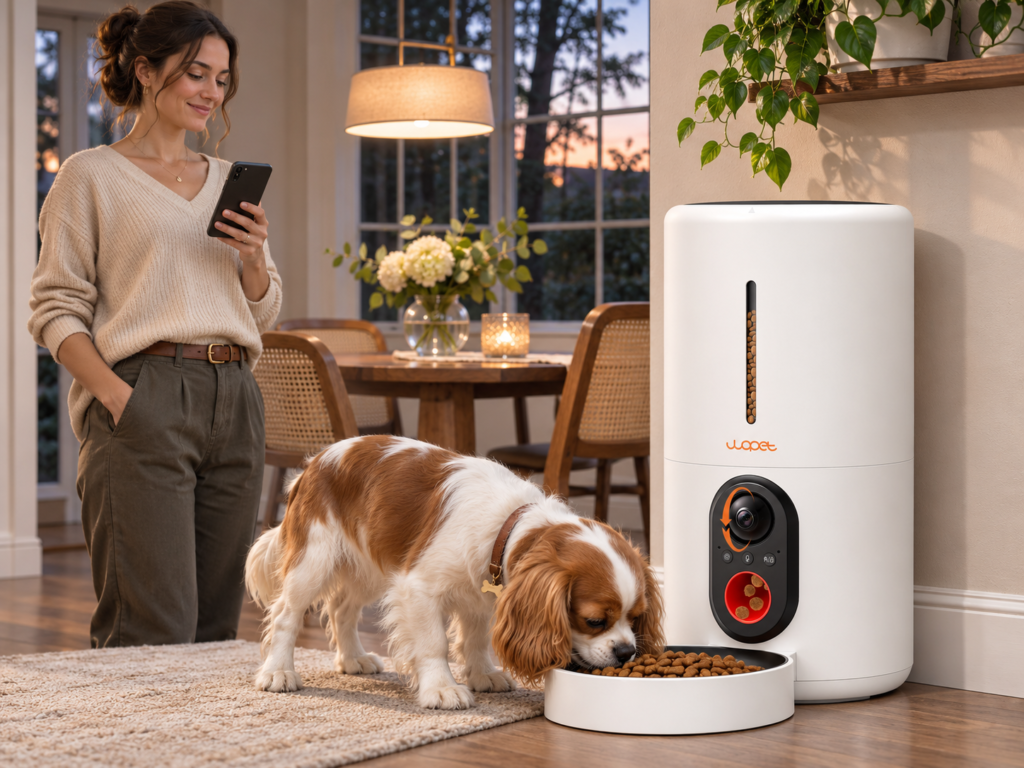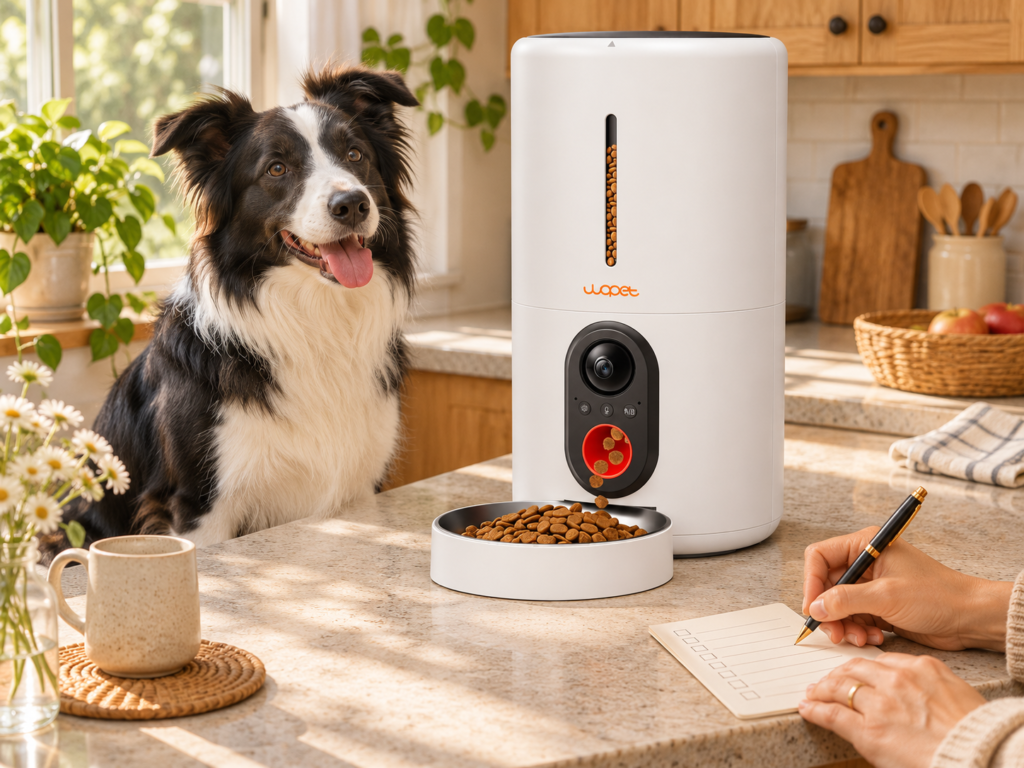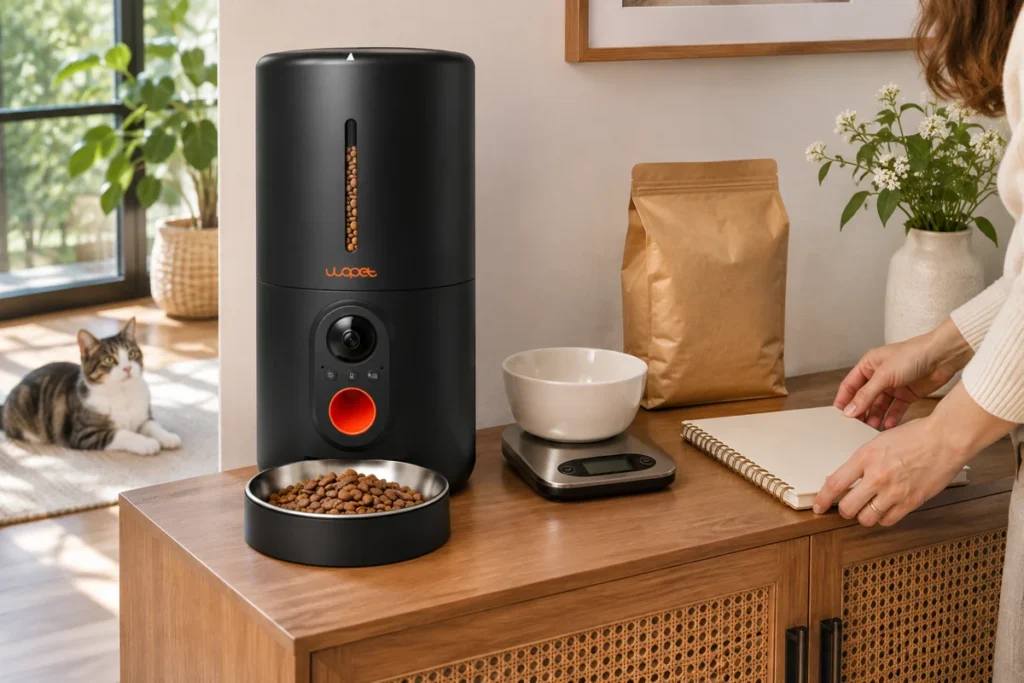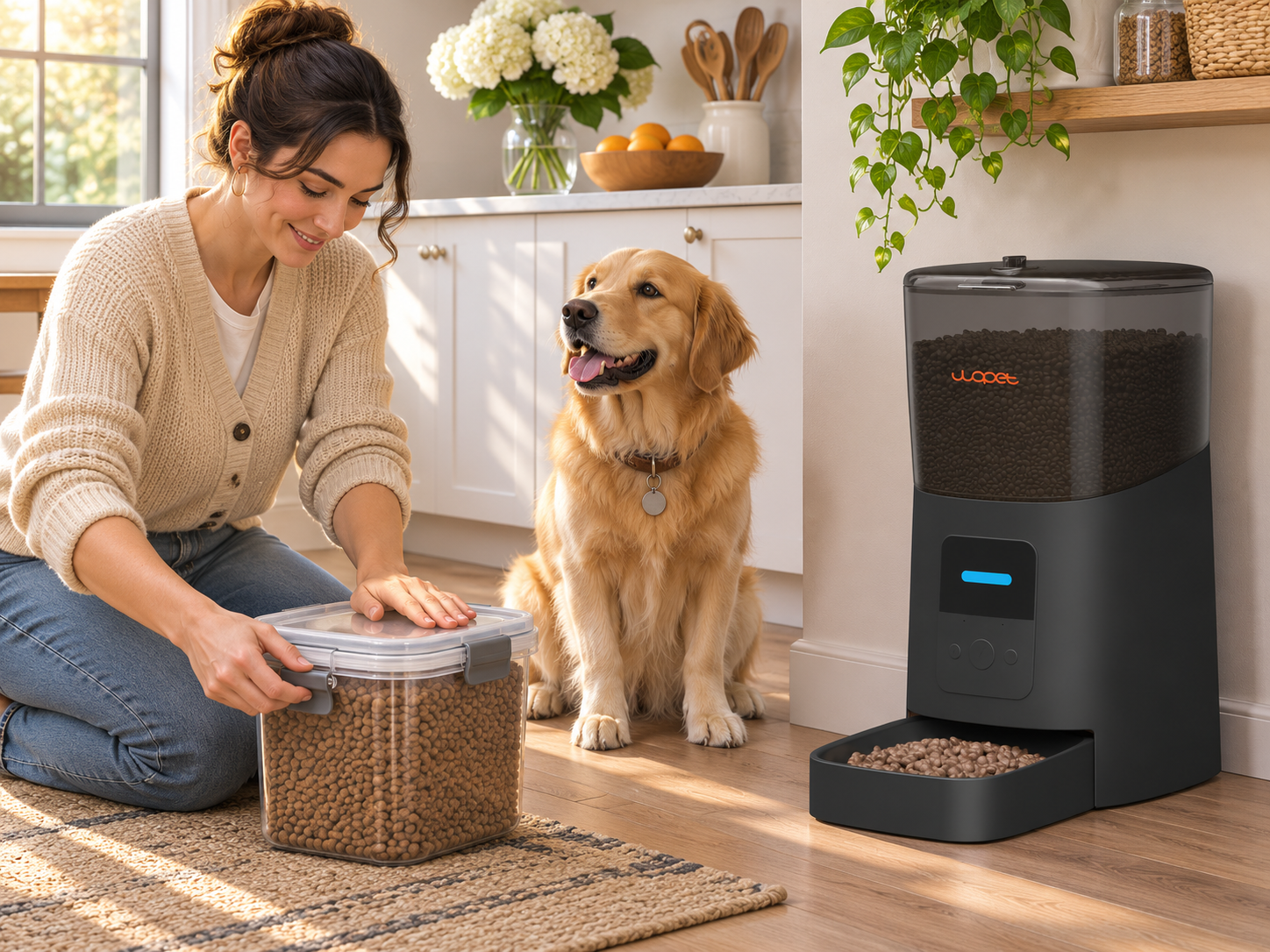

Treat the food bag as the storage authority
Keep the food bag handy when you fill the feeder. It carries the storage instructions, date and lot number you may need after the kibble goes into the hopper.
Choose a low-moisture location
A feeder beside a sink, dishwasher, exterior door, or sunny window may be exposed to humidity, splashes, or heat. Those conditions can make kibble less appealing and can encourage clumping. Select a stable spot away from direct sun and appliances that release heat or steam. If the home is humid, fill the hopper with a smaller amount and refill more often instead of trying to keep a large quantity loaded for a long period.
Rotate food instead of topping off indefinitely
When the hopper is nearly empty, inspect it before adding fresh food. Remove old crumbs and any kibble that smells or looks unusual. Avoid endlessly pouring new food on top of remnants, which makes it hard to know how long the older portion has been stored. A small refill routine also gives you a chance to check the lid, outlet, bowl, and food flow.
Clean food-contact surfaces carefully
Kibble can leave oils and dust on the bowl, chute, and hopper. Follow the manual to identify which components may be washed and how they should be dried. Electrical parts should remain dry unless the instructions say otherwise. Never reassemble damp parts and immediately load food; moisture can affect the kibble. The FDA’s pet food handling and storage advice gives general hygiene context.
Use food the dispensing mechanism can handle
A feeder is not a universal container for every kibble. Large, irregular, sticky, or crumbling pieces may bridge at the outlet or leave more residue. Confirm permitted food size and type in the model instructions. If changing foods, run a small supervised trial before loading a full hopper. Pay attention to dust and fragments that accumulate during dispensing.
A refill-and-inspection routine
At each refill, note the food name and date, inspect for moisture or odd odor, wipe or wash approved parts as needed, and run a test dispense. If food has been sitting for longer than the package guidance allows, empty the hopper and clean it before refilling. A consistent check is more useful than relying on the feeder’s capacity as a freshness measure.
Use WOPET model instructions, not assumptions
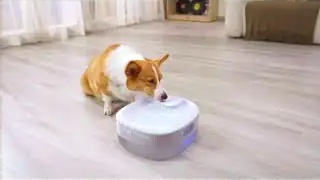
Compare the WOPET HV10P or F07 Pro with your storage and cleaning routine. The manual library provides model-specific guidance. For other considerations such as capacity and portions, read our automatic dog feeder selection guide.
What to do if kibble smells or looks different
If food develops an unusual smell, color, texture, or visible contamination, stop serving it and follow the food maker’s advice. Do not try to mask odor by mixing it with fresh kibble. Check the package date and storage conditions, then clean the hopper and bowl before loading a replacement. Save packaging details in case you need to contact the manufacturer. If your dog has eaten suspect food and becomes unwell, call a veterinarian.
Refill amounts should match your rotation habits
A large hopper is convenient only if its contents turn over within a period consistent with the food’s storage guidance. Estimate how much your dog eats per day and refill accordingly. For a small dog or a household that feeds a modest amount of kibble, loading the hopper to capacity may mean the food sits for a long time. Smaller refills can make it easier to keep food fresh and notice a problem early.
Keep the lid and seals in good condition
A lid that does not close properly may allow moisture, insects, or curious paws to reach the food. Check the lid alignment and any gasket during normal cleaning. Replace damaged parts through the manufacturer rather than improvising a seal that may contact food. If your dog can open or tip the unit, place it where the dog cannot interfere and avoid treating the hopper as a sealed storage container.
A practical weekly review
At least as part of your routine, look at the hopper interior, chute, bowl, lid, and floor around the feeder. Check for dust, stuck pieces, dampness, or signs the dog has knocked the unit. Clean as needed according to the manual and confirm food flows after reassembly. This review takes little time and can catch small issues before they become a missed serving or a difficult deep clean.
Separate freshness from portion convenience
A sealed hopper may reduce the need to open a food bag at every meal, but it does not replace checking the food’s date, smell, and storage directions. Likewise, a camera view or app status says nothing about whether kibble has absorbed moisture. Think of the feeder as a dispensing tool and the food package as the storage authority. If freshness is a priority, keep a small refill quantity, use an easy-to-clean bowl, and record when food was added instead of relying on a maximum-capacity fill.
If the feeder will be unused for a while
If you pause use for travel, a diet change, or a device issue, empty remaining kibble and clean the food-contact areas as the manual directs. Store the feeder dry and keep the food in its recommended container. Before returning it to service, inspect the chute and test a portion. This prevents old crumbs from being combined with a new refill and gives you a chance to confirm the mechanism still moves food as expected.
When to refill, not just how much to refill
Choose a refill rhythm that lets you inspect food and clean surfaces. If your dog eats little kibble, a small refill every few days may be more sensible than filling a large hopper. If the household is busy, set a reminder that fits the actual consumption rate. The aim is to know what is in the feeder and when it was added, not to maximize the amount stored.
A final freshness check
Before serving a refill, confirm the food smells and looks as expected, the hopper is dry, and the bowl is clean. If anything seems off, pause and check the package guidance. For model-specific care, use the manual rather than general assumptions. These small checks pair the convenience of automatic meals with the attention food storage still needs.