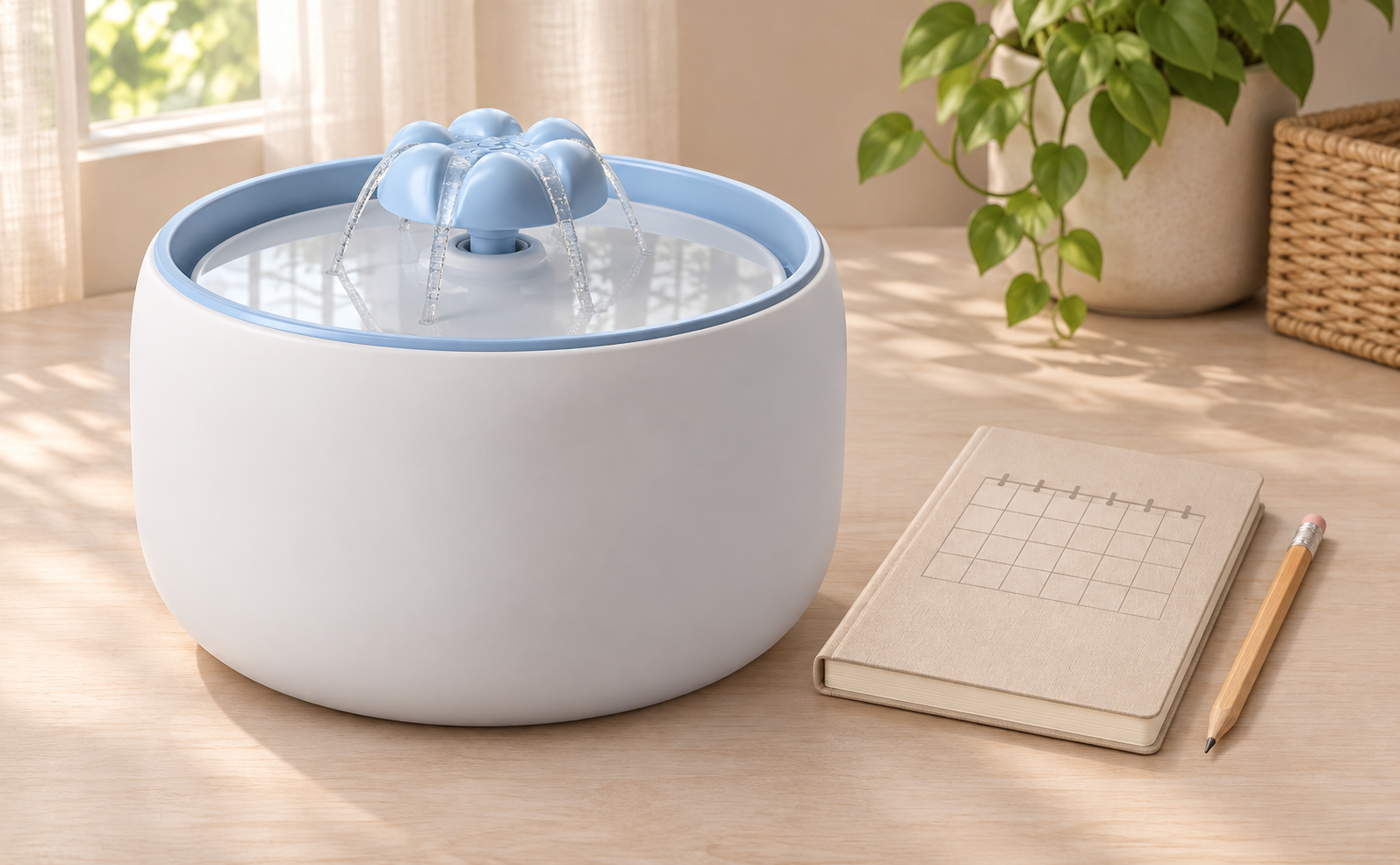

Replace a pet water fountain filter according to the instructions for its exact model, and inspect it sooner if water condition or flow changes. There is no single replacement interval that applies to every cartridge, fountain and household.
Start with the manufacturer’s schedule, record the installation date and check the rest of the fountain when a problem appears. A new filter does not remove residue already on the tray or reservoir.
Identify every consumable in the unit
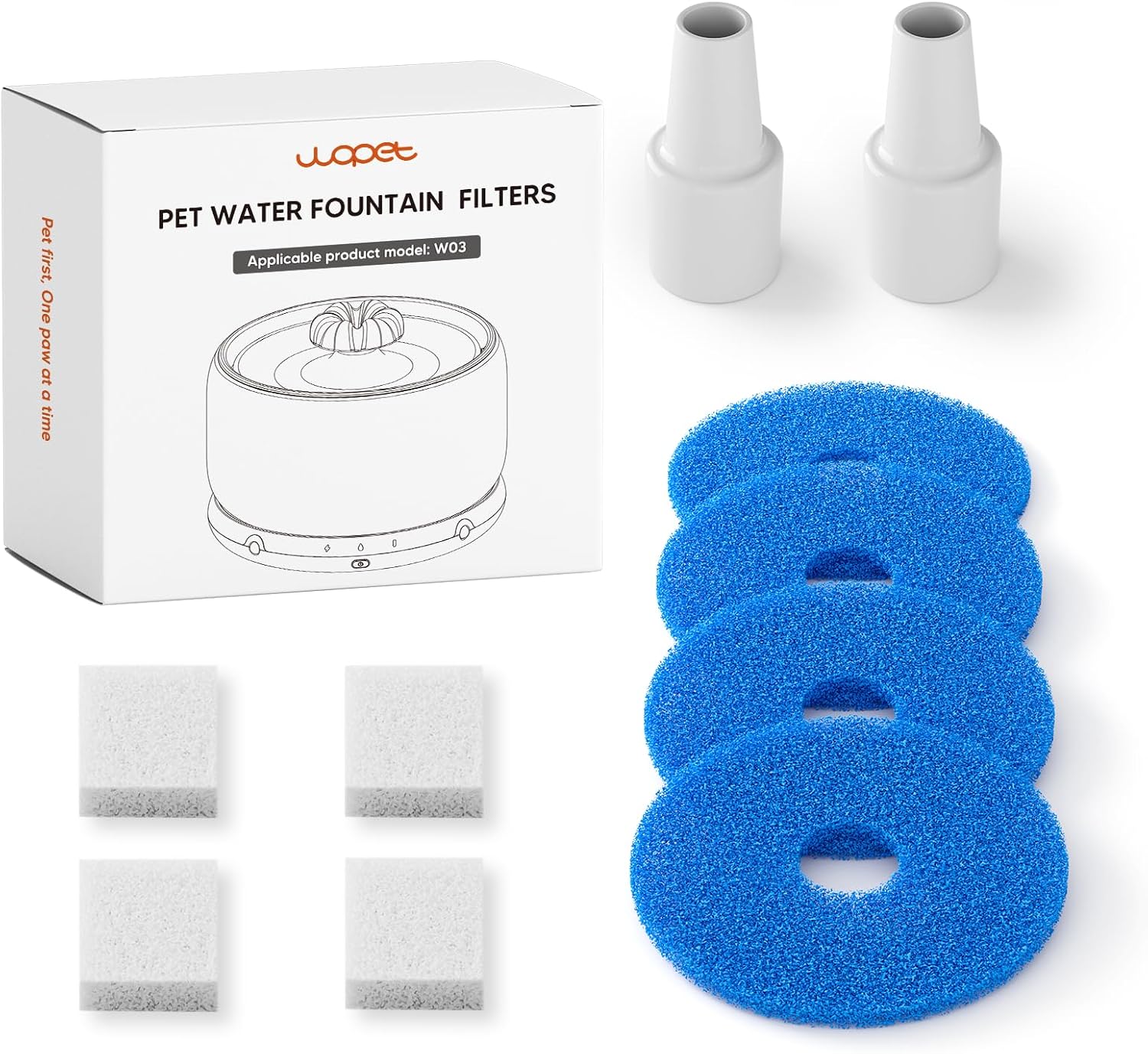
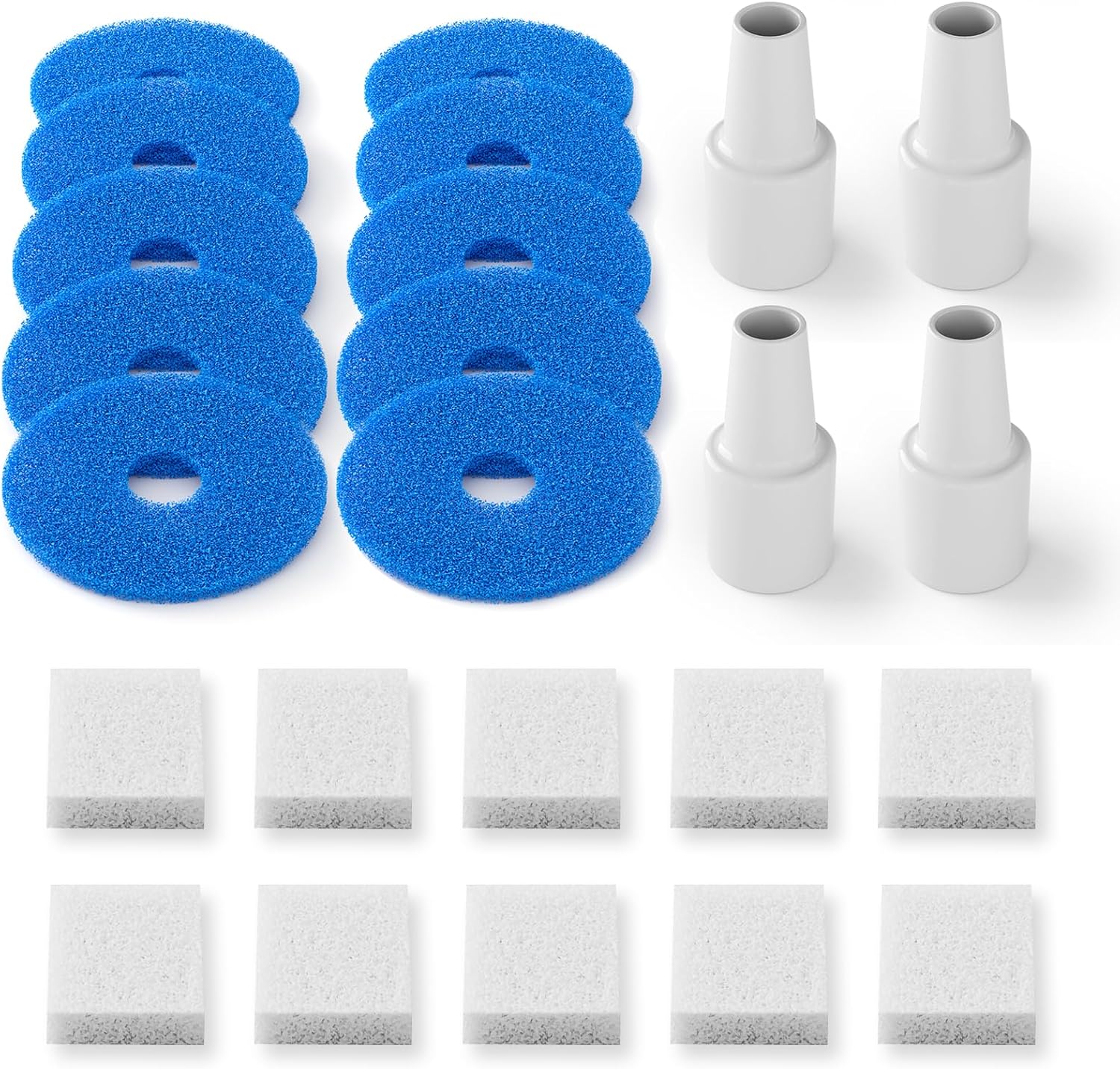
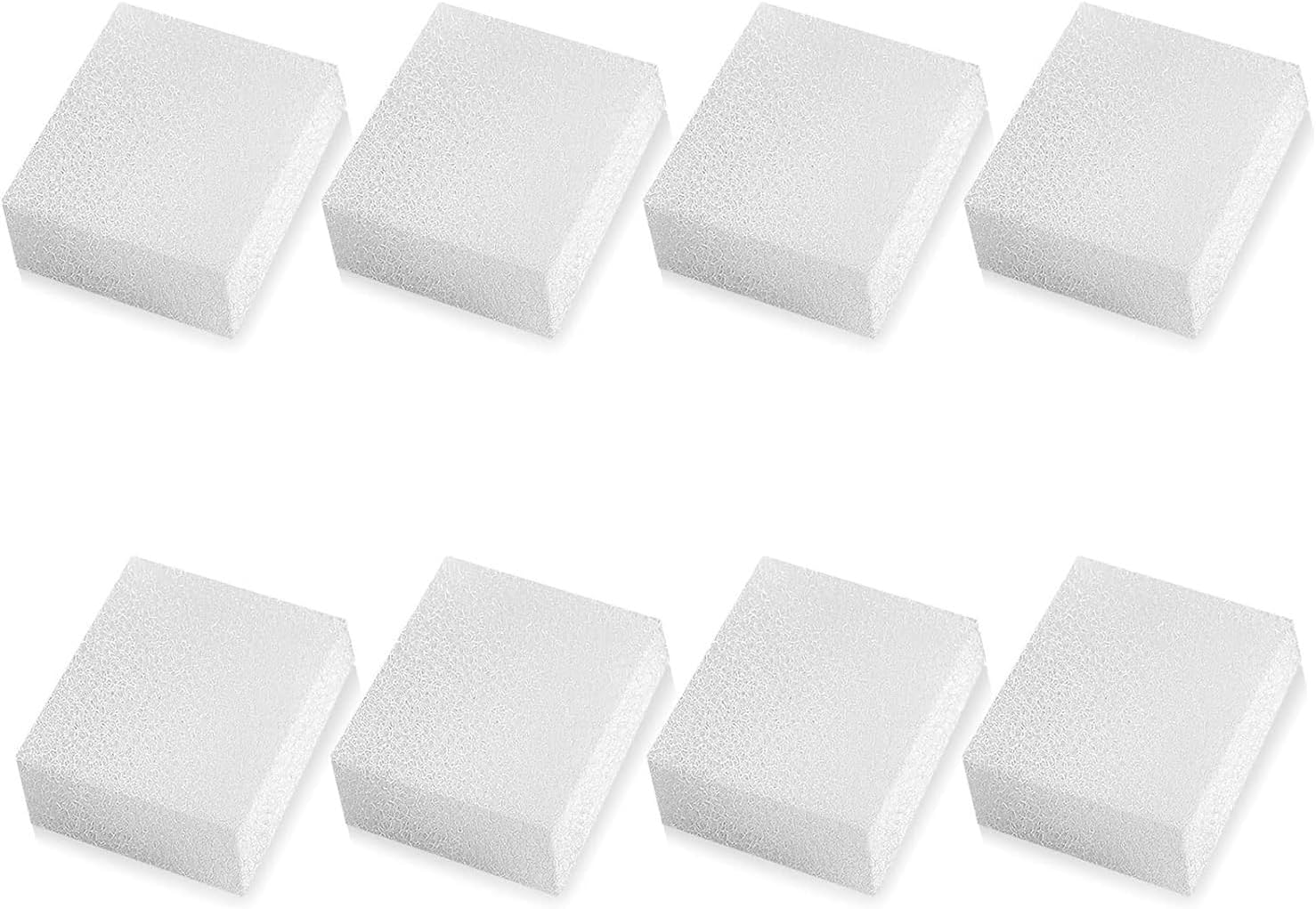
Some fountains use a cartridge and a separate protective sponge or prefilter. These parts can have different purposes and care instructions. Write down their names and the model they fit before ordering replacements.
For example, use the W03 and W03L replacement filter listing to check the matching product family, then confirm the exact cartridge and any other parts in the instructions supplied with your unit. Similar shape is not a compatibility guarantee across other models.
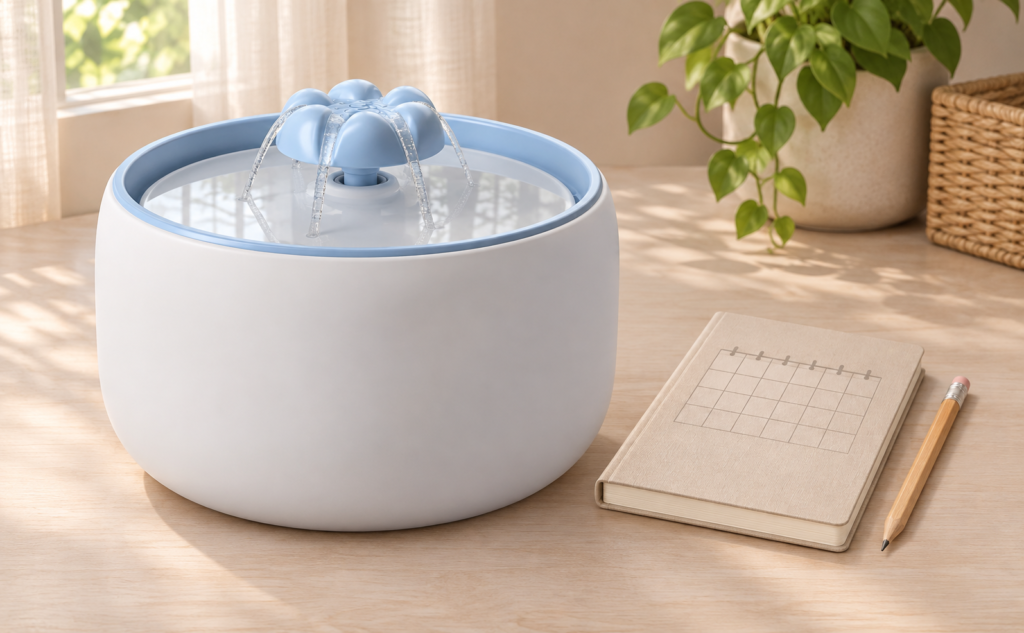
Turn the instructions into a calendar entry
When the manual gives an interval, copy it into a reminder with the model and part name. Record the installation date rather than relying on memory of when you bought the pack. A sealed spare in a drawer is different from a filter already installed in water.
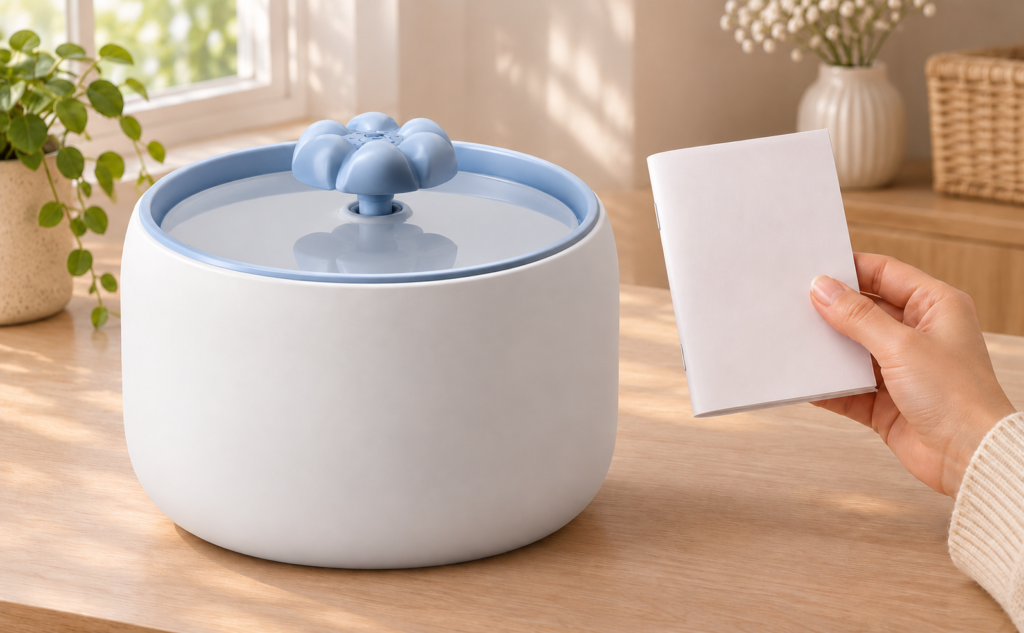
If the instructions are unclear or conflict with a listing, ask support which guidance applies to your version. Do not resolve that conflict by choosing the longest interval because it is more convenient.
The WOPET Help Center and manufacturer support directory help you locate the correct model information. This guide deliberately avoids assigning one WOPET model’s schedule to another.
A specific example from the W03 Lite manual
The wired W03 Lite manual gives different intervals for its consumables: primary filter cotton every 1–2 weeks and columnar core filter every 2–4 weeks under normal conditions. It also advises a two-week filter interval when shared by multiple pets. Use the instructions matching your version and ask support if the part or schedule is unclear. Do not apply these intervals to W03, A08 or another fountain by analogy.
| Consumable | Interval / instruction |
|---|---|
| Primary filter cotton | Every 1–2 weeks |
| Columnar core filter | Every 2–4 weeks |
| Shared by multiple pets | Manual advises a two-week interval |
| Other models | Use their own instructions |
Inspect condition between scheduled changes
Check for visible debris, unusual odor, changes in water appearance and reduced flow. These observations tell you to investigate; they do not establish which part is responsible. A clean-looking cartridge is not proof that it can stay in service beyond its stated interval.
If several pets use the same station, note how quickly debris appears. If the tray becomes dirty between checks, improve the care routine rather than expecting the filter to compensate. Keep notes about any changes in household use so the inspection routine can adapt.
Do not confuse a filter change with a full clean
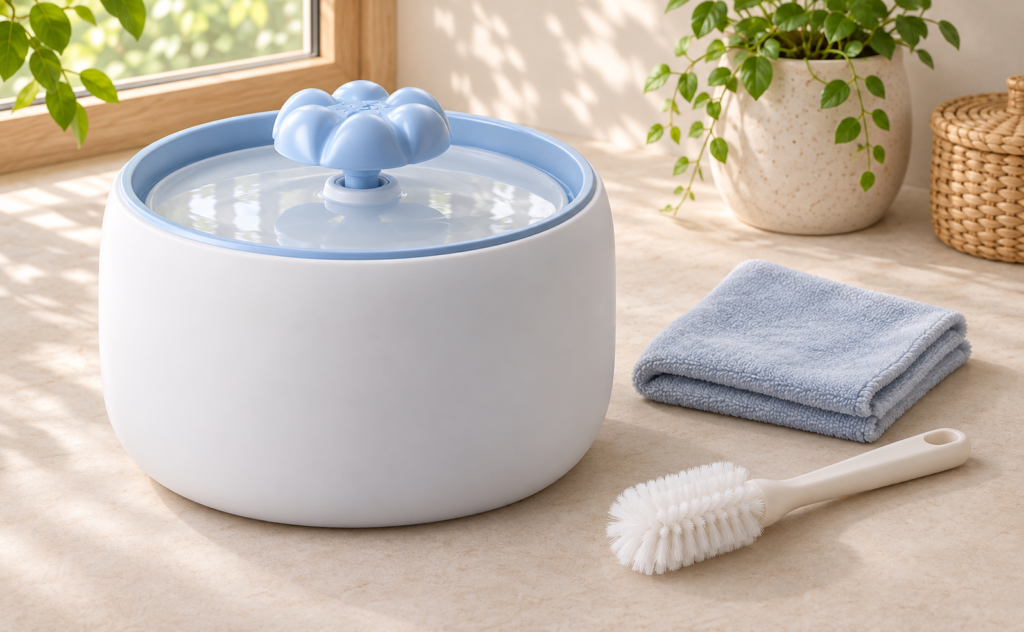
Empty and clean the approved components as directed. Check the tray, reservoir and accessible water path separately from the consumables. Replacing a cartridge while leaving residue in place does not clean those surfaces.
If odor or weak flow persists after correct maintenance, contact support with the model, filter type and installation date. Avoid adding cleaning chemicals to a cartridge or trying to extend its life through an unapproved treatment.
| Calculation | Hypothetical example |
|---|---|
| Four-pack price | USD 16 |
| Cost per cartridge | USD 4 |
| If changed every four weeks | About 13 cartridges per year |
| Annualized cartridge cost | About USD 52, other costs excluded |
Prepare replacements exactly as directed
Read the preparation instructions before installation. If the manufacturer specifies rinsing or soaking, follow the stated method. Do not assume all cartridges need the same preparation or that rinsing makes a disposable cartridge reusable.
Check orientation and seating before restarting the fountain. Retain the packaging long enough to verify that the delivered part matches the item you ordered. If the cartridge does not fit naturally, stop and check compatibility instead of trimming it.
Budget with actual replacement frequency
Calculate the cost per compatible cartridge from the current pack price, then multiply by the number you expect to use under the model’s schedule. Include other required consumables separately. Prices and pack contents change, so use the current listing rather than a permanent price quoted in a blog.
For illustration only, a hypothetical four-pack costing $16 would be $4 per cartridge. If a household used one cartridge every four weeks under its actual instructions, the annualized cartridge cost would be about $52 before shipping, tax or other parts. Those numbers are a budgeting example, not a WOPET price or replacement recommendation.
A record you can use
Keep five fields: model, part name, installation date, next change based on the manual, and observations. Add a photo of the packaging when buying an unfamiliar replacement. That small record prevents confusion between a filter change and a reservoir clean.
Plan surface care separately with the fountain cleaning checklist.
If a correct filter replacement does not restore normal flow, use the no-flow troubleshooting guide.
Common replacement questions
Can I wait until the water smells? Follow the scheduled interval rather than using odor as the only signal. Investigate odor when it appears.
Can I rinse and reuse a disposable filter? Only if its manufacturer explicitly describes that use. A rinse is not evidence of restored performance.
Will a new filter solve every flow problem? No. Incorrect assembly or debris elsewhere may also affect operation. Browse our water fountain guides to separate maintenance tasks before buying parts you may not need.
About this guide
Prepared with AI assistance using the linked product and care resources. Product and replacement-part images are from the product catalog. Images identified as AI-generated are illustrative lifestyle scenes based on product reference photos. No hands-on performance testing is claimed.