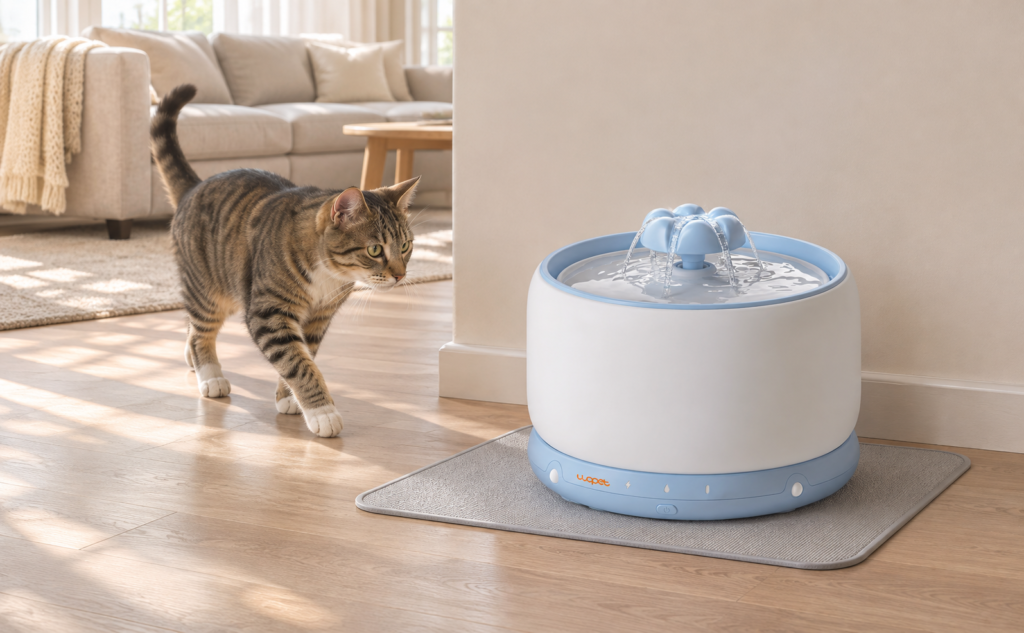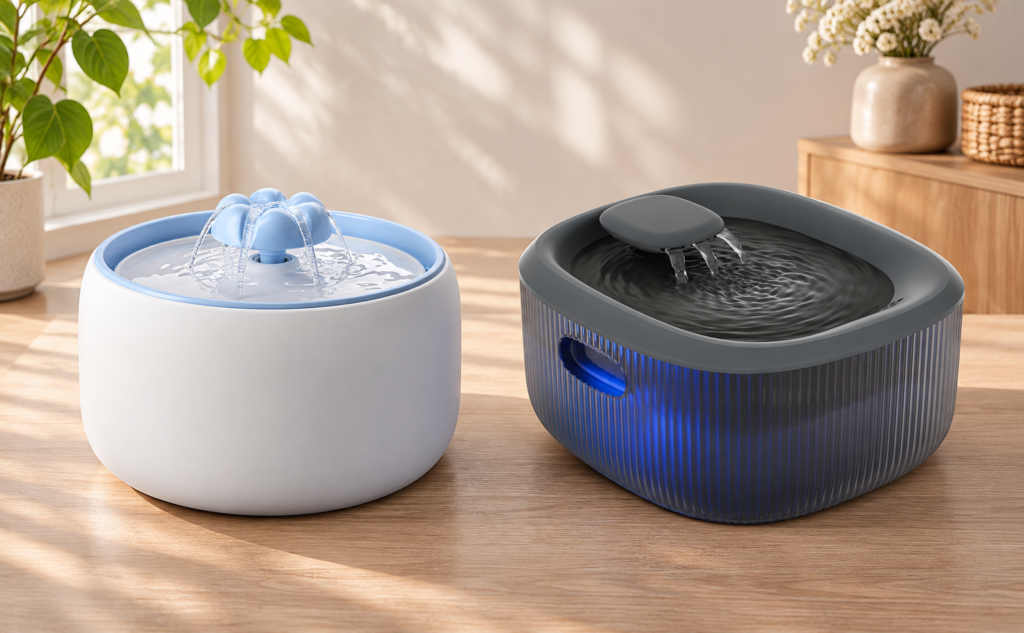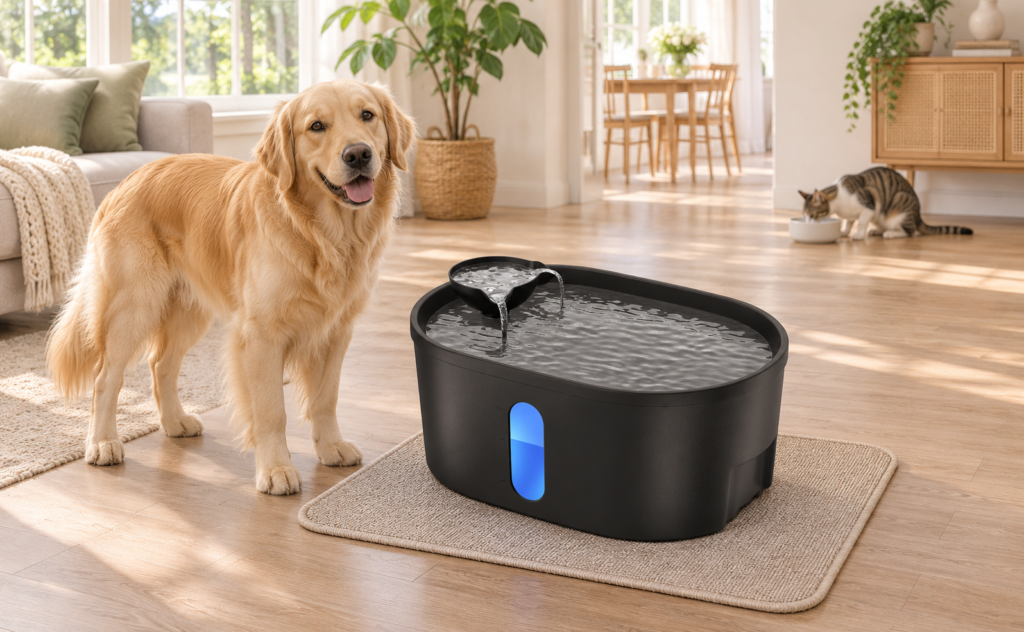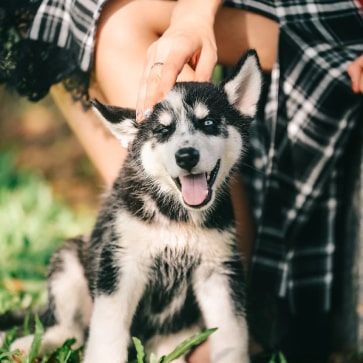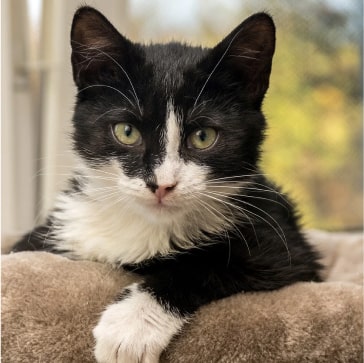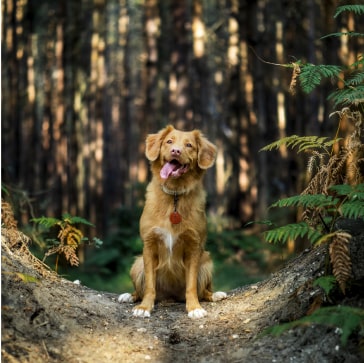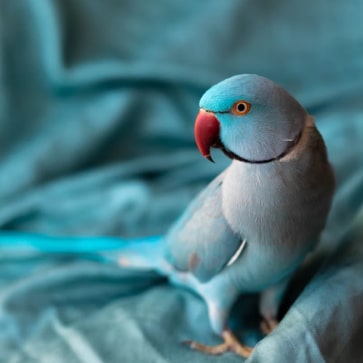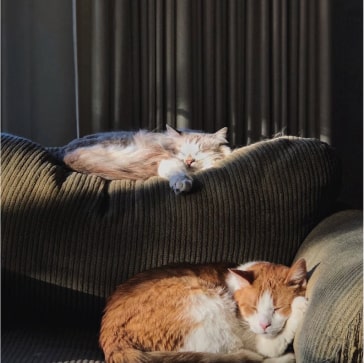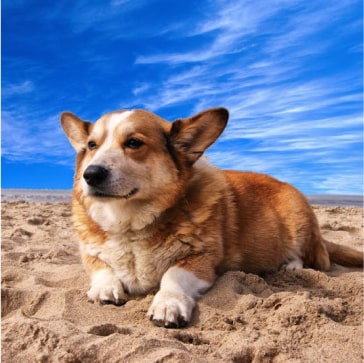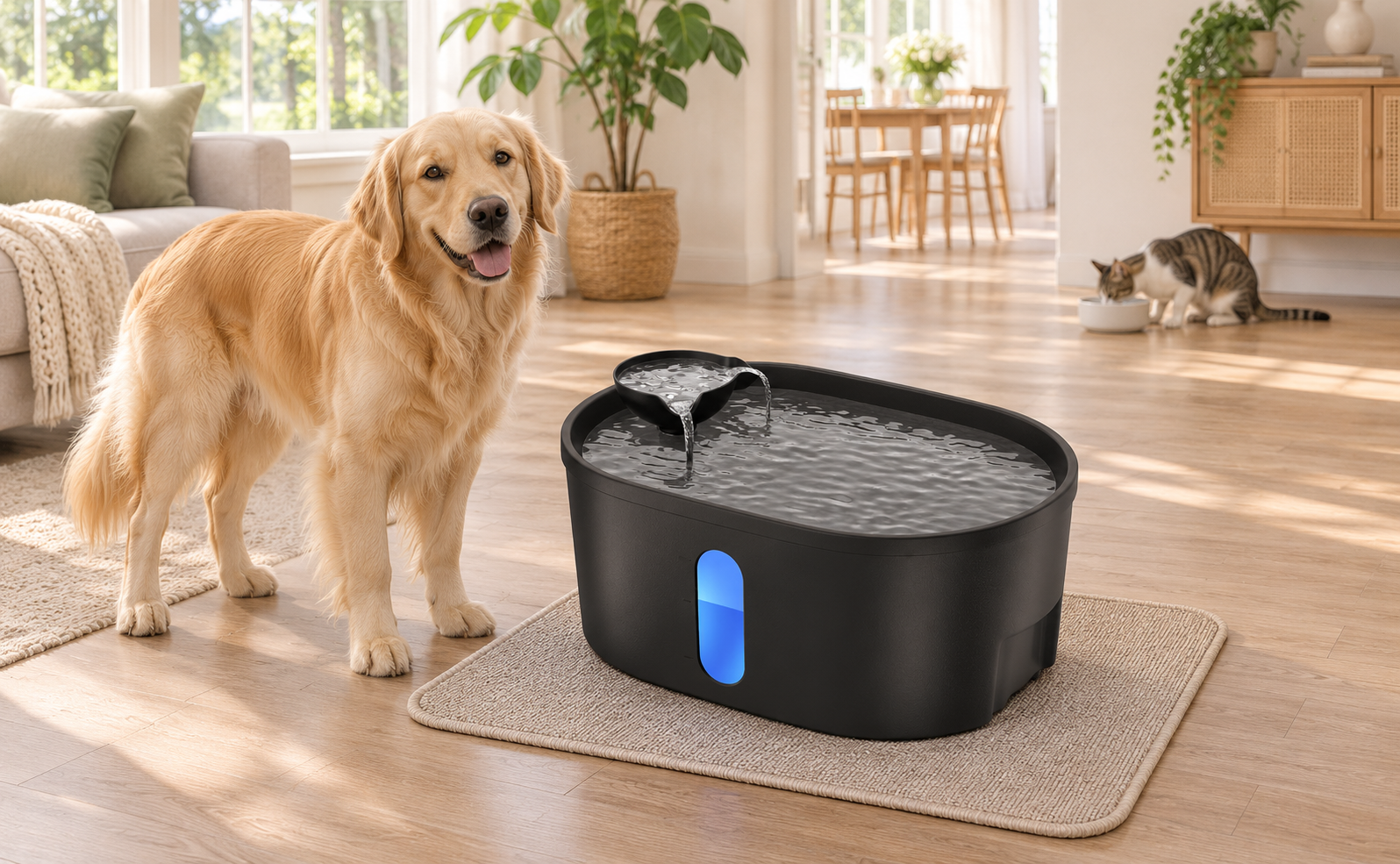

Choose a multi-pet fountain by considering usable water volume, drinking access and the frequency of your daily checks. The number printed on the reservoir does not tell you whether every pet can comfortably reach water or whether one pet can block another.
A larger fountain can reduce refill pressure, but it should not be used to calculate how long pets can be left without someone checking on them.
Measure water disappearance before choosing capacity
Use a marked jug to record how much water you add over several ordinary days. Start and finish each observation at the same water level and note spills, cleaning changes and other bowls in use. This gives a household planning figure, not an exact measure of what each pet drinks.
If the dog splashes a large amount onto the mat, the reservoir may empty faster without the pets drinking more. If cats use several bowls, measuring only the fountain misses part of their water use. Write those limitations next to your observation.
| Calculation | Result |
|---|---|
| Fill level minus minimum | 3.0 L minus 0.5 L = 2.5 L |
| Observed disappearance | 0.8 L per day |
| Volume divided by disappearance | About 3.1 days of volume |
| This does not establish | A safe unattended care interval |
Allow for the minimum operating level
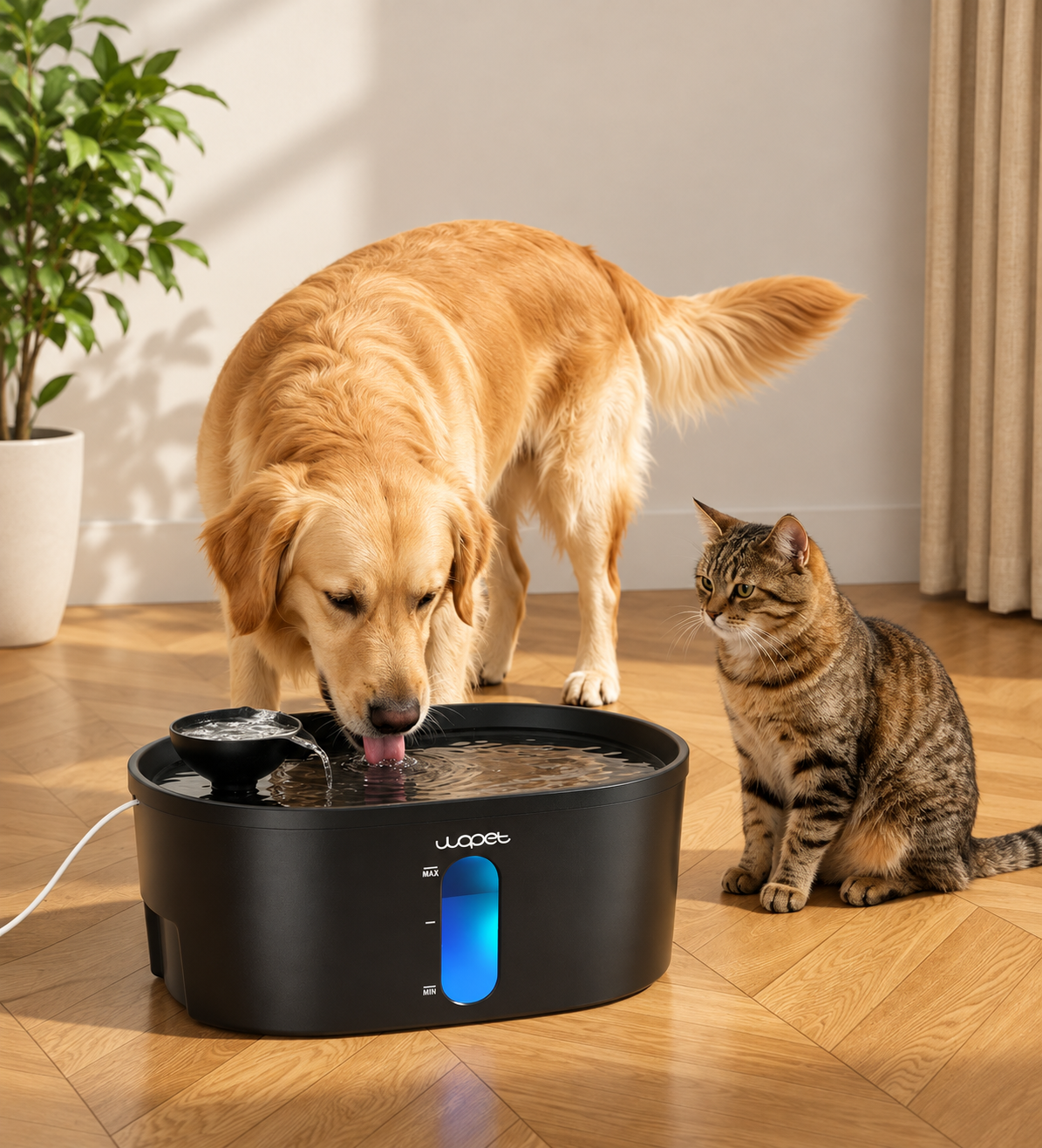
Advertised capacity and the water available before the unit reaches its minimum operating level may differ. Check the model’s markings and instructions. A reservoir should be refilled before operation is affected, rather than run down to an arbitrary empty point.
Here is a planning example with invented numbers: suppose a unit is filled to 3.0L and its stated minimum leaves 0.5L in the reservoir. The usable band is 2.5L. If observed disappearance is 0.8L per day, that represents about 3.1 days of volume in that band. It does not establish water freshness, uninterrupted operation or a safe unattended interval. Continue daily care and checks.
Compare the drinking area and the reservoir separately
A deep reservoir under a narrow opening can hold plenty of water while offering limited access at the top. A broad tray may be easier for a larger muzzle to approach but still need frequent refilling. Compare opening size, approach space and stability as well as volume.
Watch normal use. Does a larger dog stand across the cat’s approach? Does a timid pet wait until another leaves? Do splashes make the nearby floor slippery? Those observations tell you about the station’s layout, not simply its capacity.
Add separate water locations
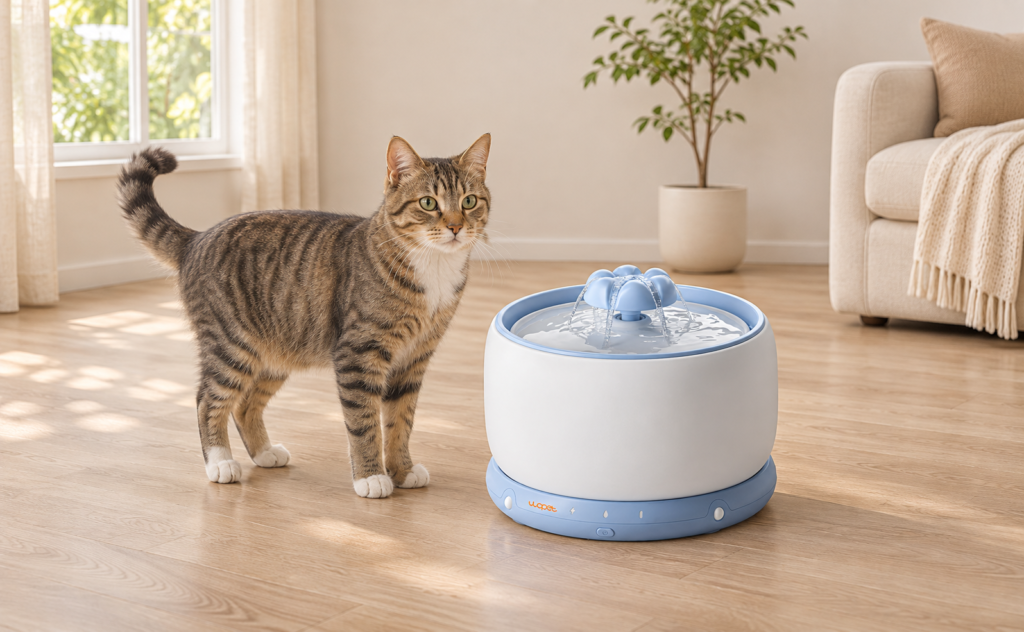
In multi-cat homes, International Cat Care recommends water in more than one location. Apply that access principle when a cat shares a home with a dog: a second suitable drinking location may be more useful than increasing one reservoir alone.
Do not place all water stations together if the goal is to offer a choice of access. Consider routes the pets use, whether a pet can retreat comfortably and whether a doorway becomes a bottleneck. A fountain and a plain bowl can serve different locations.
Consider the weight you will carry
Each liter of water adds roughly one kilogram before the container’s own weight. An 8L fill therefore adds about 8kg of water. Think about the distance to the sink and how you will empty and refill the unit without lifting more than is comfortable for you.
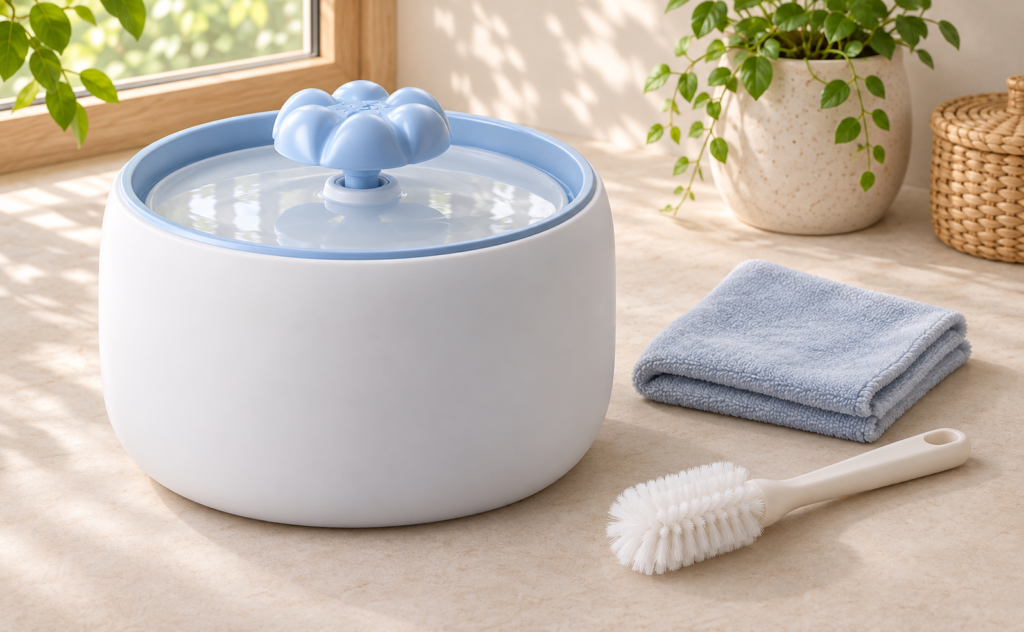
Look for a routine that works with the actual design: filling in place with a jug may be possible, while cleaning still requires moving permitted parts. Check the instructions and do not lift a fountain by a component that is not intended as a handle.
Where A08 fits in the comparison
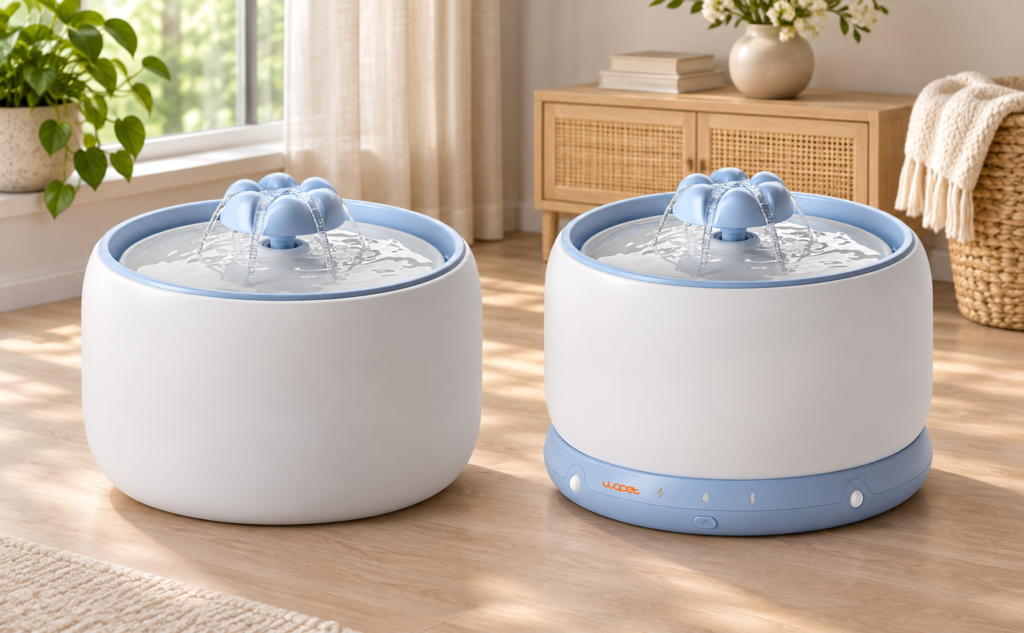
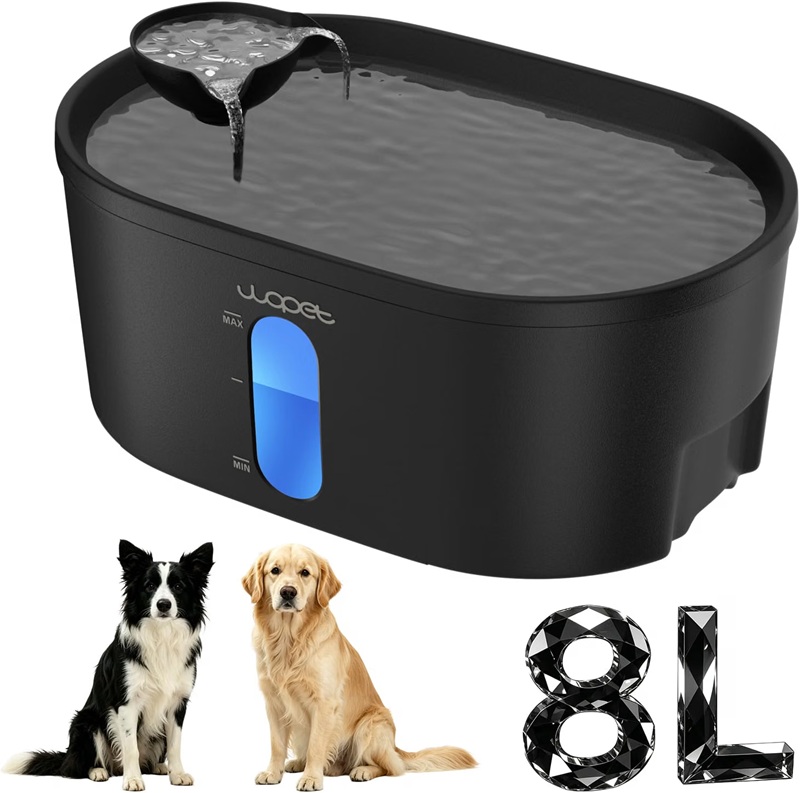
WOPET A08 is positioned for dogs and multi-cat homes, and the manufacturer lists an 8L version. That makes it relevant to compare when reservoir size matters. It does not establish that it is right for every large dog or every group of cats. Check the drinking area, floor space and maintenance instructions in the WOPET support directory.
For a smaller household, a smaller fountain plus another water station may fit the room and cleaning routine better. Choose around access and handling as well as reservoir size.
A short household trial
Record fill level, water added, spills, access problems and cleaning observations. Review them after several ordinary days, including a busier day when your schedule differs. Use the record to adjust placement or capacity; do not use it to infer a medical change in one pet’s intake.
Compare the rest of the household requirements with the fountain buying checklist.
If water remains in the reservoir but flow stops, use the troubleshooting checklist.
Common capacity questions
Is one large fountain enough for several pets? Not if access is poor. Keep suitable alternatives available and observe each pet.
Should I fill the largest model to the brim? Follow its maximum and minimum markings instead.
Can a capacity formula replace daily checking? No. Volume calculations do not verify water condition or device operation. Browse our water fountain guides for help comparing maintenance and power alongside size.
About this guide
Prepared with AI assistance using the linked product and care resources. Product and replacement-part images are from the product catalog. Images identified as AI-generated are illustrative lifestyle scenes based on product reference photos. No hands-on performance testing is claimed.