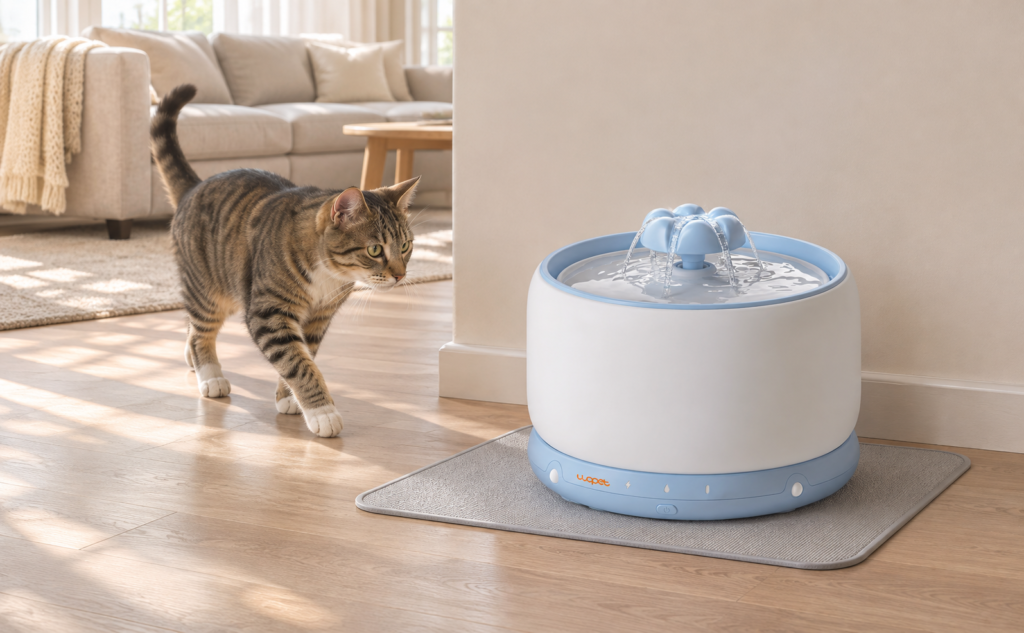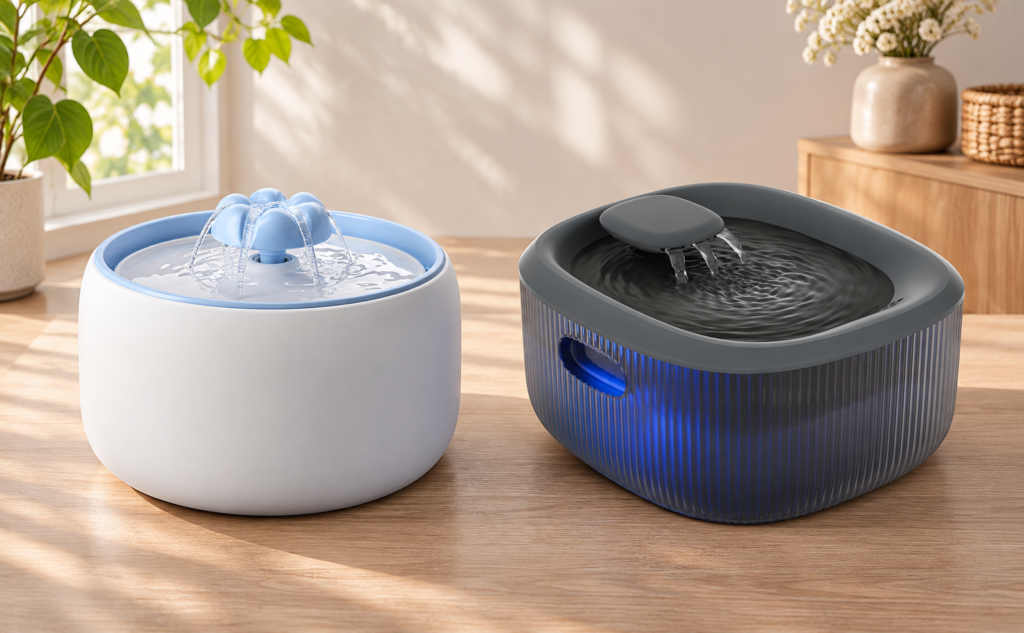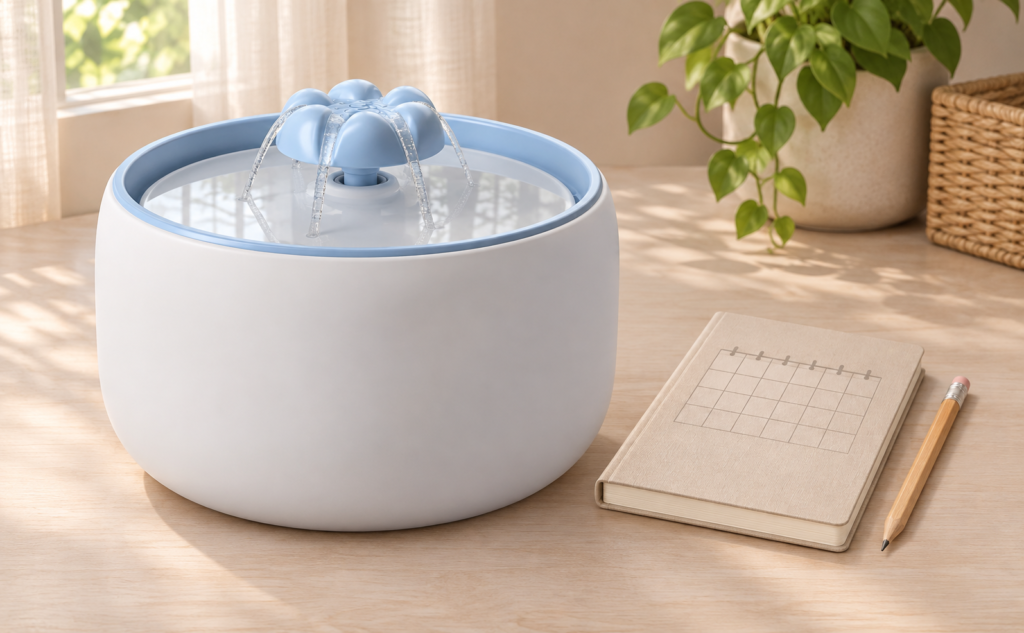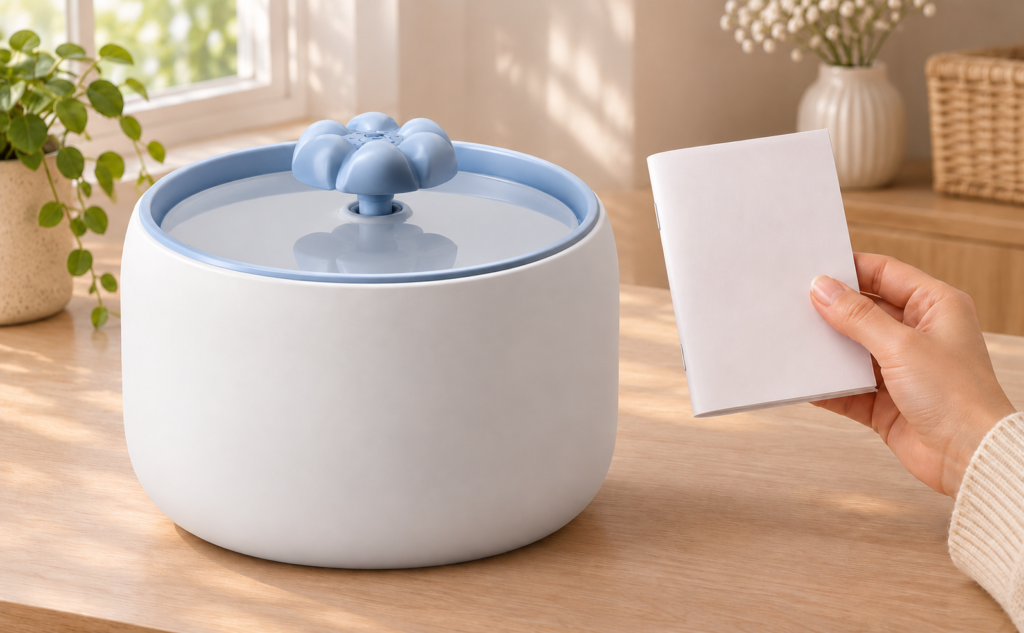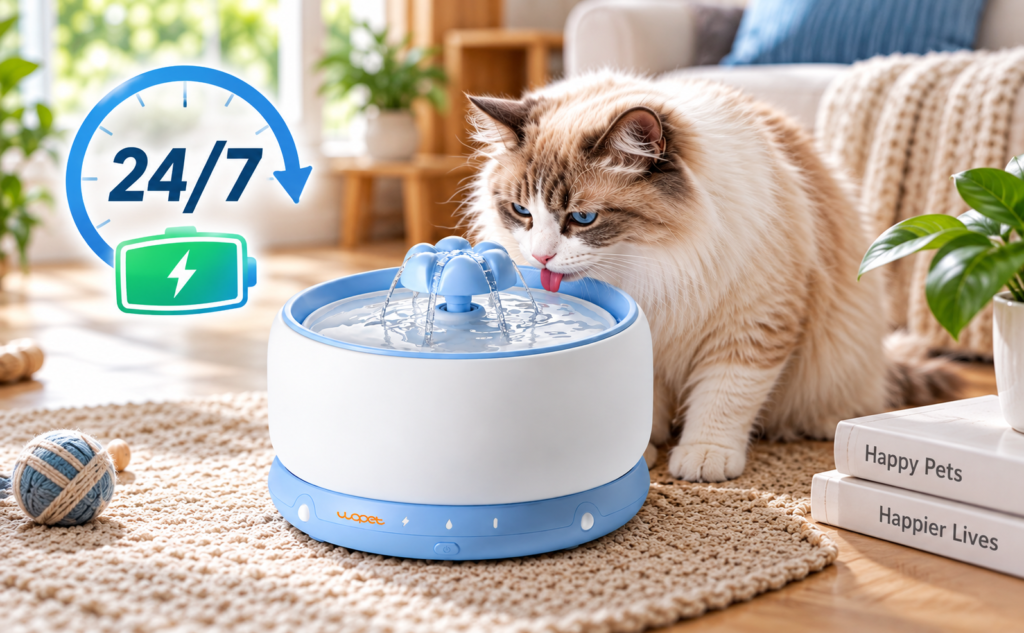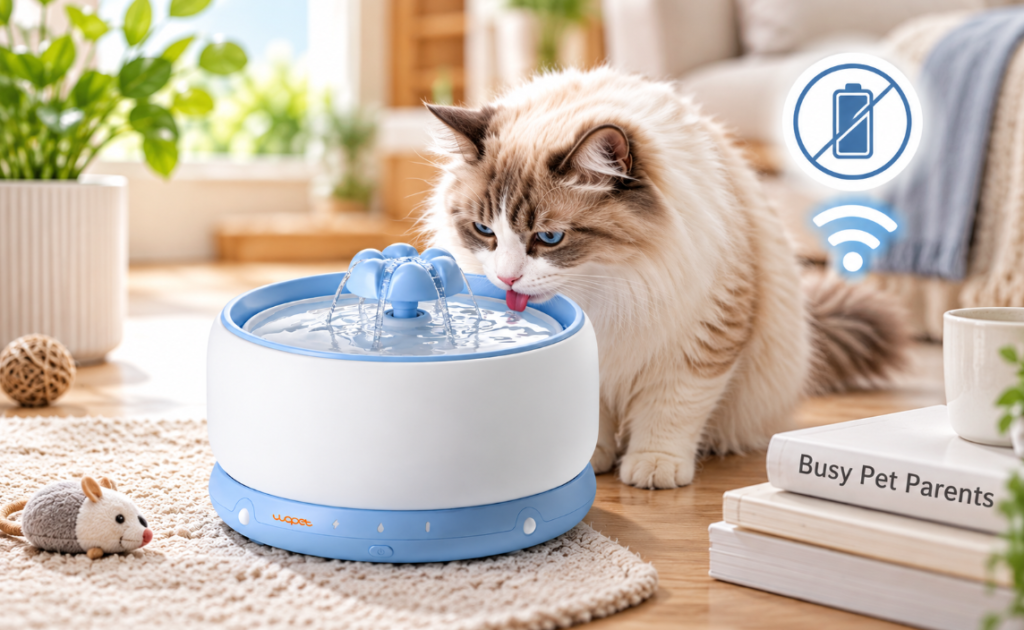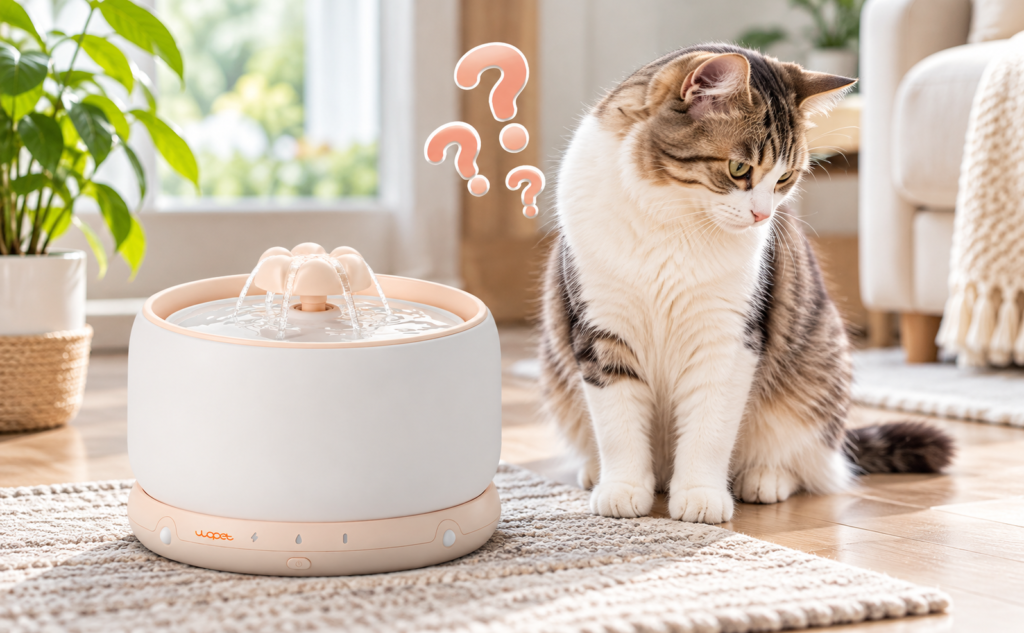

Choose a wired cat water fountain when a suitable outlet is available in a good drinking location and you prefer a routine without battery charging. Choose cordless when placement flexibility is more valuable and you can manage charging reliably. Compare cleaning, access and replacement parts separately from power.
Neither option is automatically better for every home. The most useful comparison starts with your room and the tasks the owner must perform.
Clarify what cordless means for the model
A cordless fountain can run without a cable connected during normal use, but it may still need a cable or charging base to recharge. “Wireless” can also describe a particular internal connection. Read the operating instructions rather than deciding from a listing’s short label.
Do not infer app control, Wi-Fi, a motion sensor or a particular battery duration from the word cordless. Those are separate features that need their own model-specific confirmation.
| Wired | Cordless |
|---|---|
| Needs a suitable outlet | Needs a charging routine |
| Plan a safe cable route | Check charge and base placement |
| Disconnect for maintenance | Follow battery shutdown steps |
| Check actual flow modes | Check actual flow modes |
Compare the real household tradeoffs
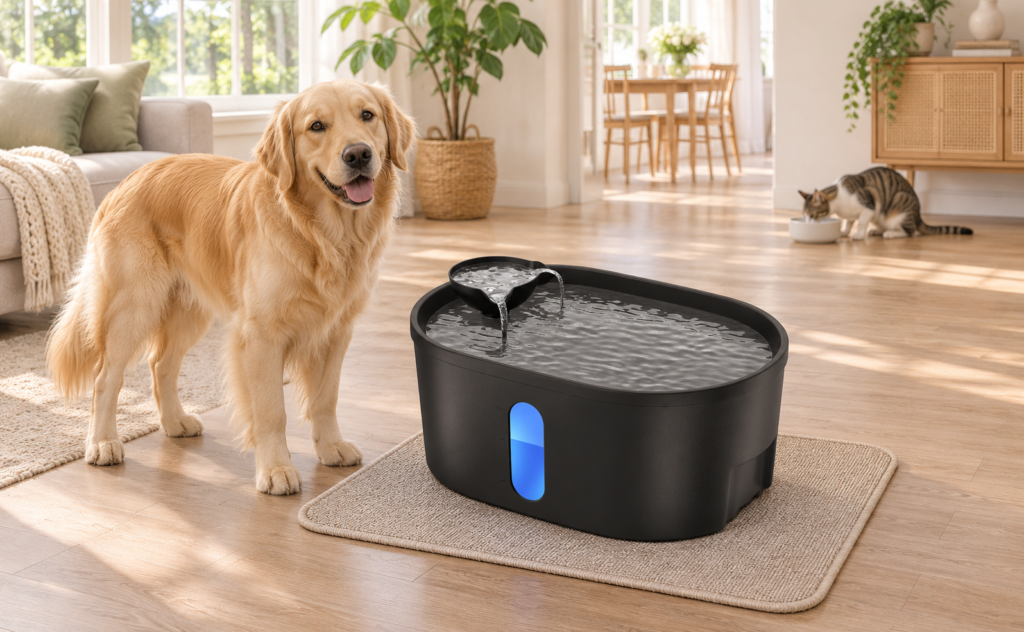
A wired model ties placement to a suitable power source. It may suit a permanent drinking station where the cord can be routed safely and the unit can be disconnected for maintenance. If the convenient outlet is beside a busy doorway, look for a better location before deciding power convenience should win.
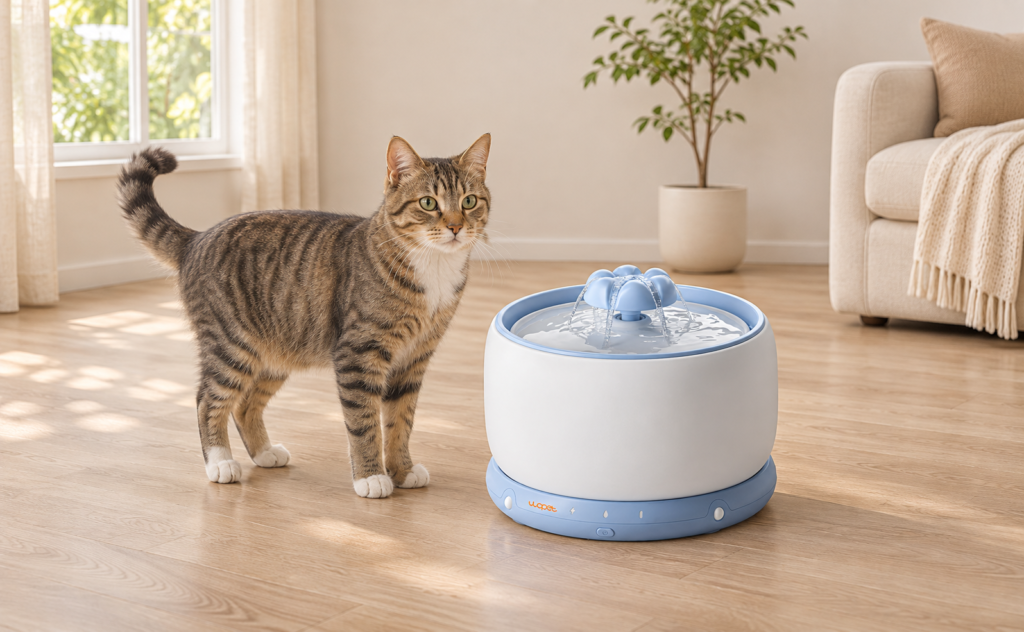
A cordless model can make it easier to try a quiet position without extending a cable across the room. That flexibility comes with charging and battery-condition checks. Consider who will notice a low battery and what water option remains available while charging.
For operating details rather than broad labels, see whether a wireless fountain can run all day.
Separate flow mode from power source
Continuous, timed and triggered flow are different operating modes. A fountain may offer one or several, depending on its design. The power source alone does not tell you which mode is available or what happens when the battery runs low.
Before buying, ask for the mode descriptions and the conditions attached to any runtime figure. A result measured under one setting should not be promised under another. If a product’s battery claim lacks a stated mode, ask for clarification instead of using it to plan unattended care.
| W03L | W03 |
|---|---|
| 3L ceramic fountain | 3L ceramic fountain |
| Wired model | Cordless model |
| Wired model without a rechargeable base | Cordless model with its rechargeable base |
| Use its own instructions | Use its own instructions |
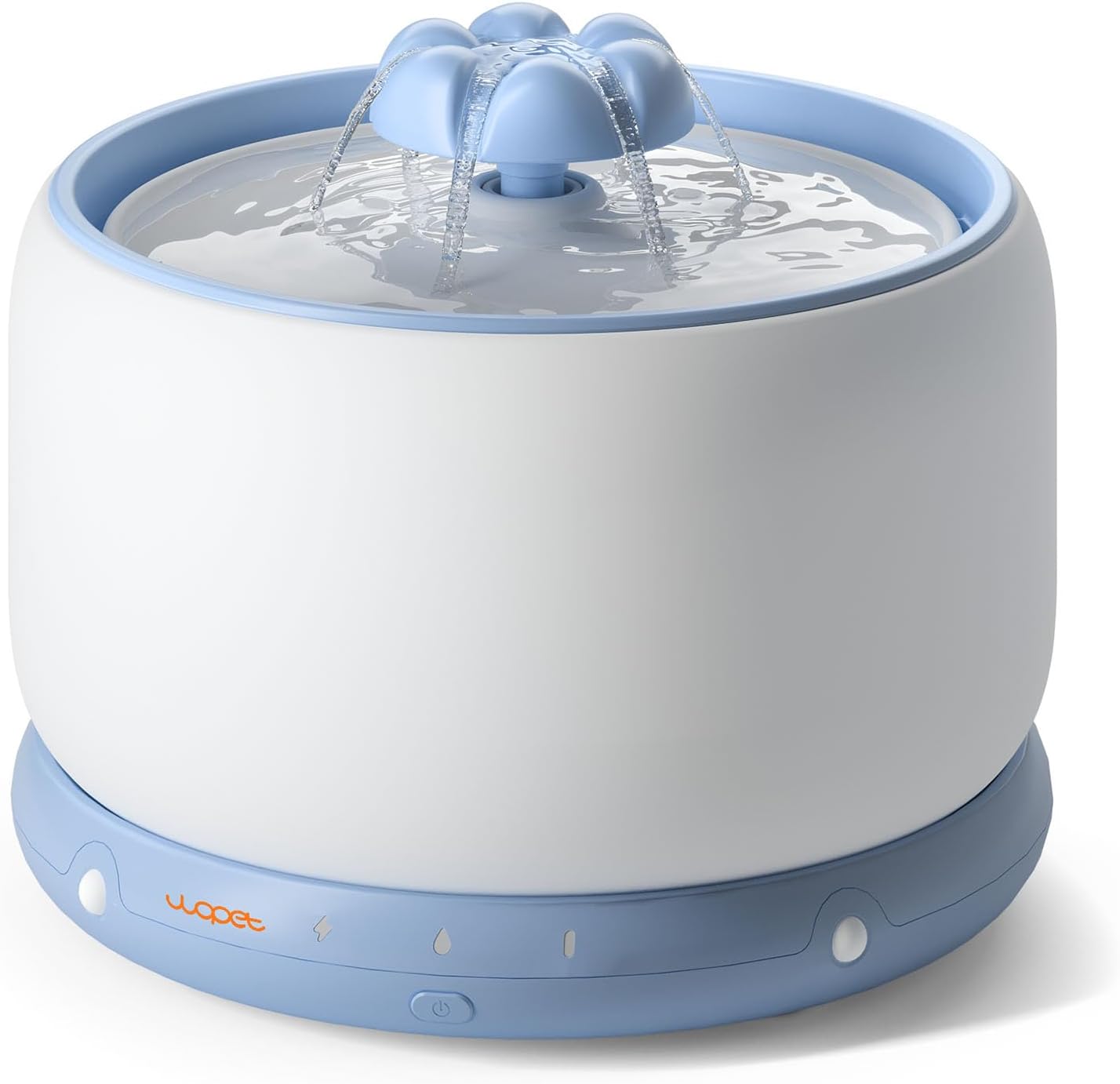
Use W03L and W03 as a focused example
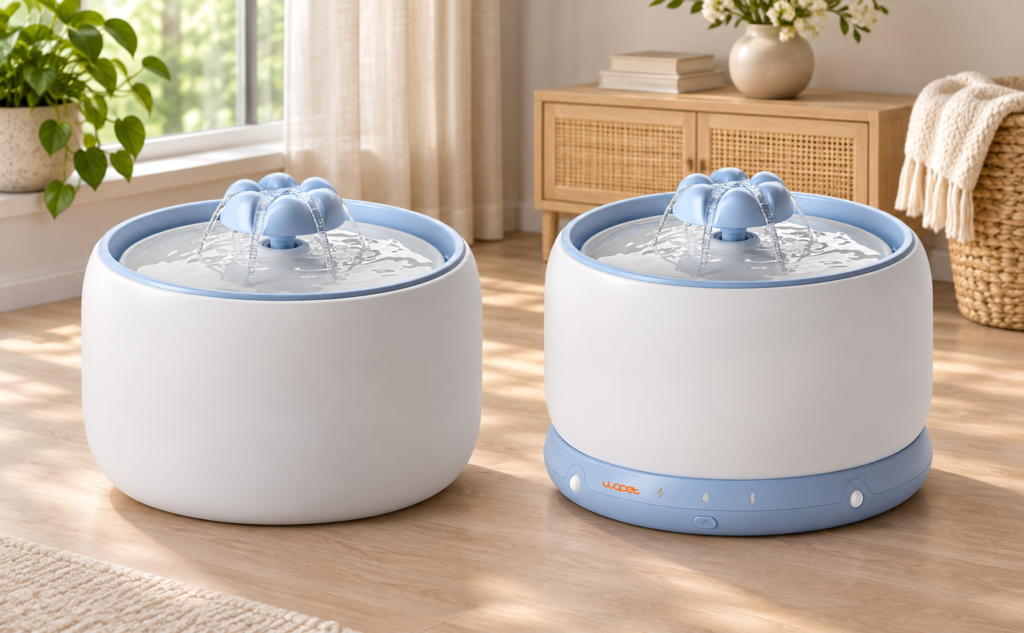
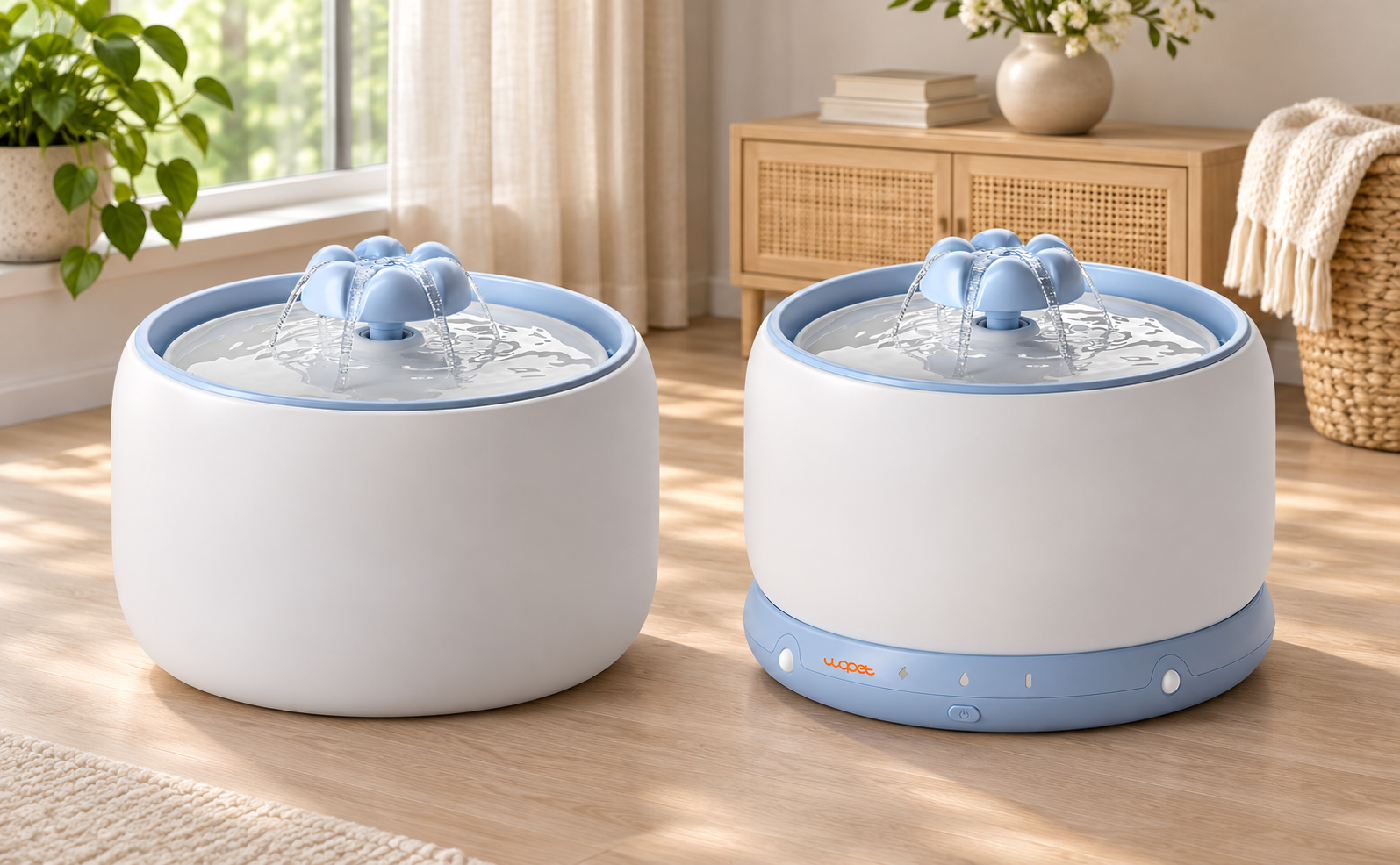
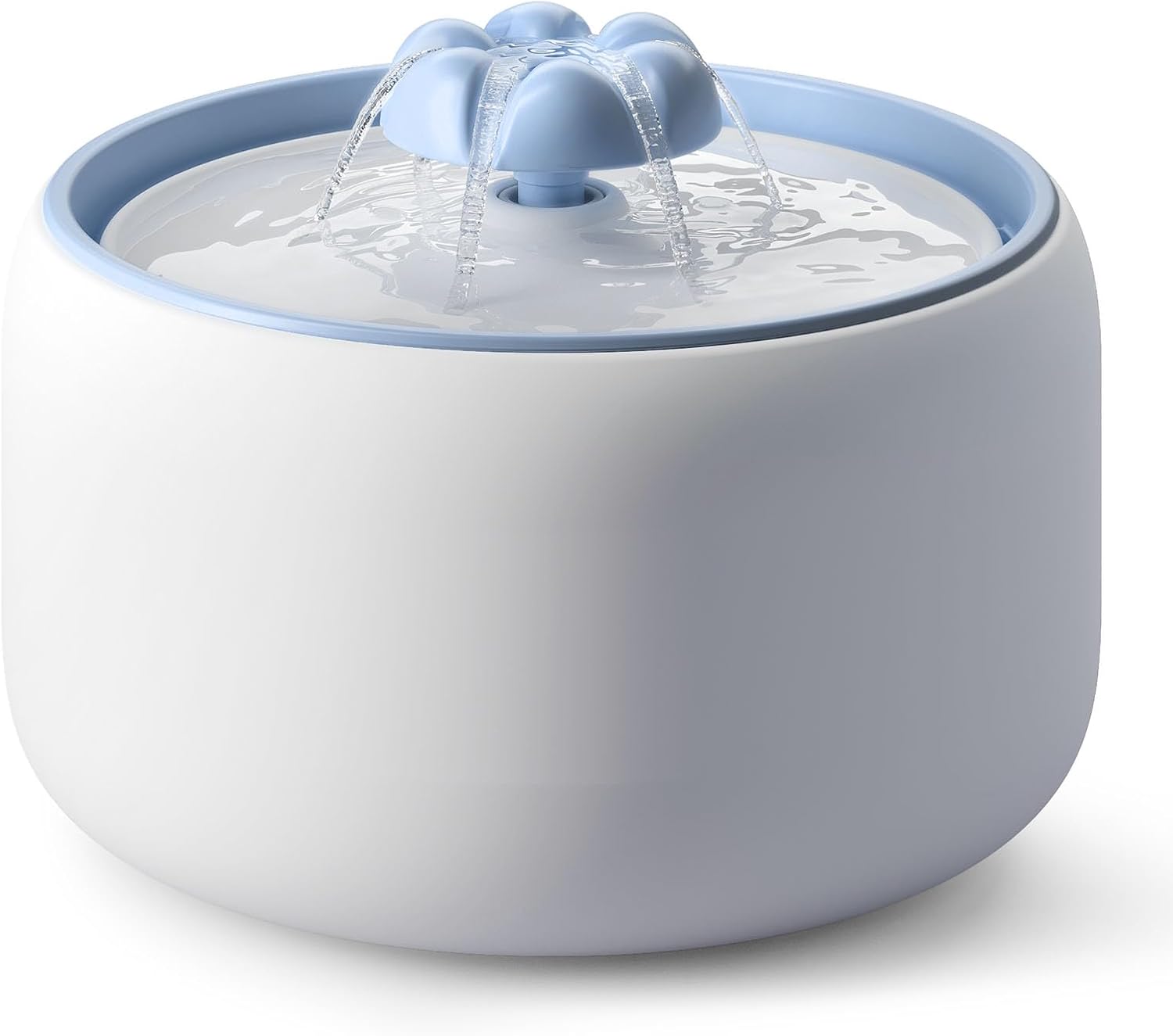
WOPET W03L and W03 are both 3L ceramic fountains. W03L is wired; W03 is cordless. Their similar appearance makes them a useful reminder to compare the complete model name, including the power arrangement.
For product details, review the W03L ceramic fountain listing and the W03 cordless ceramic fountain listing. Check the instructions supplied with the actual unit before using or charging it. This comparison does not claim a measured runtime or a noise advantage for either model.
Put cleaning on both sides of the comparison
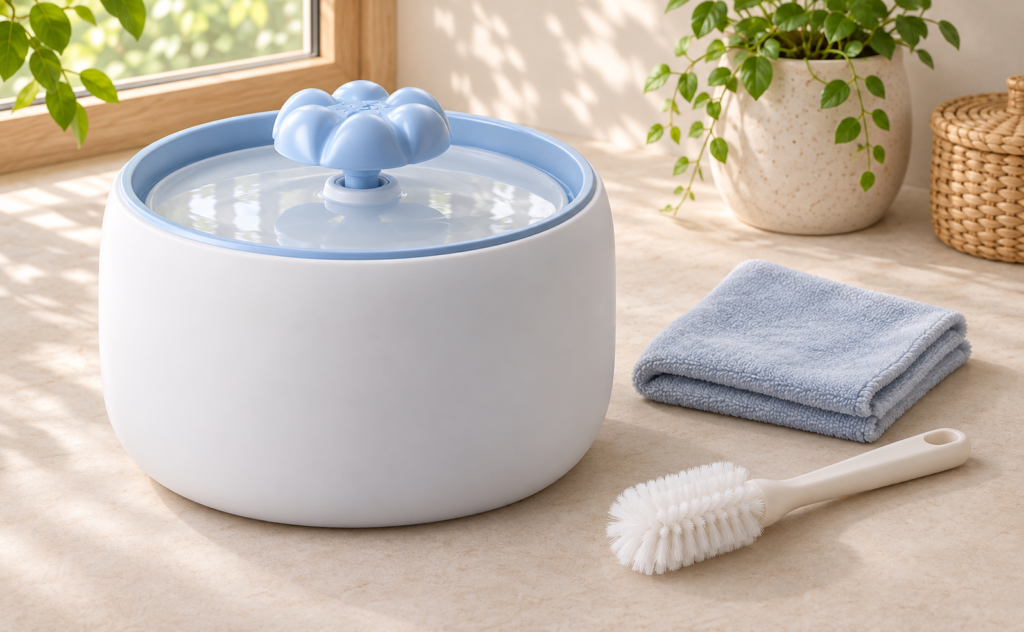
Ask how the tray and reservoir lift out, where electrical parts remain during washing and how the water path is accessed. Cordless does not mean the entire assembly is waterproof. Wired does not mean every water-contact part is permanently attached.
If cleaning access is your main concern, start with the assembly diagram and list the removable pieces. A more convenient power arrangement will not compensate for a maintenance task you cannot comfortably perform.
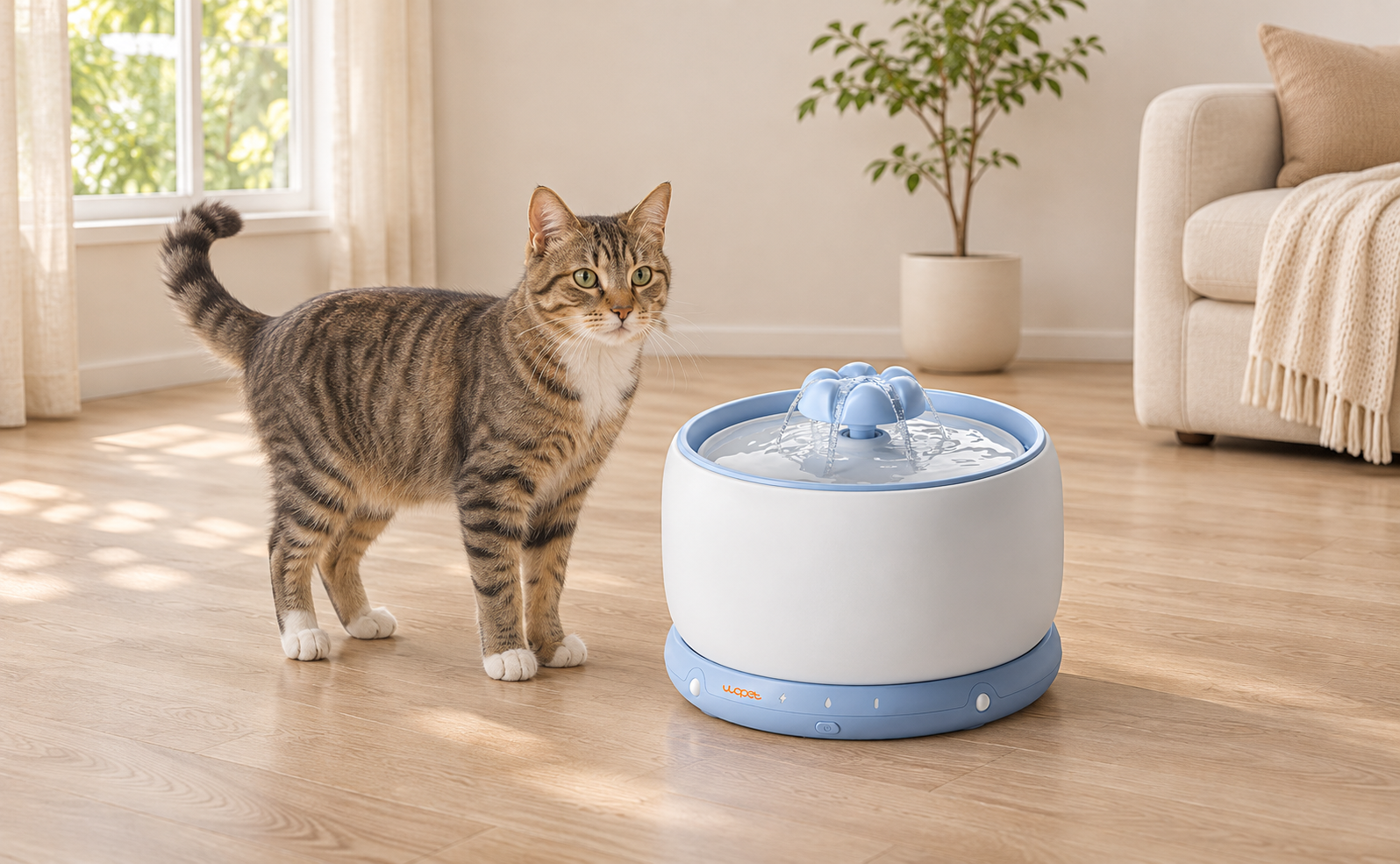
Match the choice to an actual routine
For a person who already has a suitable drinking station beside an outlet, wired operation may be a simple fit. For a renter whose quiet room corners are away from outlets, cordless may offer a better layout. For a household where people frequently forget to charge devices, consider whether the extra charging task is realistic.
These examples help define the decision; they are not evidence that one power type changes a cat’s behavior or health. Observe your own cat’s use without removing familiar water options during the transition.
To evaluate the room before choosing power, use the apartment placement guide.
To compare the remaining product requirements, return to the complete buying guide.
Questions to resolve before buying
Does cordless mean no power-related maintenance? No. Read the charging procedure, battery indications and permitted operating conditions.
Will a wired fountain keep working in a power cut? Only if the specific model has a supported backup arrangement. Do not assume it does.
Is the longest battery claim the best choice? Only if the operating mode and care routine also fit. Start with our wireless fountain feature checklist and compare the features you will actually use.
Use the water fountain guide collection to compare other practical questions. Pick the power arrangement you can support consistently in the location your home allows.
About this guide
Prepared with AI assistance using the linked product and care resources. Product and replacement-part images are from the product catalog. Images identified as AI-generated are illustrative lifestyle scenes based on product reference photos. No hands-on performance testing is claimed.