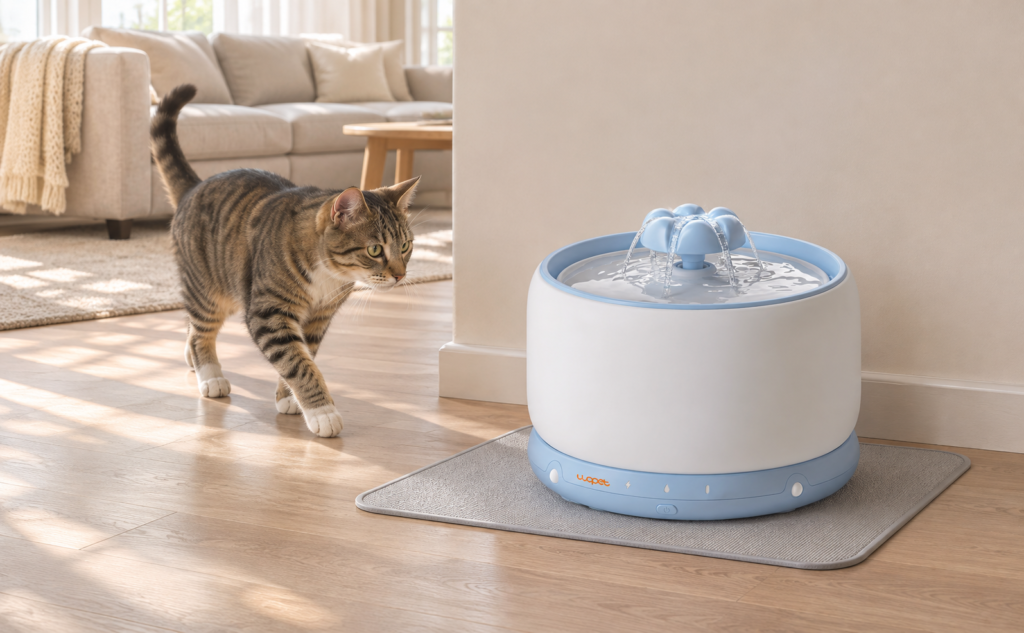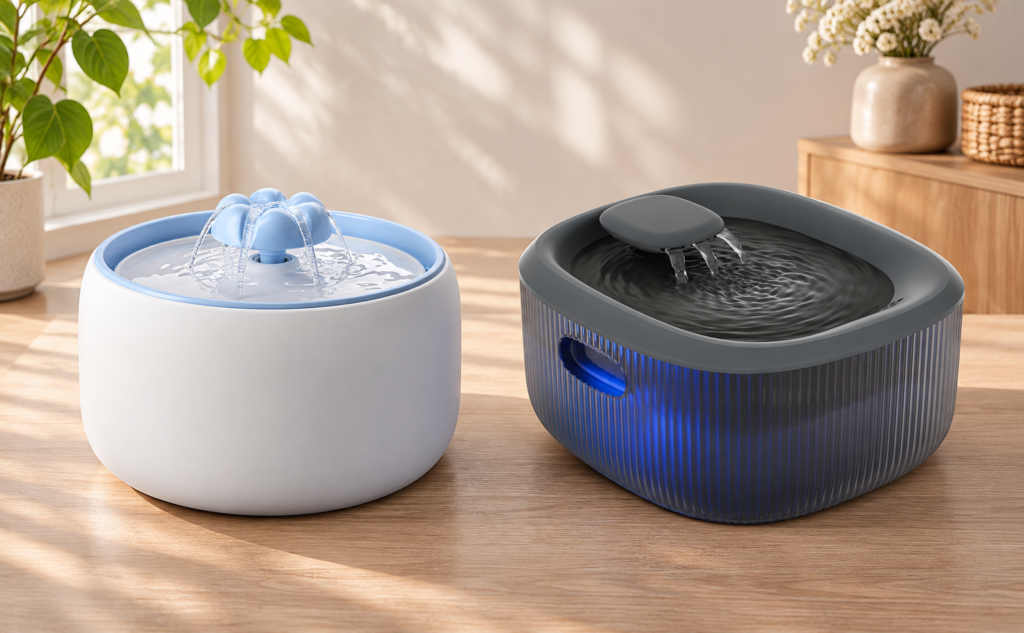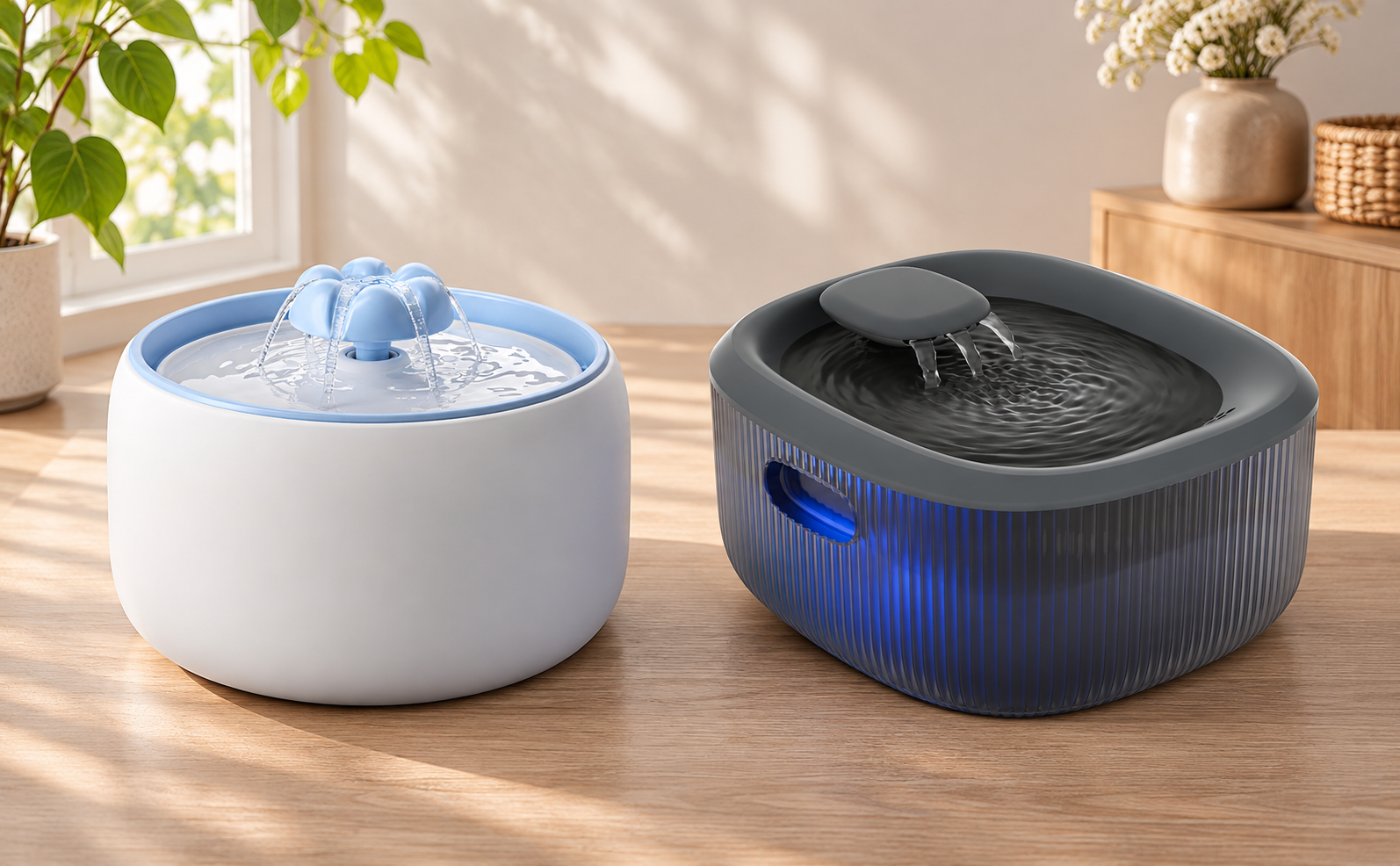

Choose between ceramic and plastic by comparing the complete fountain’s weight, shape, condition and care instructions. Material matters, but it does not by itself establish cleanliness, durability or how readily a cat will use the device.
This comparison helps you make a household decision. It does not rank products from laboratory tests or claim that one material prevents illness.
Compare the parts that actually contact water
A product described as ceramic may still contain plastic components, a filter and electrical parts. A plastic fountain may have several different materials within the water path. Identify the reservoir, drinking tray and outlet rather than assuming the marketing label describes every component.
Check the manufacturer’s documentation for the finished product. Terms such as food-contact suitable or BPA-free should be supported for the relevant parts. They are not proof that a fountain never needs cleaning or that all products made from that material have identical properties.
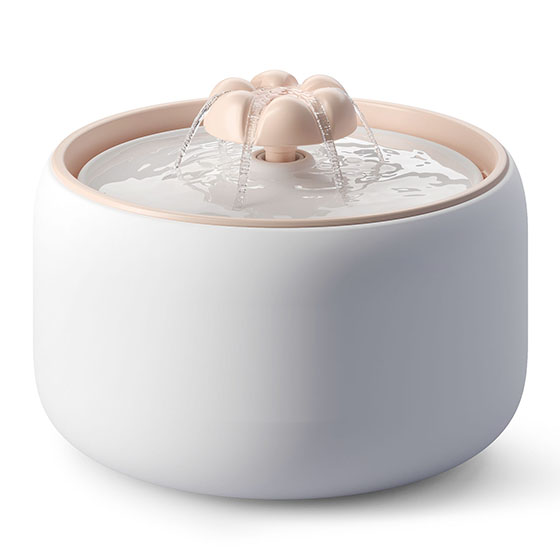
Consider weight during the whole job
Ceramic can feel substantial and may suit a station you want to keep in one place. That same weight matters when the reservoir is full and you need to carry it to a sink. A lighter plastic model may be easier for some owners to lift, but stability still depends on the shape, placement and how pets interact with it.
Before buying, imagine the complete movement: disconnecting power, lifting permitted parts, emptying water, washing and returning the unit. If carrying a full vessel is awkward, choose a design and care routine you can handle comfortably. Do not carry a unit by its spout or tray unless the instructions identify it as a handle.
Inspect surfaces and edges
Look for chips, cracks, rough areas or damaged surfaces on either material. If damage develops, stop using the affected part until the manufacturer confirms what action is appropriate. Do not attempt an improvised repair to a water-contact surface with an unknown adhesive.
For plastic, pay attention to the specific finish, seams and accessible corners. For ceramic, inspect the glaze and edges while handling the component carefully. No material label replaces that inspection.
| Ceramic | Plastic |
|---|---|
| Consider handling weight | Check weight and stability |
| Inspect glaze and edges | Inspect finish, seams and corners |
| Follow part-specific care | Follow part-specific care |
| No automatic hygiene guarantee | No automatic hygiene guarantee |
Compare access rather than assuming easy cleaning
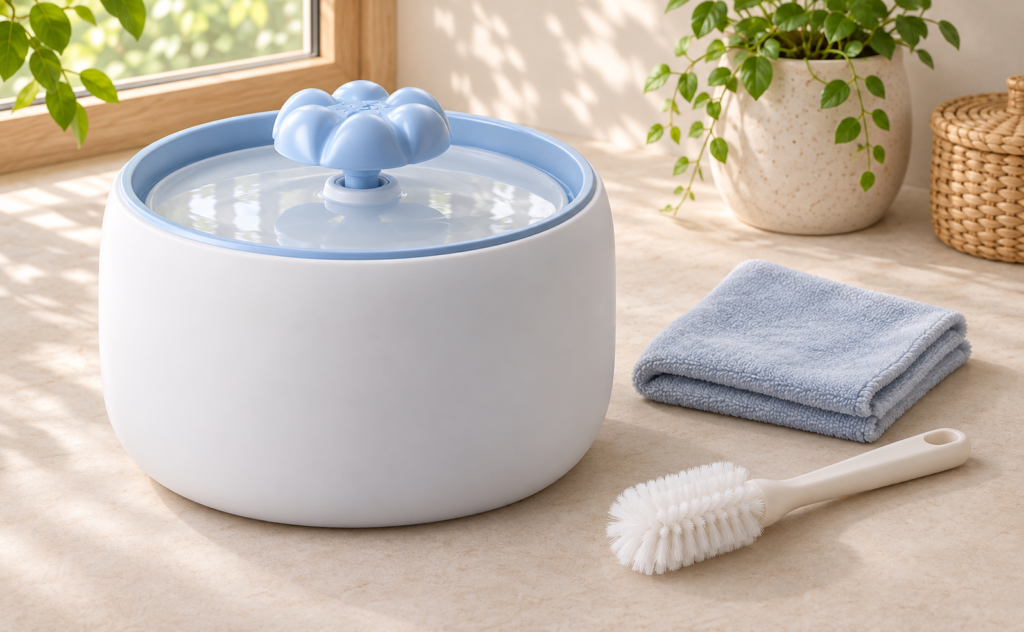
A smooth reservoir with an awkward narrow opening can be harder to reach than a more open design. Removable components are helpful only when you can reinstall them correctly and follow their individual cleaning instructions.
Ask whether you can reach the tray underside, reservoir corners and permitted outlet passages. Check dishwasher suitability per component rather than per material. Neither ceramic nor plastic automatically tells you which electrical or consumable parts can be washed.
Our existing article on plastic cat water fountain safety covers further questions about assessing a plastic model.
Separate noise from the material decision
If quiet operation matters, compare the actual model and its normal operating conditions. Water level, stream shape, placement, assembly and the water-moving system can all affect what you hear. A material name alone cannot predict the noise in your room.
Avoid comparing a freshly filled fountain with another running below its correct level. For any home comparison, keep the setting and operating conditions consistent, and describe the method before claiming a measured advantage. This article does not provide decibel measurements.
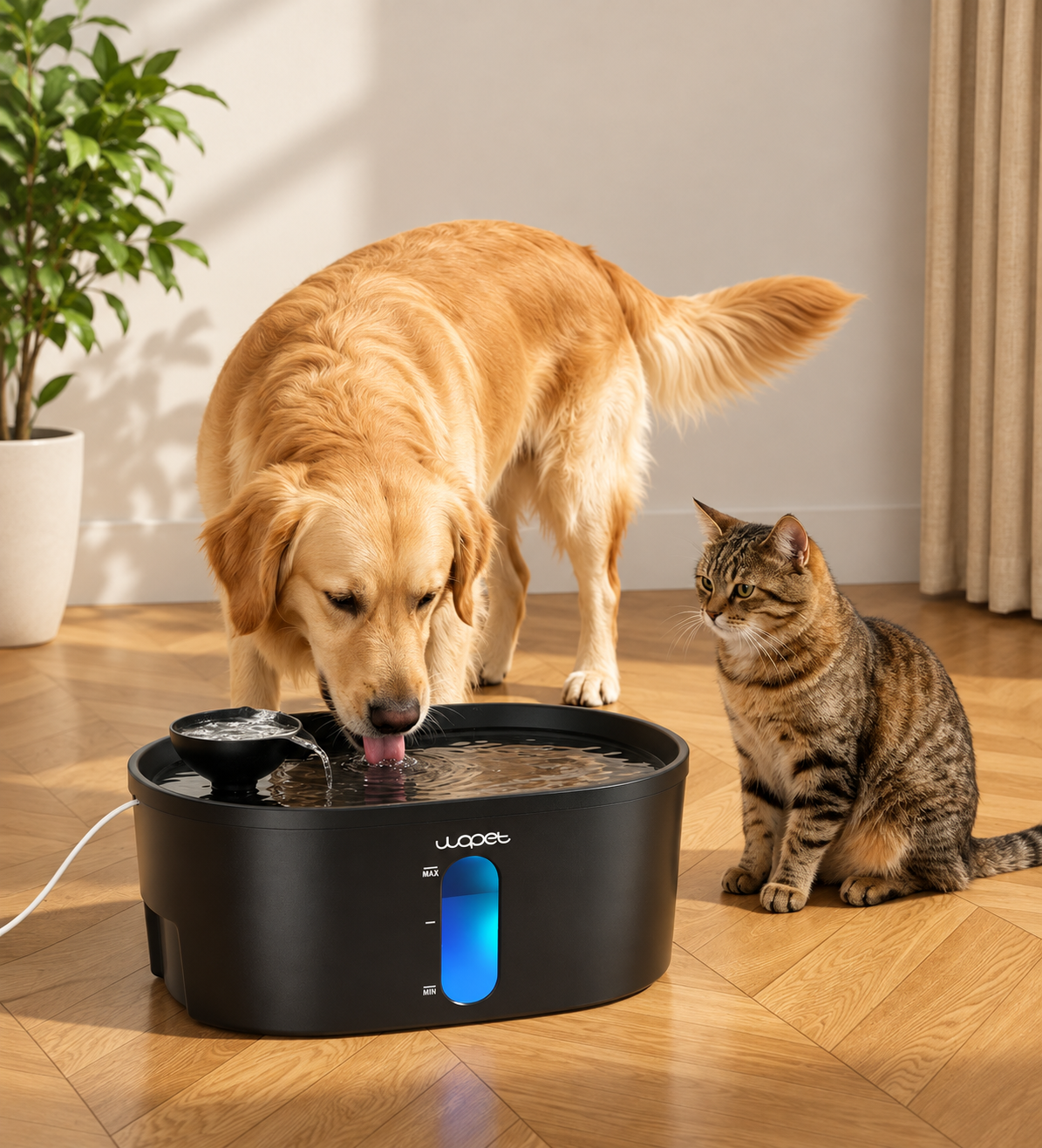
Use WOPET models as examples rather than a universal ranking
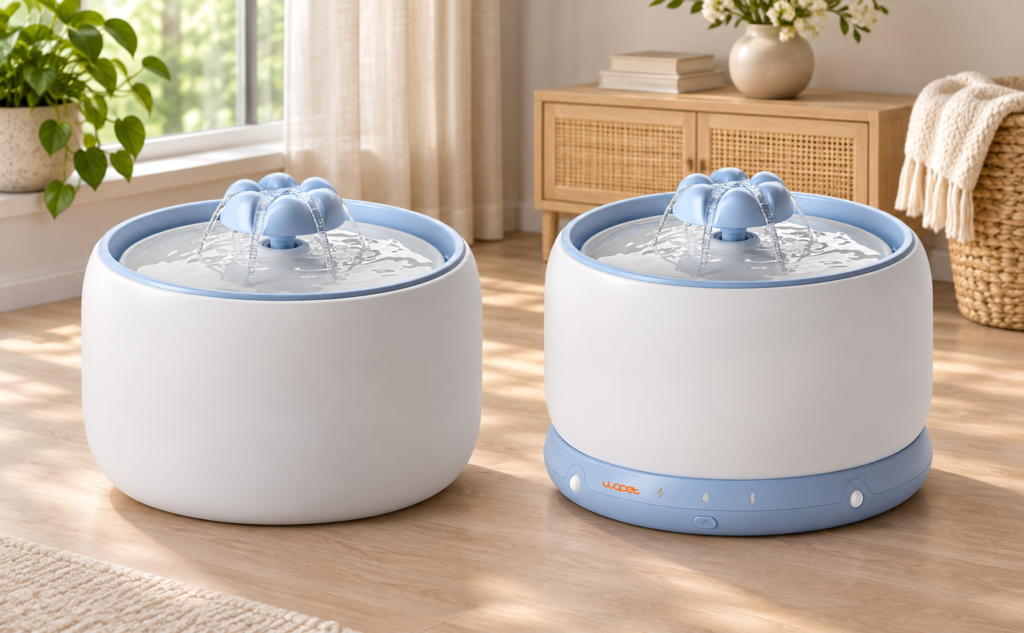
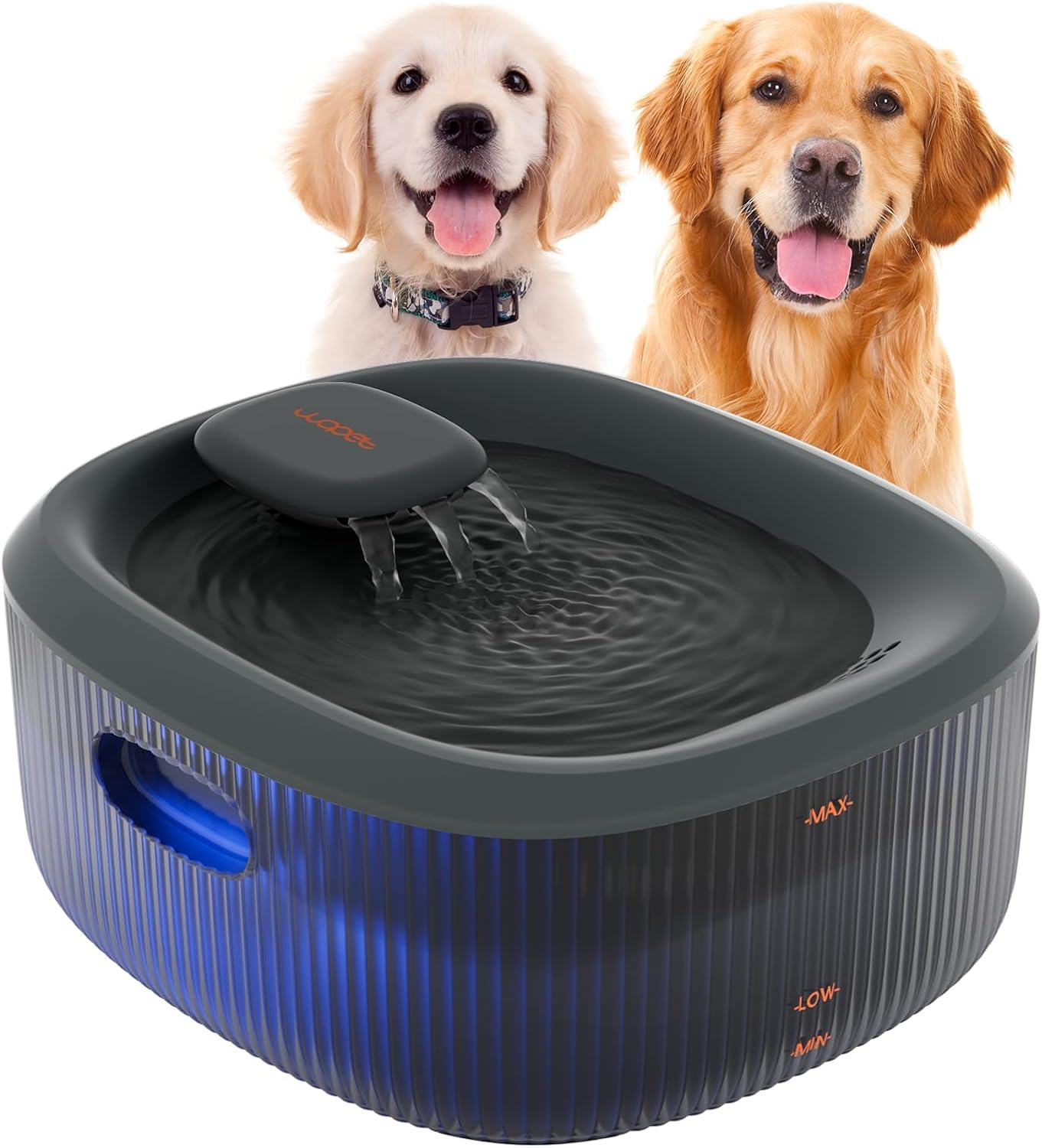
The wired 3L W03L and cordless 3L W03 are ceramic examples, while W600plus is a different fountain design. Their differences include more than shell material. Do not attribute a difference in capacity, power arrangement or tray shape to ceramic versus plastic alone.
If the wired ceramic format suits your requirements, inspect the W03L product details. Compare the complete specification and maintenance instructions with your alternative, not a photograph alone.
Choose around the constraint you cannot change
If lifting weight is the deciding factor, check the weight of the exact product and the water it will hold. If placement is the constraint, measure footprint and cable needs. If maintenance is the constraint, inspect disassembly and replacement-part access.
Give those requirements priority over a general preference for a material. You may reasonably choose different materials for different rooms or households without either choice being universally superior.
Bring material back into the complete decision with the full buying guide.
To compare the actual care task, use the model-specific cleaning checklist.
Common material questions
Is ceramic automatically more hygienic? A material name does not establish the condition of the complete fountain in use. Maintenance and surface condition still need attention.
Is plastic automatically unsafe? Assess the actual product documentation and condition rather than making a claim about every plastic item.
Will switching material make my cat drink? A change of material does not guarantee a behavioral result. Confirm normal operation and consider why a cat may avoid a fountain. Use our fountain guide collection to evaluate the rest of the setup.
About this guide
Prepared with AI assistance using the linked product and care resources. Product and replacement-part images are from the product catalog. Images identified as AI-generated are illustrative lifestyle scenes based on product reference photos. No hands-on performance testing is claimed.