
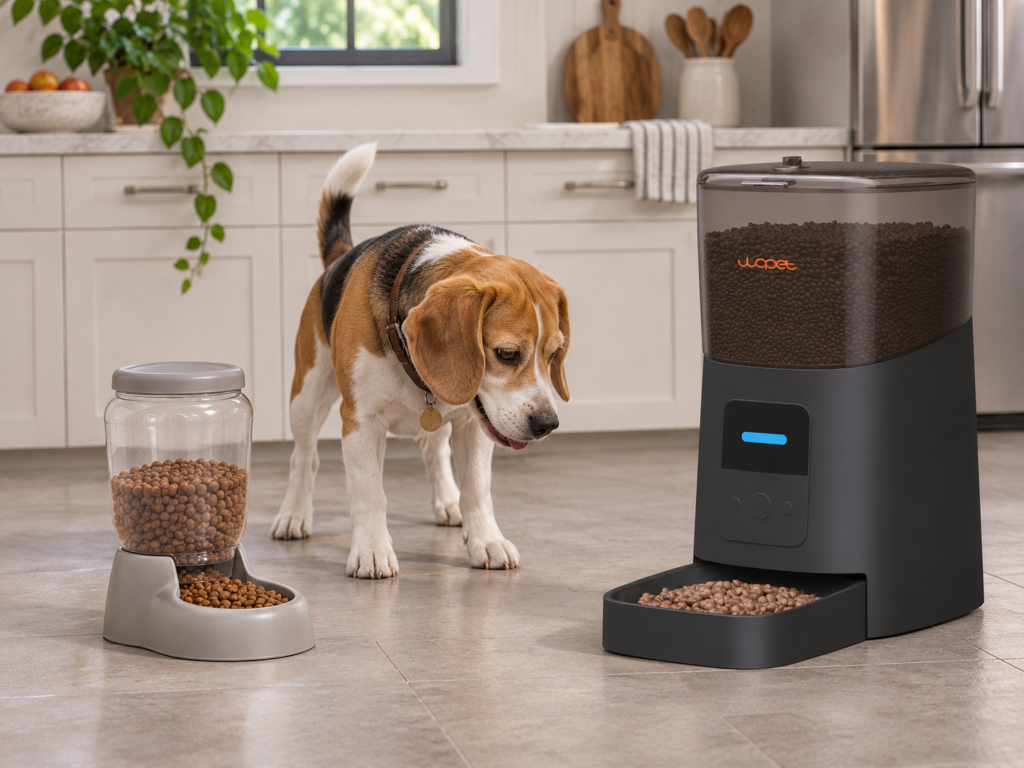
The basic difference
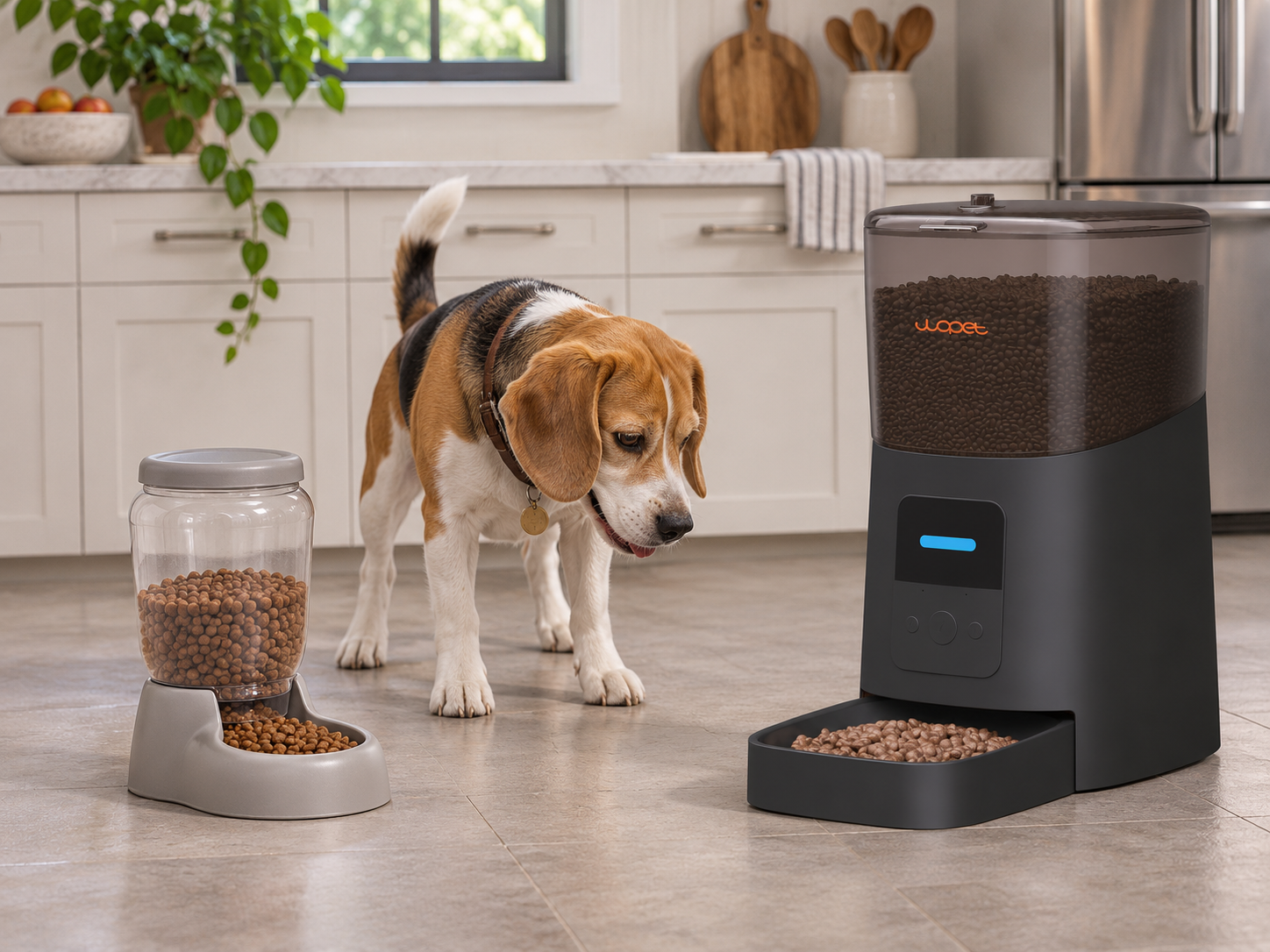
A timed feeder releases food on a schedule. A gravity feeder lets more kibble fall as the bowl empties. The choice comes down to when your dog should be able to reach the food.
Portion control and awareness
With a timed feeder, owners can set servings and observe whether the meal appears to dispense. The settings need calibration because a programmed unit may not equal a standard cup. A gravity feeder offers less information about how much the dog ate at a given meal; food may be available throughout the day and can be shared or spilled. If the dog’s weight or intake is a concern, discuss the feeding method with a veterinarian.
How eating style affects the choice
A dog that eats the whole bowl quickly may not benefit from continuous access. Another dog may regulate its intake well, but the household should still monitor the amount offered and body condition. A scheduled feeder can divide a measured ration across meals, but it does not slow eating unless paired with an appropriate slow-feeding dish. Choose around observed behavior rather than assumptions about breed or size.
Multi-pet homes require extra thought
A gravity bowl can be easy for another pet to access, while an automatic dispenser can also be shared if animals crowd the feeding area. If dogs have different diets or portions, separate spaces and supervision may matter more than feeder type. Watch how the pets behave at feeding time and choose a layout that avoids guarding or competition. If conflict occurs, ask a veterinarian or behavior professional for advice.
Freshness and cleaning considerations
Both designs need regular cleaning. Gravity units keep food exposed in the bowl; timed hoppers store kibble until it is dispensed. Follow the food package and device instructions, protect food from humidity, and clean bowls often enough for your household. A gravity feeder is not a sealed storage container, and a timed feeder’s hopper should not be left full indefinitely without inspection.
Which is easier to manage?
A gravity feeder has fewer schedule settings, but owners still need to refill and clean it. An automatic feeder requires setup, measured portions, and testing, but can serve meals at repeatable times. Compare the maintenance you will actually keep up with. If you travel, neither option replaces a person who can check the dog and intervene if food spills or the animal becomes unwell.
Where WOPET fits into the comparison
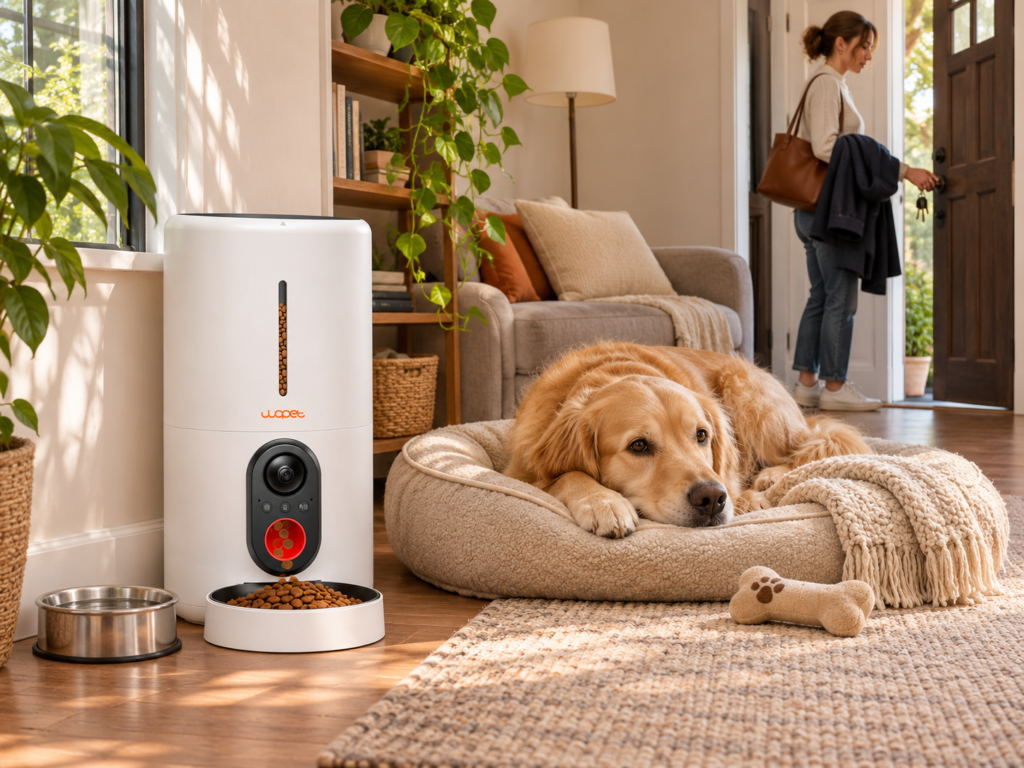
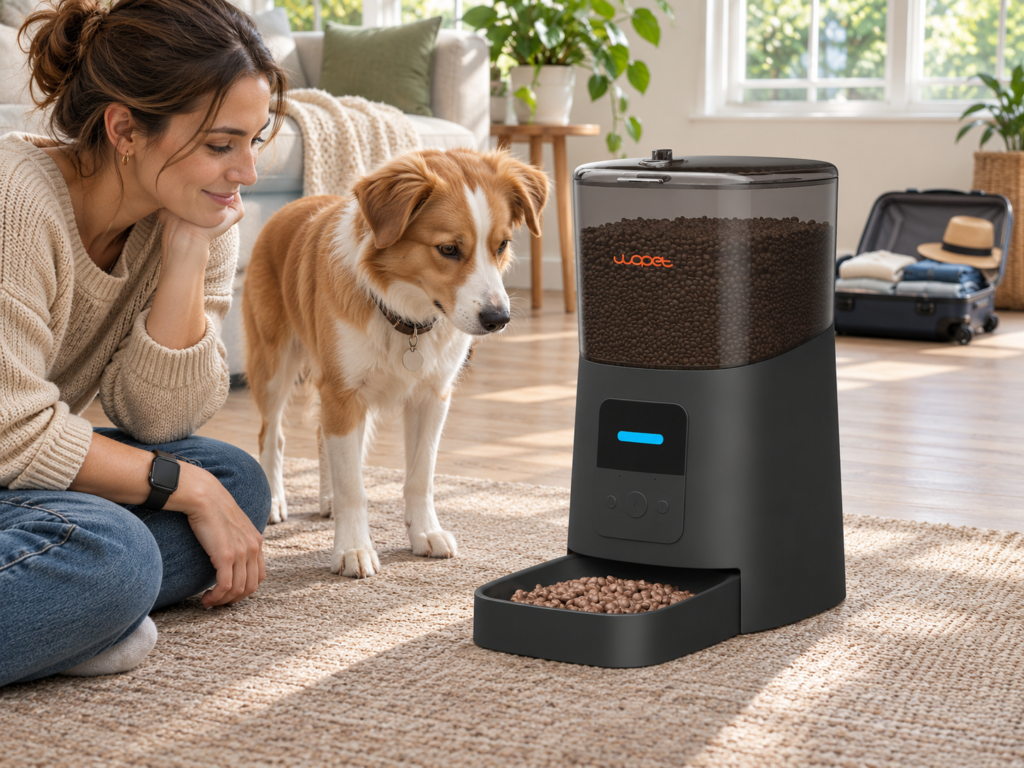
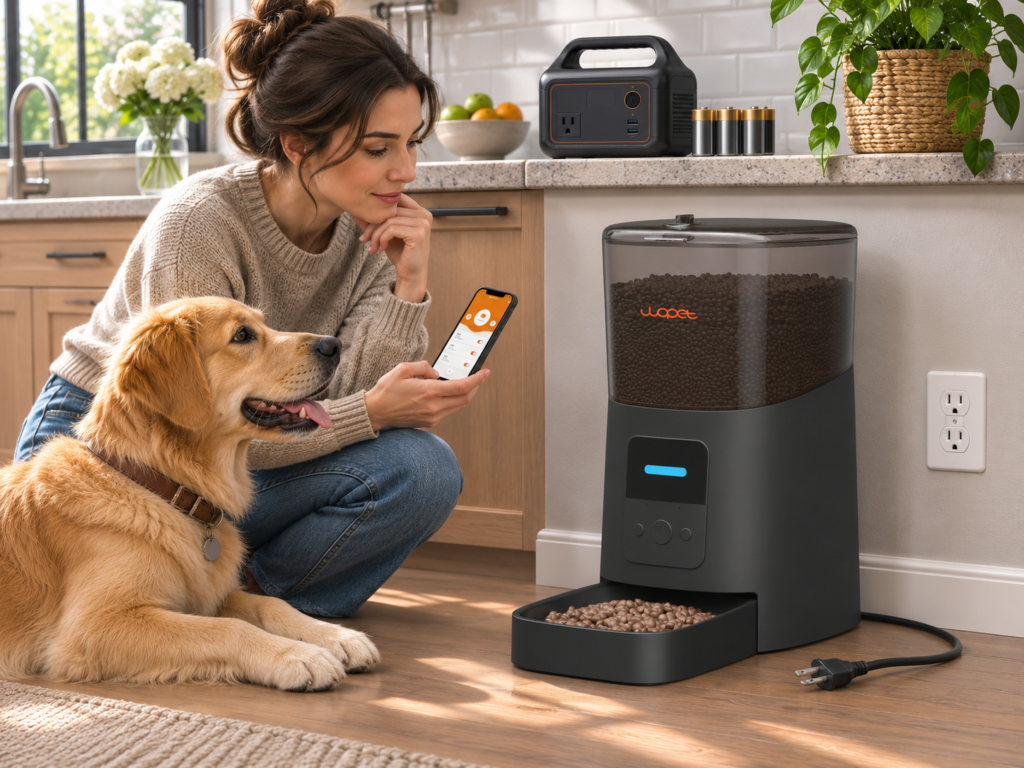
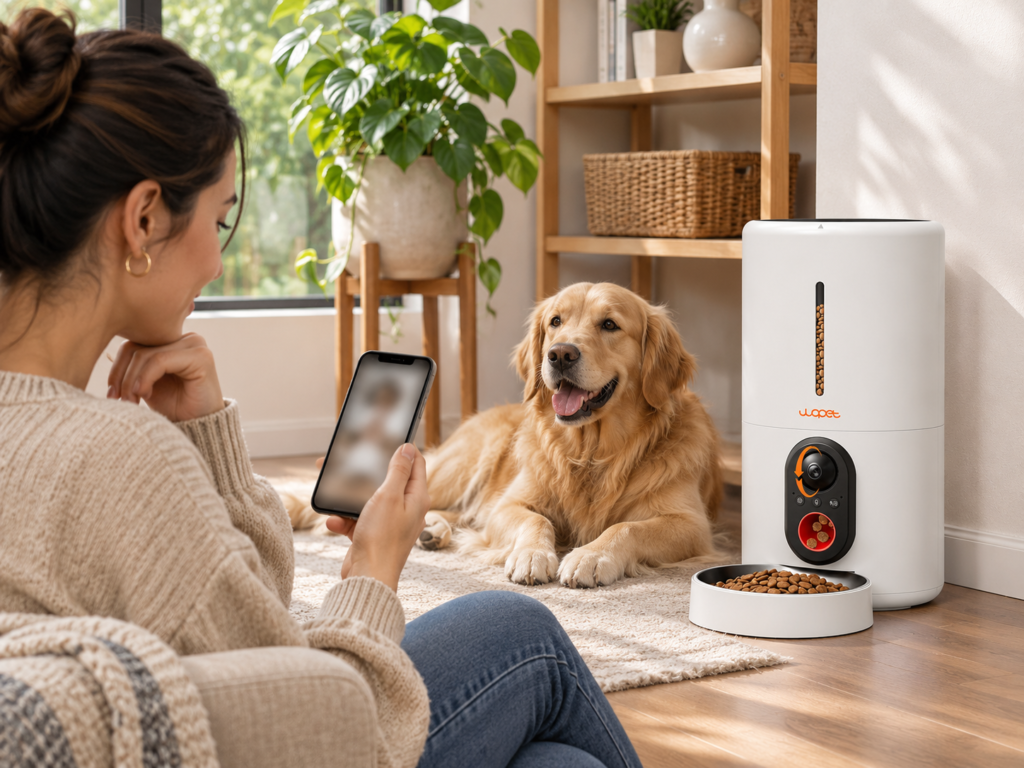
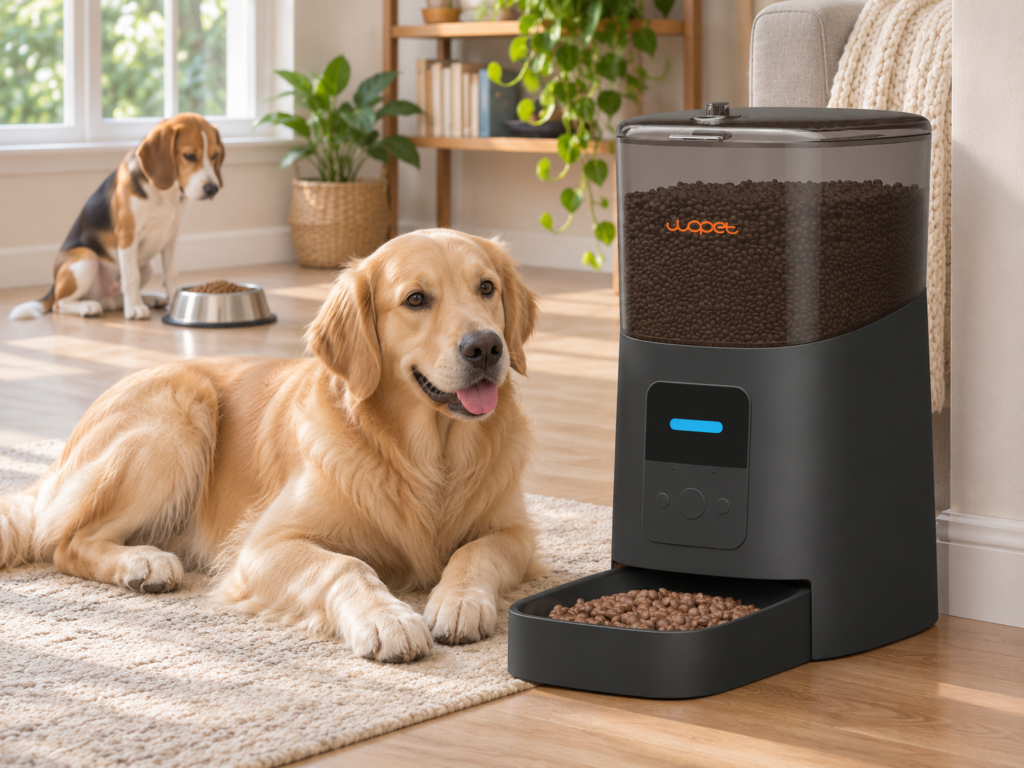
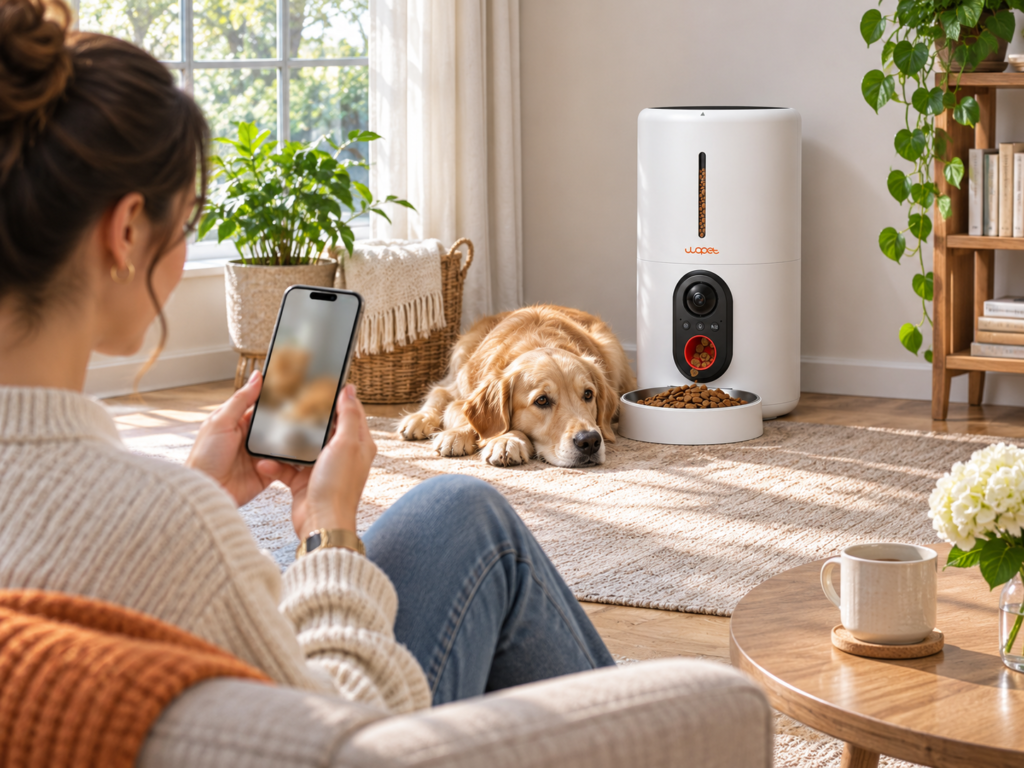
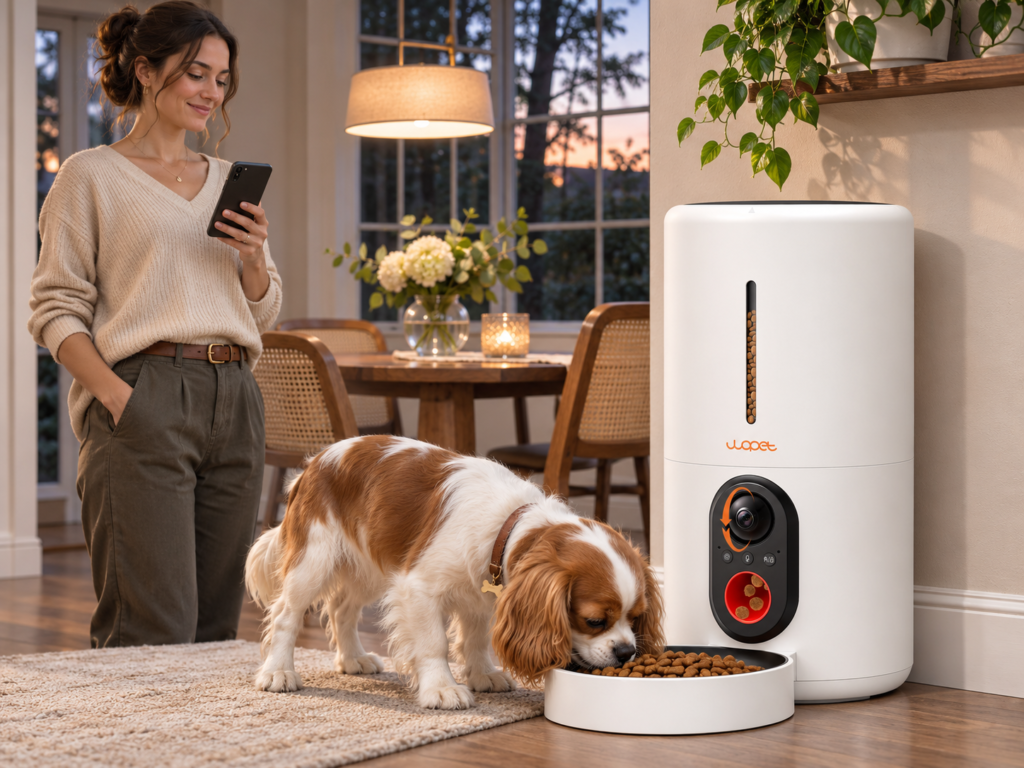
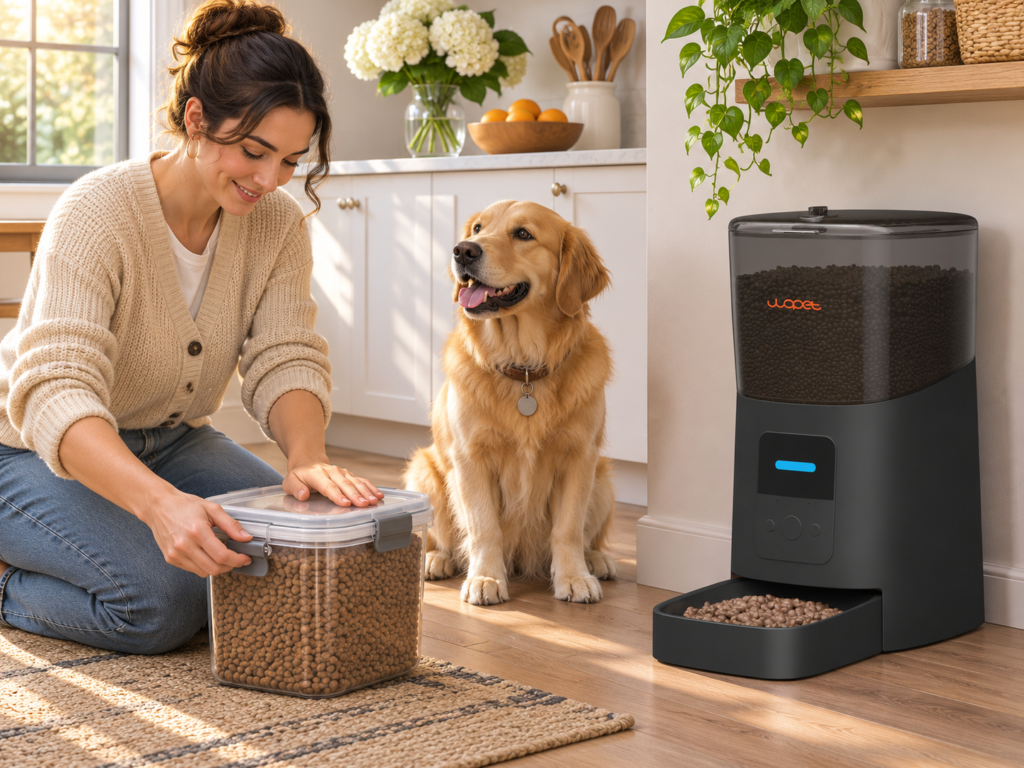
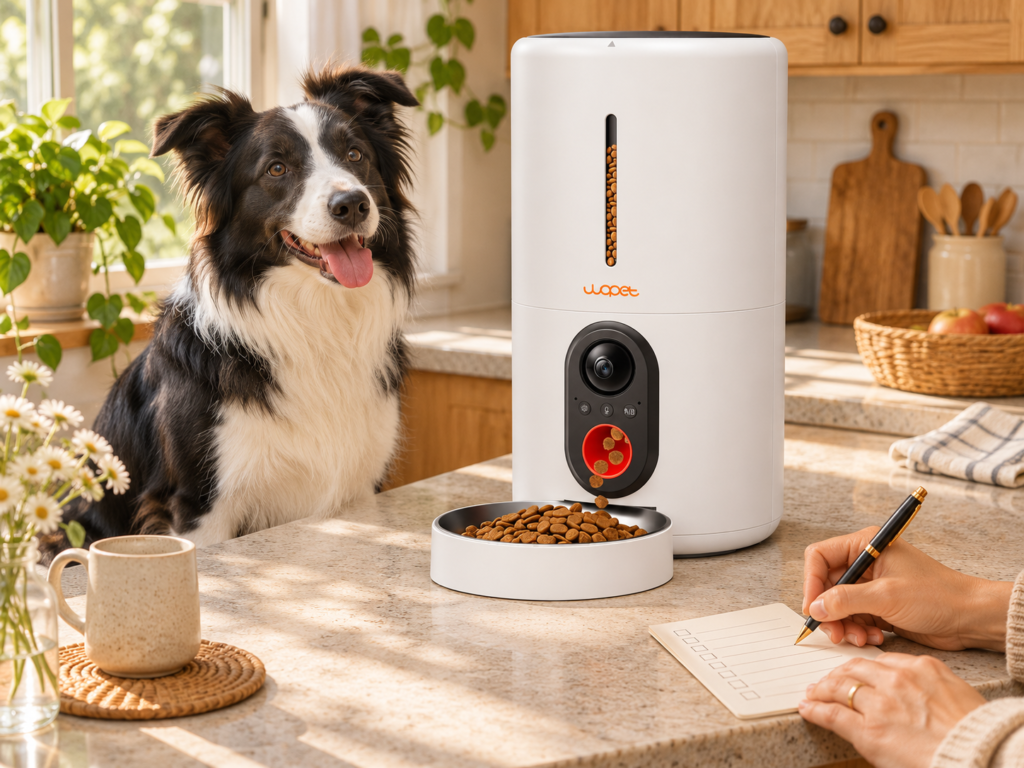
WOPET’s HV10P and F07 Pro are scheduled dry-food options. Review their features and manuals to understand portions, compatibility, and cleaning. They suit owners looking to automate planned meals; they are not gravity feeders and should be used according to model instructions.
A simple decision framework
Choose an automatic feeder if scheduled, measured portions solve a specific household need and you can test output. Consider gravity feeding only if continuous access is suitable for your dog and you can monitor intake. Ask your vet for guidance when weight management, medication, or health concerns affect feeding. For scheduled models, see our automatic dog feeder guide.
A real-life example of the tradeoff
Imagine a dog that asks for breakfast early and eats the full bowl immediately. A gravity feeder may make food available earlier, but it also leaves more food accessible through the day. A timed dispenser can serve breakfast at a chosen time, yet it still releases the meal in a bowl and does not slow the dog’s eating by itself. The best choice depends on whether the problem is meal timing, portion awareness, or eating speed.
Think about measurement and accountability
With scheduled servings, the owner can measure the daily ration and assign portions to meal times, then weigh test output. With gravity access, tracking the exact amount eaten may be harder, particularly when several pets share the area. Neither design automatically keeps a dog at a healthy weight. If intake or body condition concerns you, ask a veterinarian to help set a plan and monitor progress.
Consider food guarding and access
A dog that guards a bowl may find continuous access stressful, while another pet may repeatedly approach it. A timed feeder can also attract competition when it makes a sound before dispensing. Introduce any setup while supervising and watch how animals behave. If feeding creates conflict, separate pets physically and get professional guidance rather than relying on the device to resolve the behavior.
Compare refill habits honestly
A gravity feeder is simple to refill but may leave food exposed. An automatic hopper needs periodic refills and cleaning of the chute and food-contact parts. Consider how often you can inspect both. If you know you are unlikely to wash a complex unit or check settings, a simpler setup may be preferable. Convenience depends on maintenance habits, not just the number of buttons.
Freshness does not decide the comparison alone
Both feeders need clean bowls and food stored according to package directions. Gravity bowls can sit with food accessible, while a timed hopper holds kibble above the bowl. In either case, remove old residue, keep the area dry, and avoid topping up indefinitely without inspection. A feeder should not be treated as a sealed food container or a substitute for checking kibble condition.
Questions for a veterinarian
If your dog has weight concerns, a prescribed diet, medication timing, or a history of overeating, ask which feeding style fits the care plan. Bring details about the dog’s current meals and household schedule. The answer may differ by dog. Avoid switching to continuous food access or changing meal frequency solely because a feeder makes it easy.
When continuous access may be a poor fit
Continuous access may be unsuitable if the dog eats rapidly, gains weight easily, or has a prescribed meal schedule. It may also be a poor fit when several pets share the space or when one animal guards food. A gravity feeder does not portion meals simply because its bowl has a certain size; as food is eaten, more can flow in. Ask your veterinarian before using continuous access when intake or weight is a concern.
For general context on how meal frequency and portions relate, consult the AKC feeding-frequency guide and discuss a suitable approach with your veterinarian.