
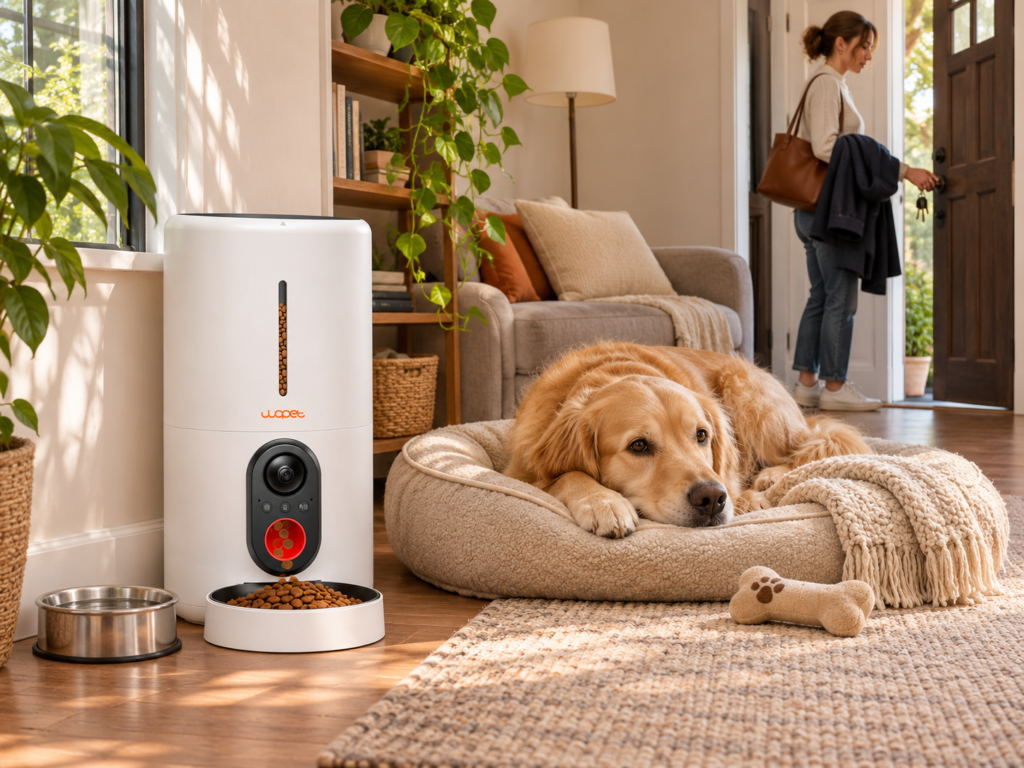
What the feeder can reasonably do
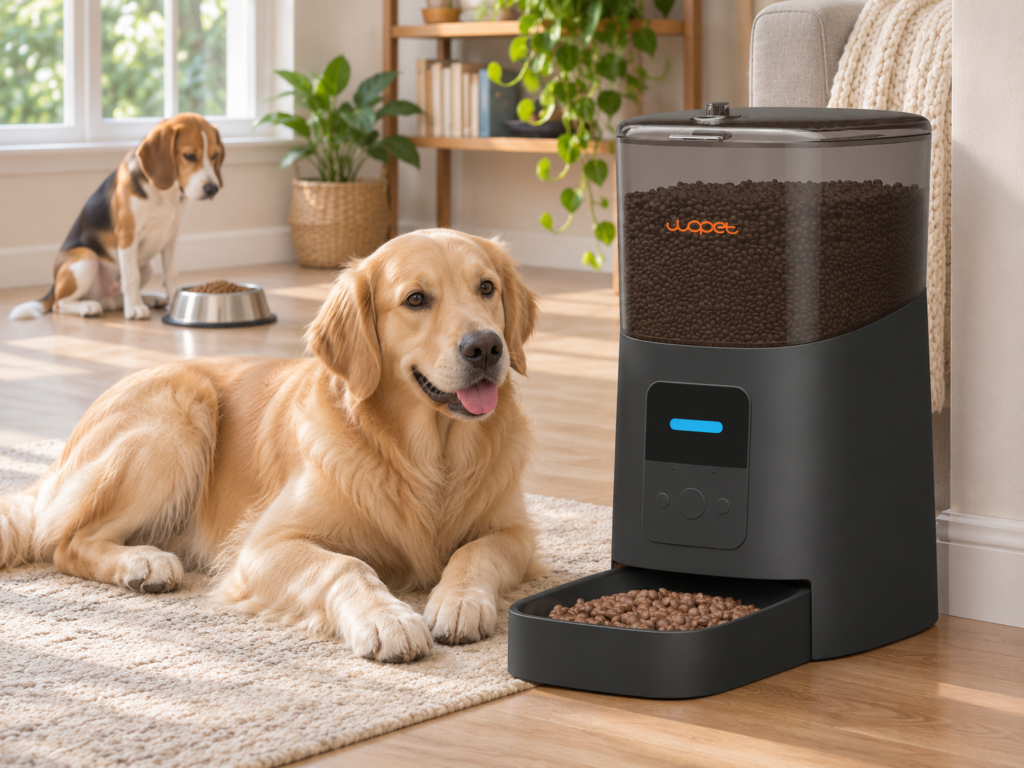
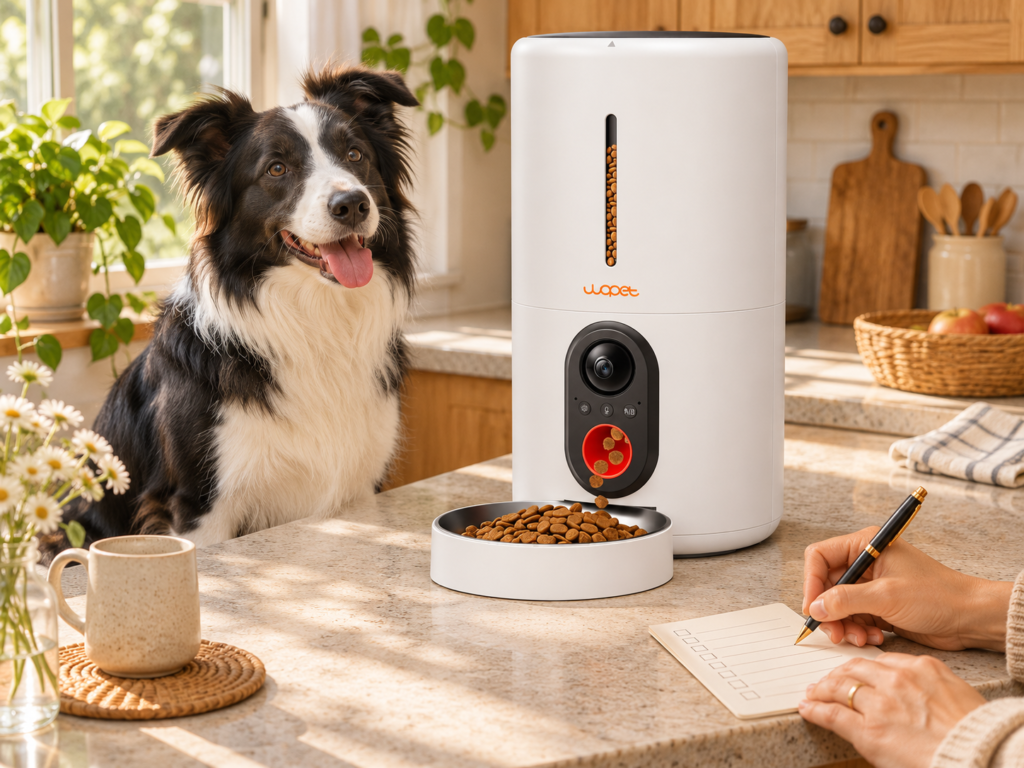
Test a scheduled meal while you’re home before using a feeder during an absence. Check that the food reaches the bowl and watch your dog eat it.
What it cannot do for a dog alone
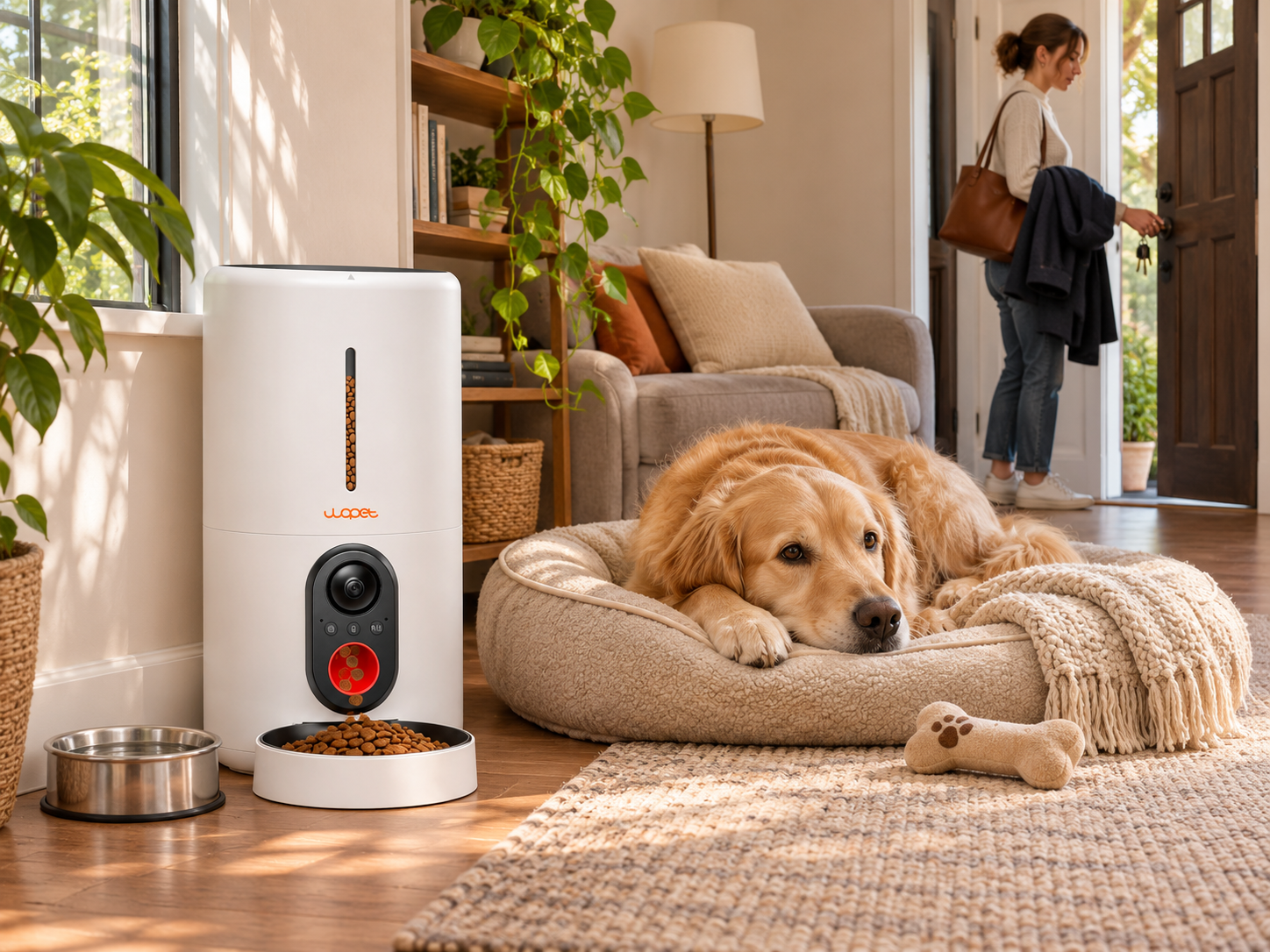
A feeder cannot let the dog outside, refresh water, clean a spill, notice an injury, or respond to sudden illness. A camera provides a limited view, not full supervision. Even if the meal dispenses, the dog may not eat it or another pet may take it. Consider the whole day’s care needs rather than judging whether the dog can be alone by hopper capacity.
Consider age, health, and temperament
Puppies generally need more frequent care and supervision than adult dogs. Senior dogs or dogs taking medication may need a person to check appetite or administer care. Some dogs are comfortable resting alone; others experience distress. If unsure about your dog’s individual needs, speak with a veterinarian or qualified behavior professional rather than extending alone time because a device is available.
Make the setup safe and comfortable
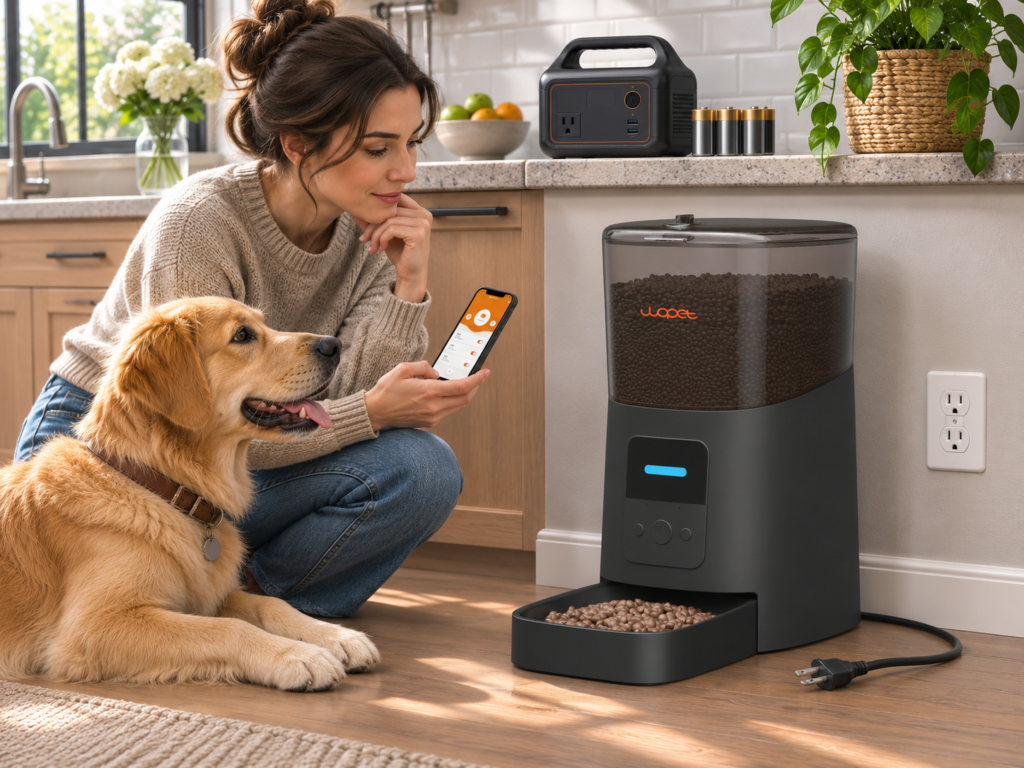
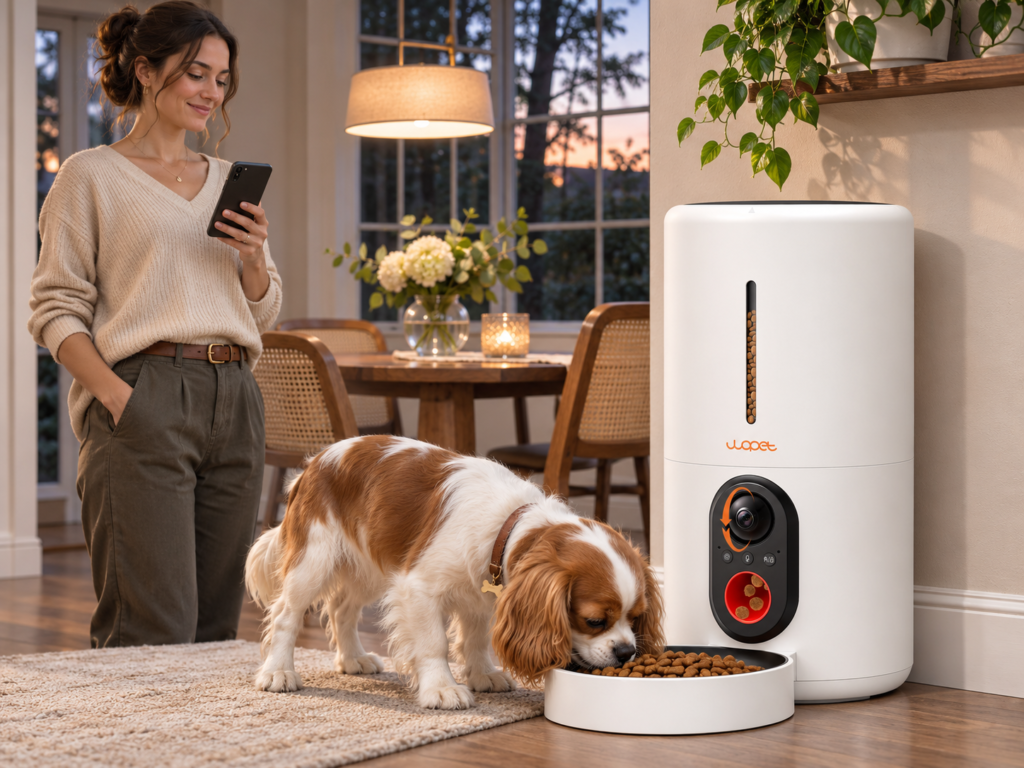
Place the feeder on a stable surface and keep cords out of reach. Ensure fresh water is accessible and the dog can reach the bowl without being crowded. In a multi-pet home, consider whether another pet can steal the meal or block access. Observe the dog using the feeder while you are home; some dogs need a gradual introduction to a new sound or moving mechanism.
Use a feeder as a routine aid
Program only the amount recommended for the dog and weigh test portions. Run multiple meals while present and check the app, clock, and power behavior. If your dog has a prescribed schedule, make sure the device can match it. Review WOPET’s first setup guidance, the relevant manual, and the troubleshooting page.
Decide when a visit is needed
Arrange a person to visit when the dog’s bathroom, exercise, social, health, or monitoring needs exceed what the household can provide remotely. A visit is also important when the dog is unfamiliar with the feeder or has a history of guarding food or getting into equipment. The right interval depends on the dog. The feeder’s schedule alone does not define a safe absence.
Prepare a backup plan, not just a backup device
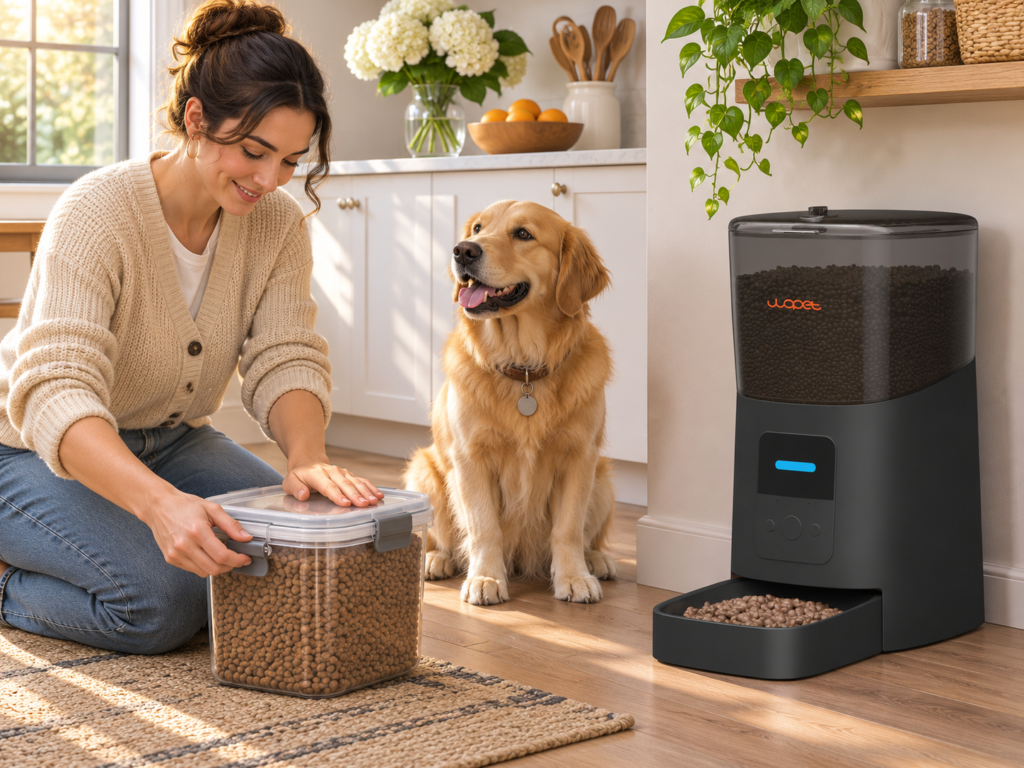
Leave a trusted helper with access, food portions, veterinary contacts, and instructions for manual feeding. Tell them how to check water and look for signs the dog is uncomfortable. If the feeder app goes offline, they should know where the manual is and how to serve a meal without resetting the device. Keep emergency contact information visible.
Compare WOPET models by routine
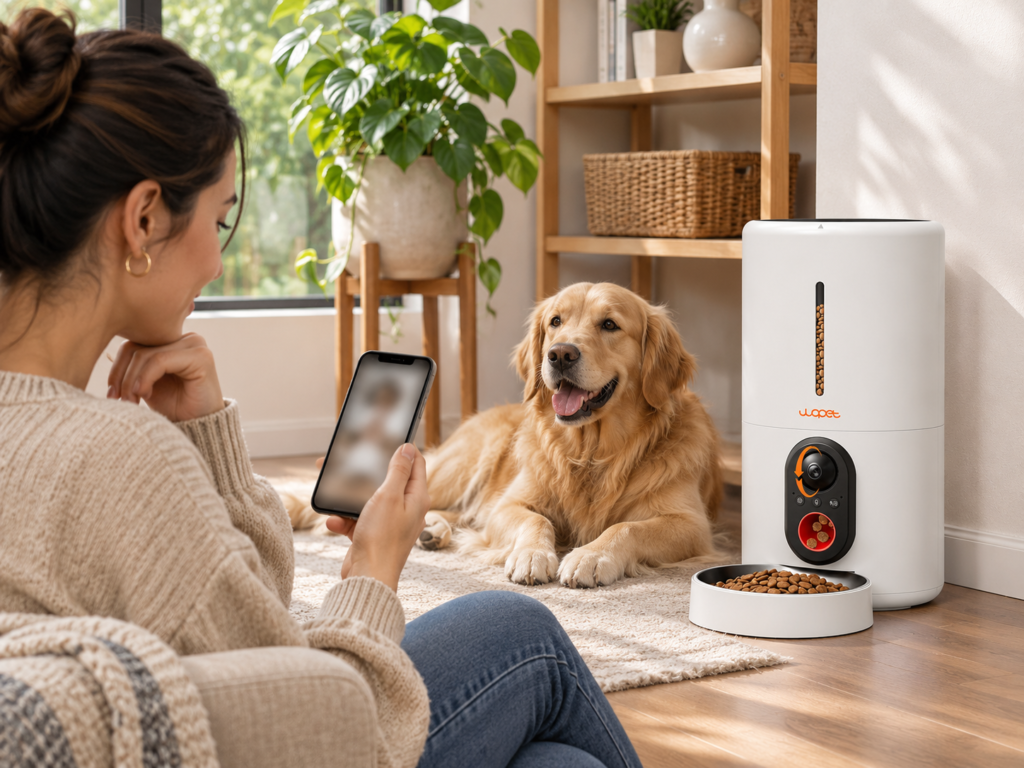
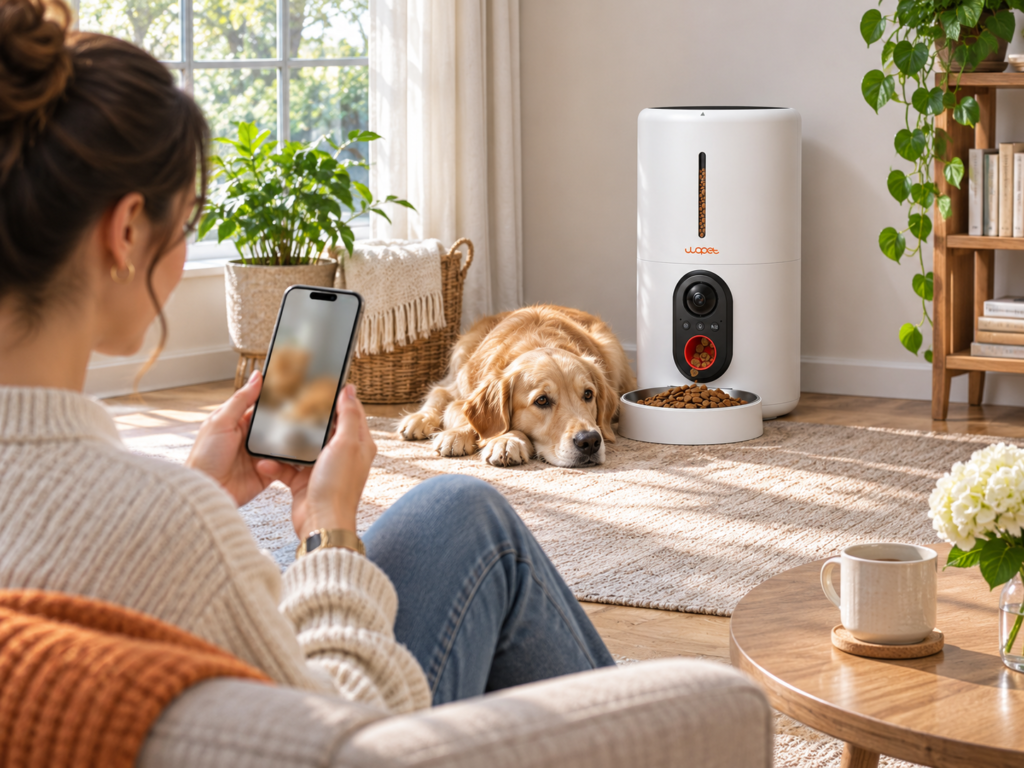
If a camera to check the feeding area matters, review the HV10P and its manual. If camera monitoring is not necessary, compare the F07 Pro. Use our routine guide to evaluate food fit and portions.
A balanced way to decide
Think of a feeder as one part of a care plan, not a permission slip to leave a dog alone longer. If your absence is longer than the dog is accustomed to, arrange human care even when the machine has food. Test the device, maintain fresh water, and check behavior. The right setup supports a familiar routine while keeping a person responsible for wellbeing.
Estimate the entire care interval
Think through the time from leaving to returning, including commute delays. Consider bathroom needs, water, activity, weather, and whether the dog is accustomed to being alone for that period. A feeder only addresses food timing. If your plan depends on everything happening exactly on schedule, add a person who can step in when a meeting runs late or the power goes out.
Use a camera with clear expectations
A camera may show movement around the bowl, but it cannot provide full supervision. Check its angle while the dog uses the feeder, and arrange someone local who can visit if the feed shows something unusual. Avoid interpreting a quiet feed as proof the dog is settled; the camera view may miss behavior elsewhere in the room. Use monitoring as a prompt for care, not a replacement for it.
Keep water and environment independent of feeding
Make sure the dog has safe access to fresh water separate from the feeder. Secure cords, keep cleaning products and food bags out of reach, and make the resting area comfortable. Consider whether another pet could block access to food or water. A properly programmed meal does not compensate for an unsafe room or a spilled water bowl.
Review local expectations and the dog’s needs
Rules or guidance about leaving pets unattended can vary by location, and individual dogs have different needs. Check local requirements and talk with a veterinarian if your dog has health or behavior concerns. The right plan for one adult dog should not automatically be applied to a puppy, an older dog, or a pet taking medication.
When the feeder is not enough
Arrange a sitter, neighbor, or professional visit if the dog needs a bathroom break, medication, social contact, or direct observation. A helper should know how to provide a meal by hand and what to do if the feeder appears jammed. For recurring work absences, build a reliable care arrangement rather than gradually extending alone time because the feeder seems to be working.
Use a measured plan
Before leaving for any period, weigh portions, verify the schedule, and observe more than one meal. If the dog’s routine changes or food remains untouched, do not keep increasing the programmed amount. Ask a veterinarian about appetite changes. The feeder should dispense the planned amount; deciding what the dog needs is still a human responsibility.
For general guidance on meal timing, see the AKC overview of how often dogs eat; use a veterinarian’s advice for your dog’s individual needs.