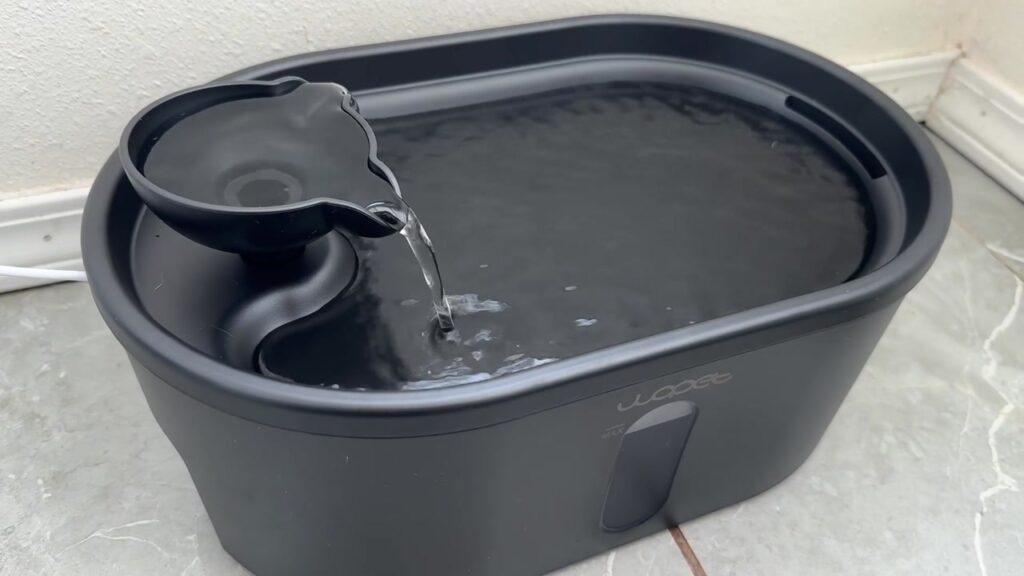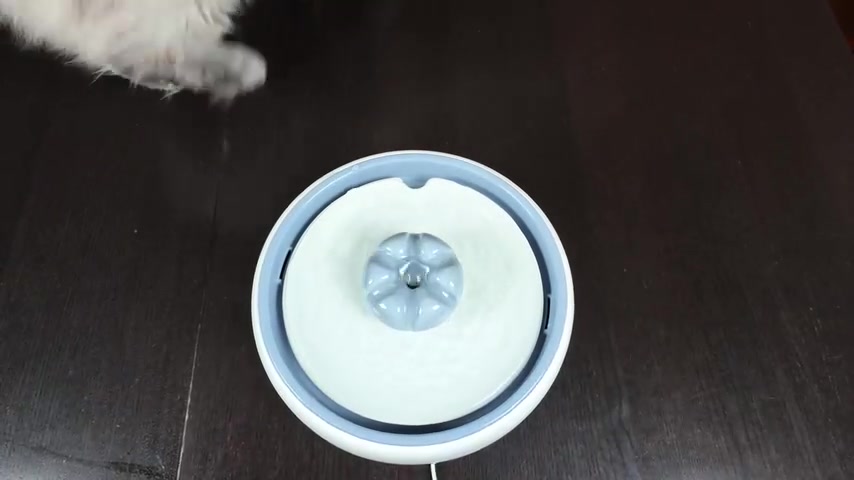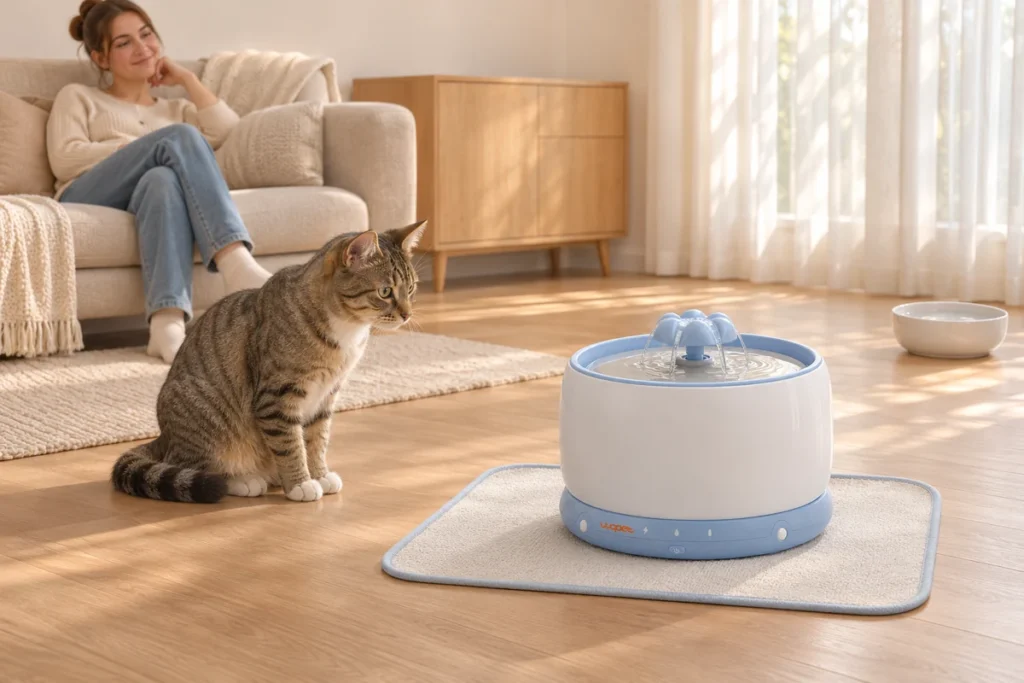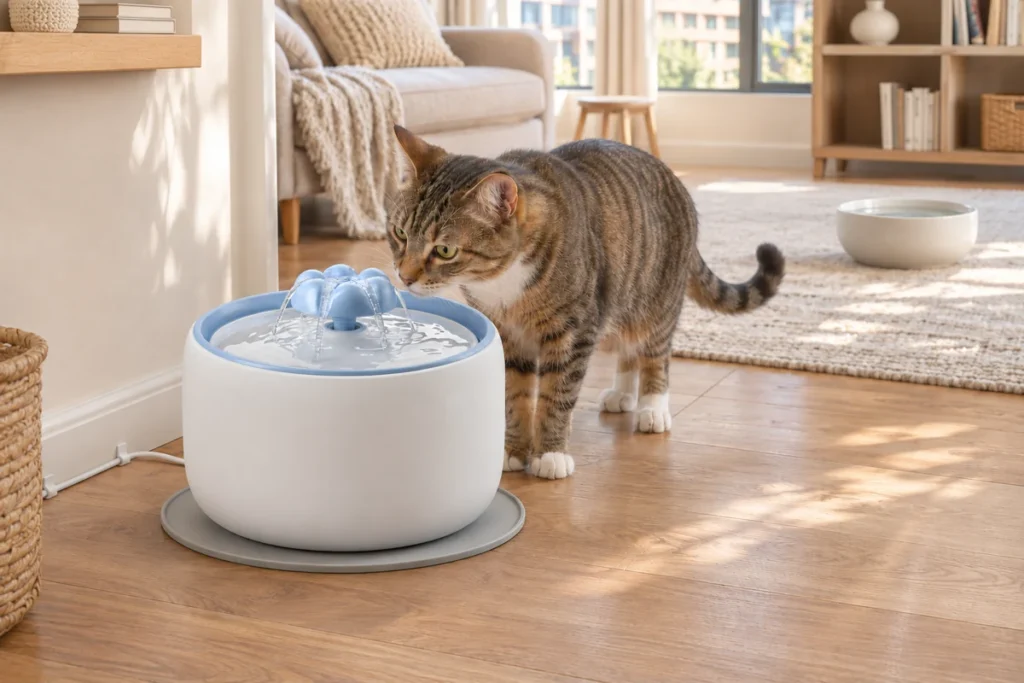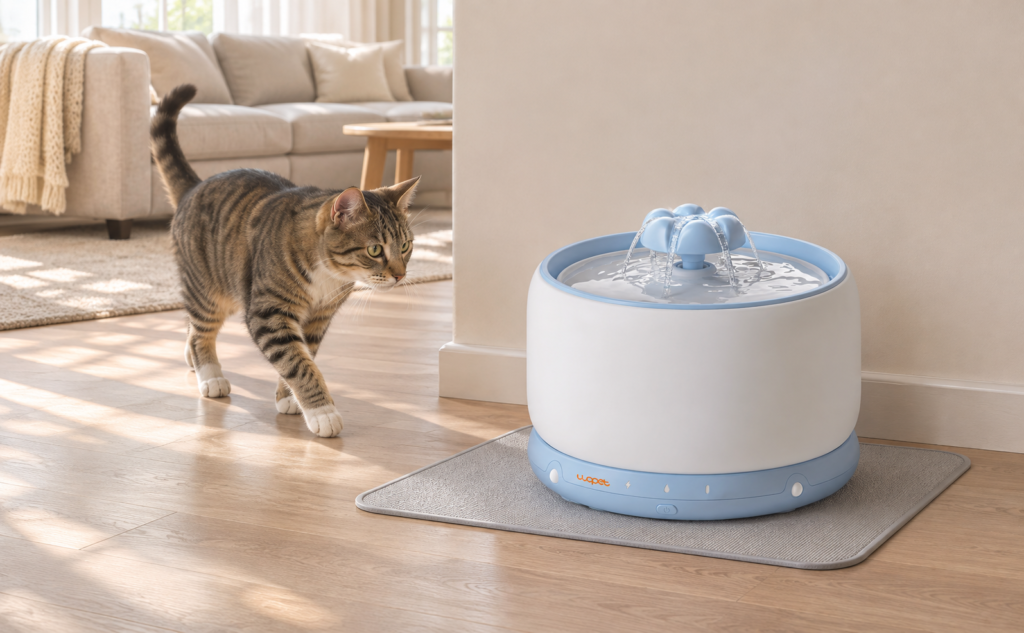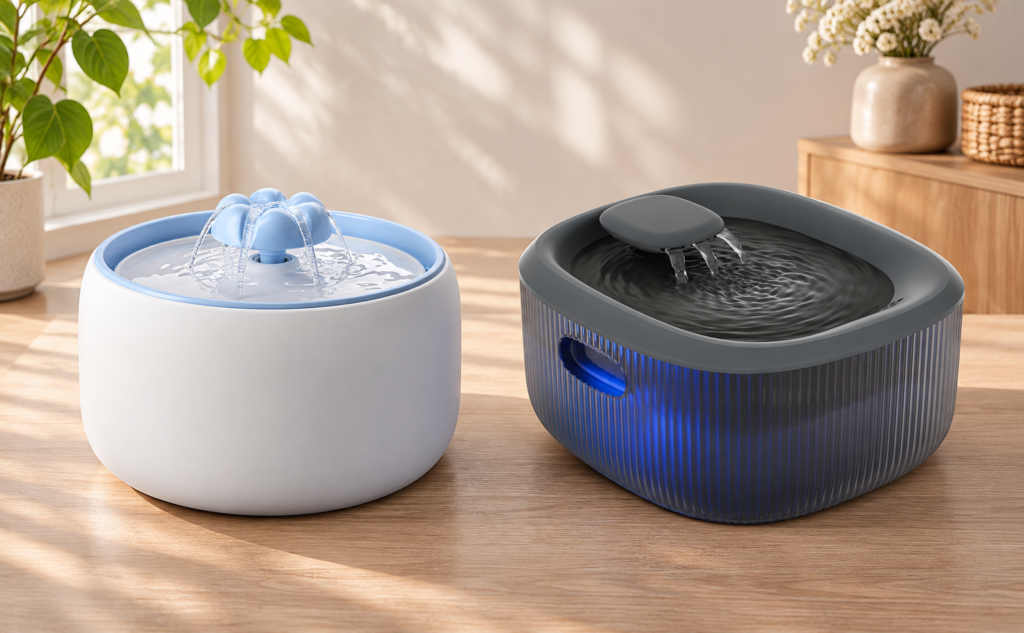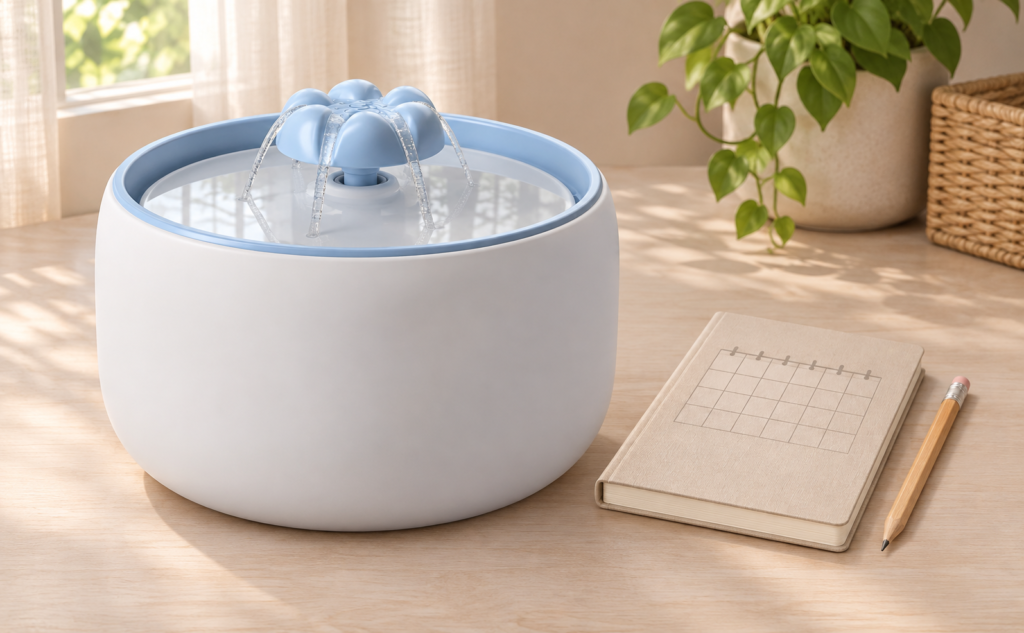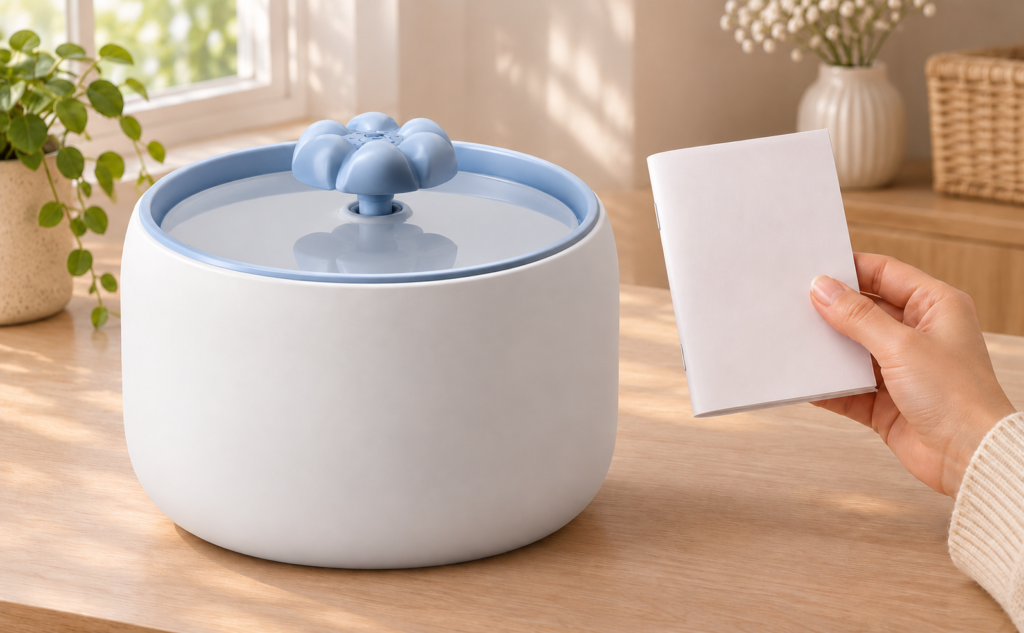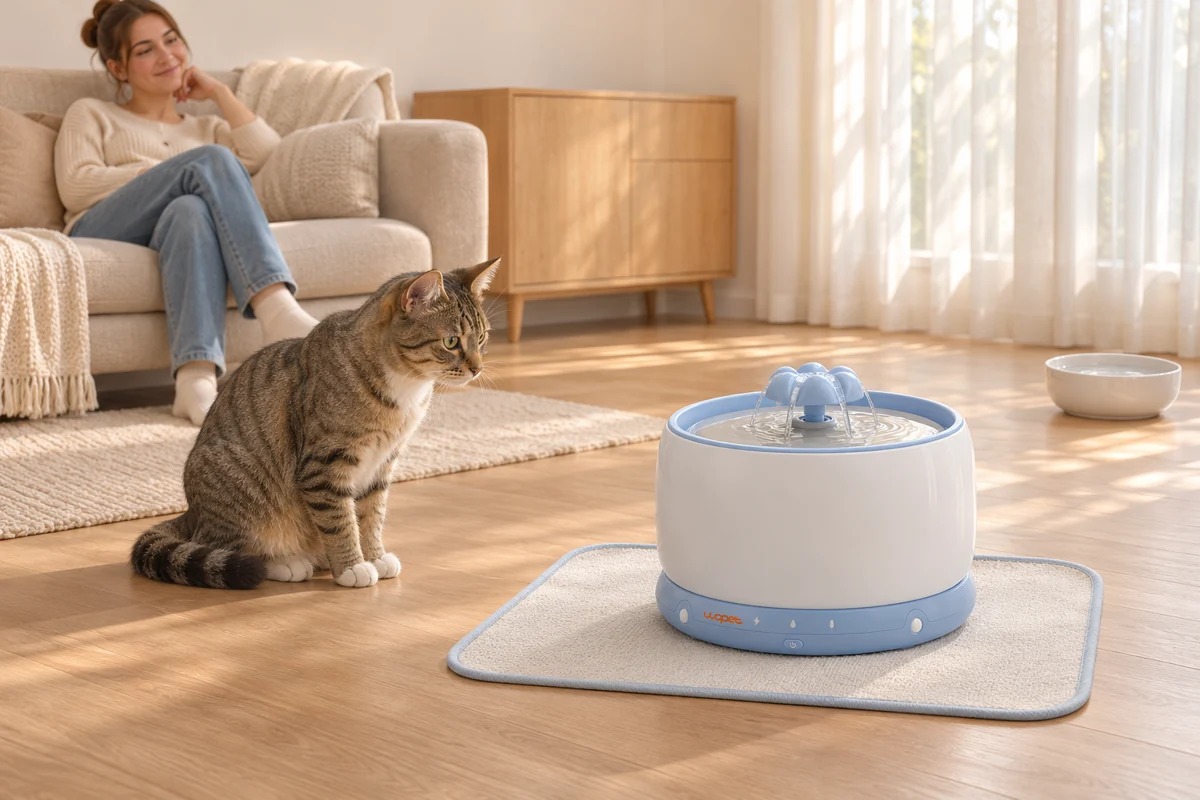

Leave your cat’s usual water bowl where it is while you introduce the fountain. Put the new fountain somewhere quiet and easy to reach, then let your cat decide when to investigate. Some cats approach straight away; others need more time around the unfamiliar shape, sound and moving water.
Try to keep the rest of the routine familiar. Moving the food bowl, rearranging the room and adding a fountain on the same day makes it harder to tell what your cat is reacting to.
Before you start: keep water access predictable
Leave the familiar drinking source in a place your cat already uses. A fountain is an additional option during introduction, not a reason to withhold the usual one. International Cat Care’s caregiver guide recommends gradual introduction and attention to the placement and maintenance of water sources. VCA’s drinking-water guidance also discusses offering different locations and options.
Choose a level, stable surface with a clear approach and a route away from other pets. Keep the drinking area away from litter and avoid placing it directly beside food. In a small home, use our apartment placement checklist to plan access, spill protection and any cable route.
1. Set up and check the fountain
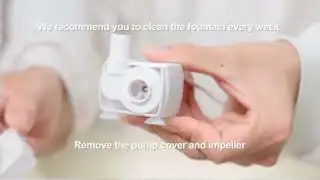
Read the exact model instructions. Clean and rinse the parts the manual identifies as washable, prepare the filter as directed, and assemble the unit correctly. Keep electrical or charging components dry unless the manual expressly permits washing them. Fill to the specified operating level; never run the unit dry.
Check operation yourself before making the fountain part of the cat’s routine. Confirm the intended mode, normal flow and stable placement. A low-water noise or incorrectly seated part can create a poor first impression that has little to do with the cat’s preference for moving water. If flow is abnormal, use the flow troubleshooting guide before continuing.
2. Let your cat explore at its own pace
Let your cat approach the new object on its own. If the design and manual allow safe access to its drinking surface while switched off, a quiet, unpowered introduction may help you separate reaction to the object from reaction to operation. The normal water bowl remains the dependable option; do not assume a switched-off fountain provides the same water access as it does in operation.
Stay nearby only if your presence is relaxing. Do not carry the cat to the spout, hold its head near the water, wet its nose or block its exit. Leave the route away from the fountain clear, and let the cat walk off whenever it wants.
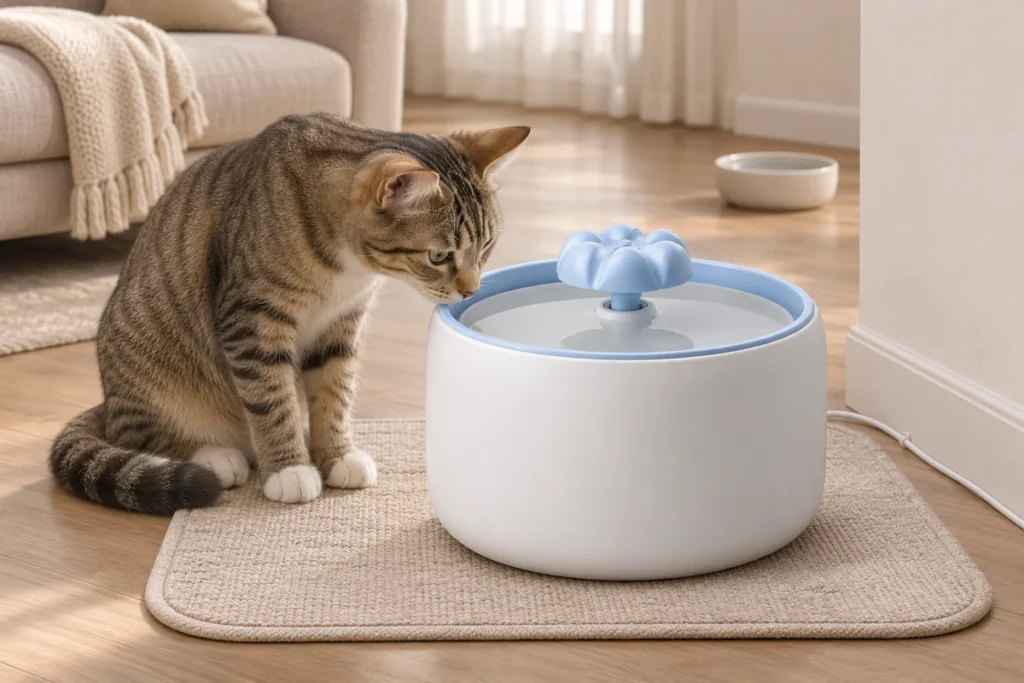
3. Turn it on while your cat has room to watch
Once the cat investigates calmly, run the fountain using a permitted operating mode while the cat has space to observe from a distance. Let it decide whether to approach. Do not keep changing flow, location and accessories in the same session; you want a manageable change, not a sequence of surprises.
If the cat backs away, leave the familiar bowl available and reduce the novelty of the next attempt. Check vibration, nearby appliances and approach routes rather than repeatedly moving the fountain closer to the cat. Pause if the cat remains distressed. Try again another time rather than repeating an introduction that is upsetting the cat.
What to watch for before moving on
| What you observe | What it may tell you | A practical next step |
|---|---|---|
| Looks at it from a distance | The object is still being assessed; drinking has not been established. | Keep normal water access and allow quiet observation. |
| Sniffs or walks around it calmly | The cat is willing to investigate. | Keep placement stable; introduce or continue permitted operation without pressure. |
| Voluntarily drinks and returns later | The station is being used. | Continue daily care and keep alternative water access available. |
| Repeatedly retreats, waits behind another pet or cannot approach | The location, sound or shared access may be unsuitable. | Pause, review the setup and provide another accessible water point. |
A short notebook entry can help: date, setup, whether you saw drinking, and whether another pet was nearby. Sniffing, pawing at water and a falling reservoir level are not reliable measures of total intake.
4. Keep up the daily checks
Once your cat uses the fountain, continue checking water quality, level and normal operation every day. Use the manufacturer’s maintenance instructions instead of assuming that circulating water stays clean. See the cleaning checklist and filter replacement guide for planning care around the exact model.
You do not need to remove all bowls after the first successful drink. Keeping another suitable source is useful during cleaning, charging or an equipment problem. Our fountain-versus-bowl guide explains how to compare both options without treating one as a universal replacement for the other.
W03L and W03: match the setup to the model
| Model | Power arrangement | Introduction detail to plan |
|---|---|---|
| WOPET W03L / W03 Lite | Wired, 3L ceramic fountain. | A suitable outlet and protected cable route that do not restrict access. |
| WOPET W03 | Cordless, 3L ceramic fountain. | A charging routine and a clear understanding of the selected operating mode. |
Check the W03L manual or W03 manual before setup. Cordless does not automatically mean continuous flow, and the similar ceramic appearance does not make their power arrangements interchangeable.
What not to do to speed things up
- Do not remove the familiar water source to force use of the new one.
- Do not add flavorings, oils, cleaners or food to the water as an improvised training aid.
- Do not leave a unit running below its marked minimum or ignore an unusual operating sound.
- Do not interpret a new or persistent change in drinking or appetite as merely stubbornness.
If drinking, appetite or behavior changes in a concerning way, contact your veterinarian. Changing equipment is not a substitute for assessment. If your cat used a fountain successfully and then stopped, read the separate guide to a sudden change in fountain use.
Common questions
How long should introduction take? There is no reliable deadline for every cat. Continue to provide normal water access, progress only with comfortable voluntary behavior, and accept that another suitable water source may remain the preferred option.
Should I put treats on the spout? Keep the drinking surface and water free of food. If you need help with a fearful response, ask your veterinarian or a qualified behavior professional for an appropriate plan.
Does one drink mean the transition is complete? It shows one use, not an established routine or adequate daily hydration. Continue observation and maintenance rather than removing alternatives immediately.